

Experts Say Trump's Case for Striking Iran Was Built on Claims That 'Simply Aren't True'
Experts challenge Trump's claims on Iran's nuclear and missile programs after joint military strikes
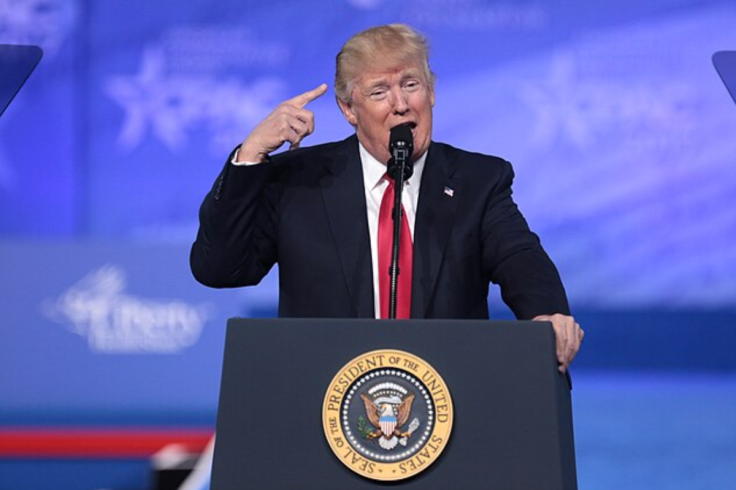
When the US and Israel launched joint military strikes against Iran on 28 February, President Donald Trump told the American people that the action was necessary — that Iran was on the verge of a nuclear weapon and building ballistic missiles that could soon reach the United States. Senior administration officials echoed those warnings, briefing reporters under anonymity that the threat from Tehran had become 'an intolerable risk.'
But within hours of the strikes, which killed at least 201 people and wounded 747, figures not independently confirmed by American or international authorities, a chorus of national security analysts, arms control experts and former government officials were already picking those justifications apart. Their conclusion, drawn from intelligence assessments and decades of research, was stark: the White House had leant heavily on claims that were either wrong or greatly exaggerated.
The Nuclear Claim
The most prominent justification Trump offered was that Iran was close to possessing a nuclear weapon. Matthew Bunn, an arms control expert at Harvard's Kennedy School, was direct in his assessment. The assertion that Iran was near a nuclear weapon, he said, 'is not true.'
Bunn noted that after the US bombed three Iranian nuclear facilities last June—strikes Trump declared had 'obliterated' the sites—Iran was left without operating enrichment facilities. 'The major facilities of Iran's programme and a lot of the key experts were destroyed,' he said. Iran may have salvaged some enriched uranium from those attacks, he acknowledged, but in terms of a facility capable of producing weapons-grade material, 'none of that is there.' That assessment stands in contrast to the position of Trump envoy Steve Witkoff, who claimed on 21 February that Iran was 'probably a week away from having industrial-grade bomb making material', a claim nuclear policy experts were deeply sceptical of.
Trump ripped up the Iran nuclear deal and created this mess. Now, he's putting servicemembers in harm's way with no clear plan and no Congressional approval. The American people deserve answers — and Congress needs to do its job. pic.twitter.com/iA4yD0C8wt
— Captain Mark Kelly (@CaptMarkKelly) February 28, 2026
The Missile Threat
Trump's claim about Iran's ballistic missile capabilities drew equally pointed scrutiny. In his State of the Union address on 24 February, and again in a video posted to social media after the strikes, Trump warned that Iran was 'working to build missiles that will soon reach the United States of America.' It was the first time any sitting US president or official had characterised Iran as poised to develop an intercontinental ballistic missile.
That framing, experts said, does not reflect what US intelligence actually shows. An unclassified assessment from the Defense Intelligence Agency published in May 2025 concluded that Iran could develop a 'militarily-viable' ICBM by 2035—and only 'should Tehran decide to pursue the capability.' Daryl Kimball, executive director of the Arms Control Association, said the intelligence community had been making a similar assessment since the mid-1990s.
Mona Yacoubian, director of the Middle East Programme at the Centre for Strategic and International Studies, said recent US intelligence assessments placed Iran as far as ten years away from developing a missile capable of striking the US. Gary Samore, a Brandeis University professor who served on nonproliferation issues under the Clinton and Obama administrations, noted that Iran's missiles appear focused on short- and medium-range targets, with a maximum range of around 2,000 kilometres—against a Tehran-to-Washington DC distance of roughly 10,000 kilometres.
'Not So Easy'
Former US Ambassador to Israel Daniel Kurtzer was similarly sceptical. 'It's not so easy to build a ballistic missile that's going to reach the United States, when we've done so much damage to their programme until now,' he said. The White House did not directly address the DIA's 2035 timeline. Spokesperson Anna Kelly said that 'President Trump is absolutely right to highlight the grave concern posed by Iran, a country that chants "death to America", possessing intercontinental ballistic missiles.'
Donald Trump is dragging the United States into a war the American people do not want. Let me be clear: I am opposed to a regime-change war in Iran, and our troops are being put in harm’s way for the sake of Trump’s war of choice.
— Kamala Harris (@KamalaHarris) February 28, 2026
Read my full statement: pic.twitter.com/JmxZaC8vBr
Regime Change Unlikely
Trump's post-strike video also called on Iranians to 'take over your government,' saying it would 'probably be your only chance for generations.' Yacoubian said Iran's ruling regime had already put succession plans in place and was 'probably better placed to manage through chaos than the Iranian people themselves.' Bunn warned that Iranians would be extremely cautious about rising up in circumstances where doing so could be seen as acting in concert with a foreign enemy — particularly after thousands of protesters were killed by Iranian security forces during crackdowns in January.
The debate over the administration's stated justifications carries implications that extend well beyond the 28 February strikes. A March 2026 analysis by the Arms Control Association argued that renewed military action was 'counterproductive, reckless, and unjustified on nonproliferation grounds,' and that conducting strikes without congressional approval may violate the 1973 War Powers Act and the UN Charter. With Iran already retaliating by firing missiles at US bases across the region, the consequences of a conflict built on contested premises remain deeply uncertain.
© Copyright IBTimes 2026. All rights reserved.