

'The Deadline Is Getting Extremely Close': Netanyahu's 34-Year Drumbeat on Iran Goes Viral as US-Israel Bombs Fall on Tehran
A historical look at Netanyahu's persistent warnings about Iran's nuclear program and their implications.
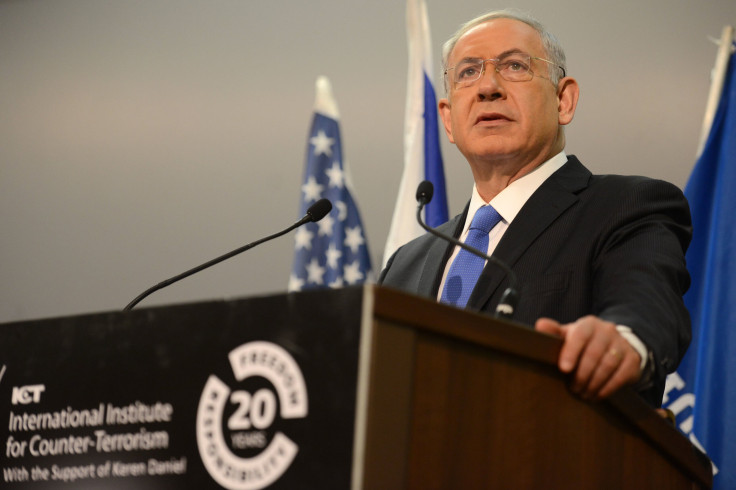
The strikes that began early on Feb. 28, 2026 were, for Benjamin Netanyahu, decades in the making, and the footage to prove it has now been seen by millions.
As joint US and Israeli forces launched what President Donald Trump confirmed were 'major combat operations' against Iran, a wave of archival footage began circulating across social media showing the Israeli prime minister sounding near-identical alarms about an imminent Iranian nuclear bomb in 1992, 1995, 1996, 2002, 2009, 2012 and 2015.
The clips, compiled in part by CNN and shared widely on X, have reignited a long-running debate over whether Netanyahu's three-decade campaign against Iran's nuclear programme represented prescient strategic thinking, an intelligence failure, or calculated political theatre. With bombs falling on Tehran and Iranian missiles striking back at northern Israel and Gulf Arab states, the question now feels considerably less abstract.
A Warning That Began Before Some of His Soldiers Were Born
Netanyahu's public campaign against Iran's nuclear ambitions began in January 1992. At the time a rising Likud parliamentarian, he addressed the Knesset and warned that Iran would 'become autonomous in its ability to develop and produce a nuclear bomb' within three to five years, and that the threat 'must be uprooted by an international front headed by the US.'
The prediction was wrong. Three years passed, and Iran had no nuclear bomb. In February 1995, Netanyahu appeared on CBS News and delivered the same forecast, this time arguing that Iran would reach nuclear capability 'within three to five years' without importing any additional materials. That prediction also went unfulfilled.
Here's 30 years of Netanyahu telling you Iran is days away from a nuclear bomb. pic.twitter.com/dLARAqTzRH
— Jackson Hinkle 🇺🇸 (@jacksonhinklle) February 27, 2026
In 1993, he had gone further in a piece published by Yedioth Ahronoth, claiming that Iran would have its first nuclear bomb by 1999, citing then-Iranian president Hashemi Rafsanjani's October 1991 statements about Muslim cooperation on atomic weapons. The bomb did not materialise. When 1999 came and went without incident, Netanyahu continued issuing fresh timelines rather than revising his framework.
The pattern intensified once he became prime minister. On July 10, 1996, Netanyahu addressed a joint session of the US Congress for the first time, warning that 'if Iran were to acquire nuclear weapons, this could presage catastrophic consequences, not only for my country, and not only for the Middle East, but for all mankind,' adding that 'the deadline for attaining this goal is getting extremely close.' C-SPAN's archive of that appearance captures him in nearly the same rhetorical register he would use for the next three decades. The deadline, whatever it was, did not arrive.
From Congress to the UN Cartoon Bomb
In 2002, Netanyahu returned to Congress, this time advocating for the invasion of Iraq. He told the committee that both Iraq and Iran were 'racing to obtain nuclear weapons' and that Iraq was operating 'centrifuges the size of washing machines.'
No weapons of mass destruction were found in Iraq. He resumed warning about Iran almost immediately afterward. A 2009 US State Department diplomatic cable released by WikiLeaks described then-prime-ministerial candidate Netanyahu informing a visiting congressional delegation that Iran was 'probably one or two years away' from nuclear weapons capability. Three years later, that estimate still had not materialised.
The most memorable moment came at the United Nations General Assembly on Sept. 27, 2012, when Netanyahu walked to the podium carrying a cartoon drawing of a bomb and drew a red line across it with a marker.
'By next spring, at most by next summer,' he told the assembly, Iran would have 'finished the medium enrichment and move on to the final stage.' He said they would then be 'only a few months, possibly a few weeks before they get enough enriched uranium for the first bomb.' The image became one of the most recognisable moments of his career. The red line he drew was never crossed on the timeline he described.
What made that 2012 performance particularly striking in retrospect was what was happening internally at the same time. Leaked intelligence documents later reported by Al Jazeera revealed that Mossad had assessed at roughly that same period that Iran was 'not performing the activity necessary to produce weapons,' even while continuing to develop enrichment capability.
In 2011, departing Mossad chief Meir Dagan had stated in his final intelligence summary that an Iranian nuclear weapon was not imminent, and that military action could actually spur, rather than prevent, Iran's weapons development.
2015, the JCPOA and the Road to Operation Shield of Judah
Netanyahu's 2015 address to Congress, his third, was his most politically explosive. Delivered at the invitation of Republican House Speaker John Boehner without informing the White House, it was a direct assault on the Obama administration's emerging nuclear deal with Iran, known as the Joint Comprehensive Plan of Action (JCPOA).
Netanyahu argued that the deal would not 'block Iran's path to the bomb' but 'pave' it. Fifty-eight Democratic members boycotted the speech. Democratic leader Nancy Pelosi, who attended, publicly described it as 'an insult to the intelligence of the United States.' The deal was signed regardless. Trump withdrew the US from it in 2018, a decision Netanyahu had lobbied for following an Israeli intelligence operation that extracted roughly 55,000 pages of Iranian nuclear documents from a warehouse in Tehran.
The viral compilation of Netanyahu's warnings, spanning 1992 to the present, is generating two very different responses online. Those who see the strikes as long-overdue and justified point to the footage as evidence of a leader who understood a threat others refused to face.
Those who are sceptical point to a 34-year series of missed deadlines, intelligence assessments that contradicted his public claims, and a pattern of warnings that have twice now brought the region to the edge of full-scale war.
© Copyright IBTimes 2026. All rights reserved.