

Defense Officials Undercut 'Imminent Threat' Narrative, Say Iran Had No Pre-Strike Plans Against US
Senior defence officials dispute the Donald Trump administration's claim of an imminent Iranian threat.
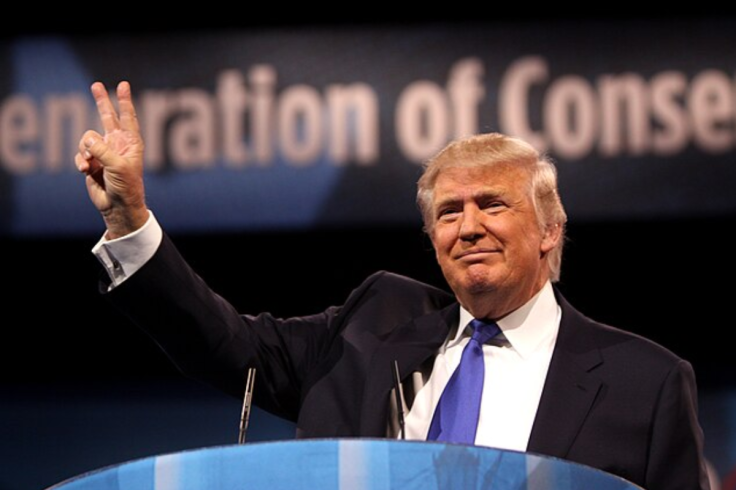
Senior defence officials have privately contradicted the Trump administration's public justification for striking Iran, telling CNN that key intelligence does not support claims of an imminent threat.
The White House launched joint US-Israeli strikes on Iran on 28 February 2026, killing Supreme Leader Ayatollah Ali Khamenei and igniting a wider regional war, yet two of the central arguments used to sell the action to the public have since been undermined by the very intelligence agencies responsible for making those assessments.
The fissures between the official narrative and the underlying intelligence now pose one of the most serious political and legal challenges the administration has faced since taking office.
The Missile Claim That Intelligence Does Not Support
In the days before the strikes, President Trump made a specific and alarming assertion: Iran, he said, was 'working to build missiles that will soon reach the United States of America.' He repeated the claim in his State of the Union address on 24 February and again in a social media video after the strikes began, saying Iran had been building missiles that 'could soon reach the American homeland.'
According to two sources with knowledge of the matter, the claim that Iran will soon have a missile capable of hitting the US is not backed up by intelligence. There is currently no intelligence to suggest Iran is pursuing an intercontinental ballistic missile programme to strike the US, the sources said. Three sources separately told CNN there has been no change in recent assessments of Iran's intercontinental ballistic missile aspirations.
The record on this point is not ambiguous. An unclassified 2025 Defence Intelligence Agency assessment: 'Golden Dome for America: Current and Future Missile Threats to the U.S. Homeland,' states that Iran 'has space launch vehicles it could use to develop a militarily-viable ICBM by 2035 should Tehran decide to pursue the capability.' That is a conditional projection nearly a decade away, far removed from the 'soon' framing the president used in addresses to Congress and the nation.
New: Pentagon briefers acknowledged to congressional staff in a briefing Sunday that Iran was not planning to strike US forces or bases in the Middle East unless Israel attacked Iran first, multiple sources to @NatashaBertrand, @jmhansler & me.
— Zachary Cohen (@ZcohenCNN) March 2, 2026
Why this matters: It undercuts…
Iranian Foreign Minister Abbas Araghchi, in an interview released the week of the strikes, said Tehran had 'deliberately limited the range of our missiles to 2,000 kilometres' and described the weapons as defensive. Secretary of State Marco Rubio, pressed on the president's 'soon' language at a press conference in St Kitts, declined to put a timeline on the claim.
Rubio said he would not 'speculate as to how far away they are,' but maintained that Iran was 'certainly' heading towards intercontinental capability and that its ballistic missile programme had not come up during 'Gang of Eight' congressional intelligence briefings that week. White House spokesperson Anna Kelly, in a statement to CNN, said Trump was 'absolutely right to highlight the grave concern posed by Iran... possessing intercontinental ballistic missiles.'
The Nuclear Threat: Contradictions Within the Administration Itself
The second pillar of the administration's justification, Iran's nuclear programme produced an arguably starker internal contradiction. Trump has repeatedly claimed that US and Israeli strikes last year had 'obliterated' Iranian nuclear facilities. Yet Special Envoy Steve Witkoff, one of the two main US negotiators in the Iran talks, gave an interview in the days before the 28 February attack claiming Iran was 'probably a week away from having industrial-grade bombmaking material.'
On the nuclear programme, Rubio acknowledged that Iran was 'not enriching right now,' but said Iran was 'trying to get to the point where they ultimately can.' According to a source, intelligence showed Iran was actively trying to rebuild its enrichment capability, installing additional centrifuges, getting damaged ones back online, and rebuilding facilities needed to weaponise enriched uranium. However, sources and experts said that work would take far longer than a week. According to a source, the rebuilding was also happening in locations unlikely to be impacted by new military strikes.

Trump, in his interview with Axios on 1 March 2026, cited two main reasons for the strikes: Iran's long record of links to attacks worldwide and a breakdown in diplomatic talks. 'The Iranians got close and then pulled back — close and then pulled back. I understood from that that they don't really want a deal,' Trump told Axios. He also claimed Iran had begun rebuilding some of the nuclear facilities that the US and Israel struck last year, though he had claimed those same sites had been 'obliterated' as recently as his State of the Union.
International oversight of Iran's nuclear sites had, in any case, been severely limited long before the February strikes. Iran barred UN nuclear watchdog inspectors from examining certain damaged sites following the 12-day war with Israel last year, leaving visibility into those facilities extremely limited.
No Congressional Authorisation — and Significant Legal Doubt
Beyond the intelligence disputes, the strikes face a constitutional challenge that legal experts say cannot be papered over. The White House presented no public legal justification for the action, and Secretary of State Rubio did not provide a full accounting to congressional leaders in the 'Gang of Eight' briefing, multiple sources told CNN.
Christopher Anders, a national security lawyer with the American Civil Liberties Union, said Trump 'violated the Constitution by invading Iran because the Constitution is crystal clear on who has the authority to declare war and commit American service members to battle and that is Congress alone.' He added that the president had 'tried to grab that power for himself without getting authorisation from Congress before doing so.'
Ilya Somin, a law professor at George Mason University and scholar at the Cato Institute, said the conflict was 'very obviously a war,' a characterisation he noted Trump himself had confirmed. 'I certainly wouldn't shed any tears if the Iranian regime were to be overthrown,' Somin said. 'It's an awful regime. It's an enemy of ours and so forth, but the war that has been started here is unconstitutional.'
The administration has historically leaned on Article II of the Constitution, granting the president command of the armed forces, to justify military action without prior congressional approval. Steve Vladeck, CNN's Supreme Court analyst and a Georgetown University Law Centre professor, noted that the Justice Department's past arguments in favour of such authority had 'depended on assertions that the strikes were limited and unlikely to lead to a broader conflict.' He said that rationale was 'hard to take remotely seriously here,' given that Trump himself described the campaign as 'massive and ongoing' and the military was planning for several days of attacks.
Iran has since attacked US military bases, launched ballistic missiles into Israel, killing at least eight people in a residential building in Beit Shemesh, and struck targets across the Gulf region, including Kuwait, Bahrain, and the UAE. Maersk and Hapag-Lloyd have suspended all vessel crossings through the Strait of Hormuz, and overall traffic through the channel fell by roughly 75 per cent by the end of 28 February, according to analysis by Kpler.
As the region absorbs the consequences of a war launched partly on intelligence its own architects cannot fully defend, the question of how the United States arrived here, and who was told what, has only grown harder to ignore.
© Copyright IBTimes 2026. All rights reserved.