

Death Toll Rises to 22 as Pro-Iran Protesters Storm US Consulate and UN Offices Across Pakistan
Protests in Karachi and Gilgit-Baltistan turn deadly as demonstrators react to the killing of Iran's Supreme Leader
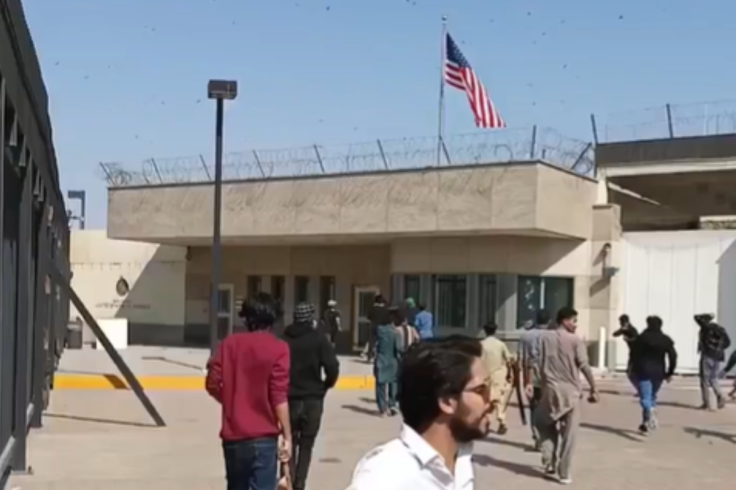
Sunday began with smoke and gunfire in Karachi. By the time Pakistani authorities had declared the situation under control, at least 22 people were dead and more than 120 others wounded in some of the worst anti-American violence the country has seen in years. The trigger was thousands of miles away—US and Israeli strikes on Iran that killed Supreme Leader Ayatollah Ali Khamenei—but the rage landed squarely on Pakistani soil, on US consulate walls, and on United Nations offices in the country's north.
Hundreds of Shiite demonstrators descended on the US Consulate in Karachi within hours of news breaking about Khamenei's death. Some got through. A crowd of young protesters climbed the main gate and reached the consulate driveway, smashing windows before security forces pushed them back. A nearby police post was set on fire. Senior police official Irfan Baloch later told reporters that reports of the consulate building itself being torched were 'baseless,' but did not deny the breach.
Twelve More Dead Up North
Karachi was not the only front. In Gilgit-Baltistan, the northern region that borders China and Afghanistan, the death toll climbed separately and fast. Local police official Asghar Ali said that 12 people were killed and more than 80 wounded there after thousands of protesters stormed the offices of the UN Military Observer Group and the UN Development Programme. Government offices were also hit, a local charity's premises were damaged, and police facilities were set ablaze.
Government spokesman Shabir Mir confirmed that all UN staff were accounted for and safe. Troops were eventually deployed and order restored, he said—though not before the toll had already mounted. The hospital in Karachi told a grimmer story in real time: police surgeon Summaiya Syed Tariq confirmed that six bodies arrived at the city's main government hospital in the initial hours, with the number climbing to 10 as critically wounded patients died.
BREAKING: At least 9 dead near the U.S. consulate in Karachi, Pakistan after people stormed the compound in protest of the killing of Iran’s Supreme Leader Ali Khamenei. pic.twitter.com/siAhzvlPij
— Republicans against Trump (@RpsAgainstTrump) March 1, 2026
From Lahore to Islamabad, Cities on Edge
The unrest was not contained to those two flashpoints. In Islamabad, police fired tear gas and used batons against hundreds of Shiite demonstrators attempting to march on the US Embassy in the Diplomatic Enclave. In Peshawar, thousands more were dispersed with tear gas as they tried to approach the US Consulate. Lahore saw repeated clashes near its own consulate throughout the day.
Clashes were still ongoing at 3 pm local time. In a video circulating on social media, one protester filmed others attempting to start a fire near the consulate, saying: 'We are setting the American consulate in Karachi on fire. God willing, we are avenging the killing of our leader.' Not every gathering turned violent. In Multan, Shiite demonstrators held a peaceful rally. One of those present, Mamoona Sherazi, said she had come to mourn a leader she considered a 'fatherly figure,' adding: 'God willing, we will never bow before America and Israel.'
The Government and the people of Pakistan join the people of Iran in their hour of grief and sorrow and extend the most sincere condolences on the martyrdom of His Eminence Ayatollah Seyyed Ali
— Shehbaz Sharif (@CMShehbaz) March 1, 2026
Khamenei.
Pakistan also expresses concern over violation of the norms of…
Officials Urge Calm, Probe Ordered
Interior Minister Mohsin Naqvi called the day 'a day of mourning for the Muslim Ummah and for the people of both Iran and Pakistan,' while simultaneously urging citizens not to take the law into their own hands. Sindh Chief Minister Syed Murad Ali Shah ordered a full investigation into the Karachi deaths, instructing authorities to conduct 'a transparent and impartial investigation to establish the facts.'
Prime Minister Shehbaz Sharif went further than most Pakistani leaders in his public framing of events. Writing on X, he described the killing of Khamenei as 'a violation of the norms of international law' and said Pakistan extended its 'most sincere condolences on the martyrdom' of the Supreme Leader. President Asif Ali Zardari expressed deep sorrow over the martyrdom of Khamenei, conveying condolences and prayers for 'patience and strength to the Government and people of Iran during this period of grief.'
We are monitoring reports of ongoing demonstrations at the U.S. Consulates General in Karachi and Lahore, as well as calls for additional demonstrations at U.S. Embassy Islamabad and Consulate General Peshawar. We advise U.S. citizens in Pakistan to monitor local news and…
— U.S. Embassy Islamabad (@usembislamabad) March 1, 2026
The US Embassy in Islamabad posted on X that it was monitoring demonstrations at multiple consulates and tracking calls for further protests, advising American citizens in Pakistan to avoid large crowds, stay alert, and keep their travel registration current. The British Embassy issued a parallel warning to its nationals.
Shiite Muslims account for roughly 15% of Pakistan's population of around 250 million people—one of the largest such communities anywhere in the world, according to the Associated Press. Large-scale anti-US and anti-Israel demonstrations are not uncommon among this community, although clashes of this scale are rare. Sunday's violence was not a protest that got out of hand at one location—it was simultaneous, geographically spread, and deadly. What happens next in Iran will likely determine whether the streets of Karachi stay quiet.
© Copyright IBTimes 2026. All rights reserved.