

Officials Acknowledge No US Intel Showed Iran Was About to Strike, Fuelling Criticism of Trump's War Justification
Congressional briefings found no intelligence of an imminent Iranian attack, undermining the rationale for Operation Epic Fury.
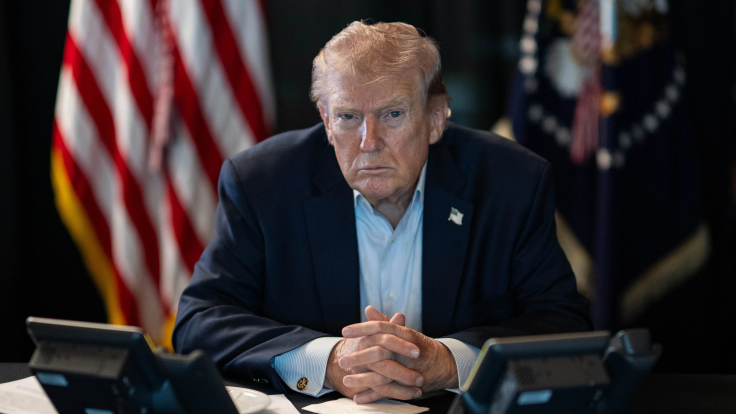
Trump administration officials privately admitted to Congress there was no intelligence suggesting Iran planned to attack the United States first, unravelling the central rationale used to launch Operation Epic Fury.
The disclosure, which emerged from closed-door congressional briefings on Sunday, 1 March 2026, has deepened a widening credibility crisis for the White House. Lawmakers on both sides of the aisle are now demanding answers; and some are already calling it a 'war of choice.'
The Briefings That Undercut the White House's Own Narrative
According to three people familiar with the matter, Trump administration officials told congressional staff during private briefings on Sunday that US intelligence had not suggested Iran was preparing to launch a preemptive strike against American forces. The officials instead acknowledged a more general concern about Iran's missile stockpiles and its network of proxy forces across the region, two of the sources said, a characterisation that differs significantly from the 'imminent threat' language used publicly by the president and his cabinet.
Reuters reported the same finding, citing two separate sources who spoke on condition of anonymity. In those briefings, administration officials emphasised Iran's ballistic missile capacity and regional proxy presence, while conceding there was no specific intelligence about Tehran moving to strike American forces first. Notably, the administration only began openly testing its justifications more than twelve hours after the first missiles flew, a lag that critics say is itself revealing.
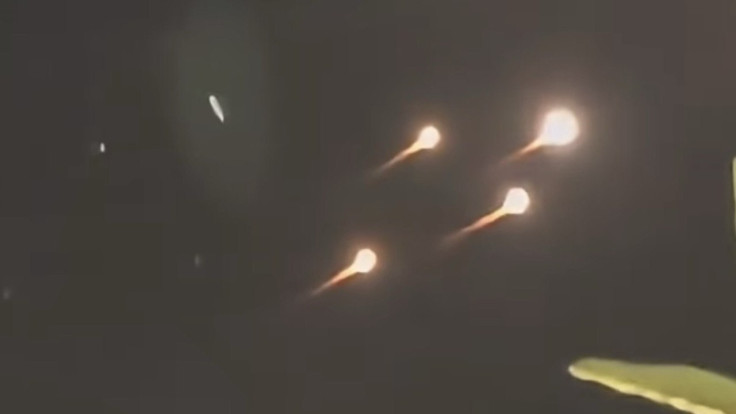
The intelligence community's own record on this question is unambiguous. A May 2025 unclassified assessment from the Defense Intelligence Agency found that Iran could develop a 'militarily-viable' intercontinental ballistic missile by 2035, and only if Tehran decided to pursue it.
Daryl Kimball, executive director of the Arms Control Association, told PolitiFact that the US intelligence community had held a similar long-range estimate on Iranian missile development since the mid-1990s. The White House did not respond to PolitiFact's request for comment on Trump's claim that Iran could 'soon' reach the United States with a ballistic missile.
Rubio's Shifting Account and the 'Israel Trigger' Admission
Secretary of State Marco Rubio's public explanation on Monday, 2 March 2026, marked a significant departure from the administration's initial messaging. In remarks to reporters on Capitol Hill before briefing congressional leaders, Rubio acknowledged that the 'imminent threat' the US acted on was not an Iranian plan to strike America unprovoked; it was the anticipated Iranian response to an Israeli attack.
The statement effectively confirmed that Israel's planned strike, not any direct Iranian aggression, triggered US military involvement. Senator Mark Warner (D-Va.), the top Democrat on the Senate Intelligence Committee, drew the distinction sharply: 'There was no imminent threat to the United States of America by the Iranians. There was a threat to Israel.' Warner, who had received a classified briefing from senior administration officials, reiterated that he had seen 'no intelligence that Iran was on the verge of launching any kind of preemptive strike against the United States of America.' He told CNN the president 'started a war of choice.'
The confusion was compounded by the fact that the administration offered multiple, at times contradictory, rationales in a single 24-hour period. At a Medal of Honour ceremony on Sunday, Trump cited destroying Iran's conventional missile capabilities and navy as key objectives.
The Congressional Fight and the Constitutional Question
The intelligence revelations have added considerable urgency to a war powers fight that was already scheduled before the first strikes landed. On 26 February 2026, Senators Tim Kaine (D-Va.), Chuck Schumer (D-N.Y.), and Adam Schiff (D-Calif.) announced they would force a Senate floor vote on a War Powers Resolution requiring explicit congressional authorisation for any US participation in hostilities against Iran.
The resolution, which would not prevent defensive operations, had been introduced on 29 January 2026 and was already privileged, meaning it could be called for a floor vote without committee approval.
In a statement released on 28 February 2026, Kaine described the strikes as 'a colossal mistake' and called the conflict 'dangerous, unnecessary, and idiotic.' He told NPR's Weekend Edition on Sunday: 'The Constitution says we're not supposed to be at war without a vote of Congress. This is important. The lives of our troops are at risk. We ought to come back to Washington right away and vote on this.' A vote was expected on Tuesday, 3 March 2026, though Kaine acknowledged it could slip to Wednesday given the pace of ongoing diplomatic and military developments.
Senator Andy Kim (D-N.J.) pointed directly at the sequencing of events, arguing that any Iranian threat to US forces was a product of the military build-up itself: 'Whatever imminent threat they're posing was likely in reaction to our unprecedented military build-up in the region. This is an example of the president deciding what he wanted to do, and then making his administration find whatever argument they could make to justify it.' Republican Rep. Thomas Massie (R-Ky.), a co-sponsor of a parallel House resolution alongside Rep. Ro Khanna (D-Calif.), called the strikes 'acts of war unauthorised by Congress' — one of the few Republicans to break ranks.
No imminent threat identified. We did start this war, without a real plan or exit strategy. This can't be a war without end. https://t.co/qIiVX0jXk6
— Senator Andy Kim (@SenatorAndyKim) March 2, 2026
The resolution nonetheless faces a steep climb. Previous efforts have repeatedly failed in the GOP-controlled Congress, and even if it passed, Trump would be all but certain to veto it. Overriding that veto would require a two-thirds majority in both chambers, a threshold that appears far out of reach. Sen. Tom Cotton (R-Ark.), chair of the Senate Intelligence Committee, said he expected 'overwhelming support from elected Republicans' for the operation. Sen. Thad Fetterman (D-Pa.) also broke with his own party, telling Fox News the resolution was 'really an empty gesture.'
With six American service members already dead and Rubio promising that 'the hardest hits are yet to come,' the question of whether the legal and evidentiary threshold for war was ever genuinely met, or merely assumed, may end up being the defining legacy of Operation Epic Fury.
© Copyright IBTimes 2026. All rights reserved.