

US Is Ill-Prepared For Iran Sustained Conflict Amid Supply Strain, Retired General Warns
The US-Israel operation has left Iran in chaos, with experts warning of a deepening military resource crisis
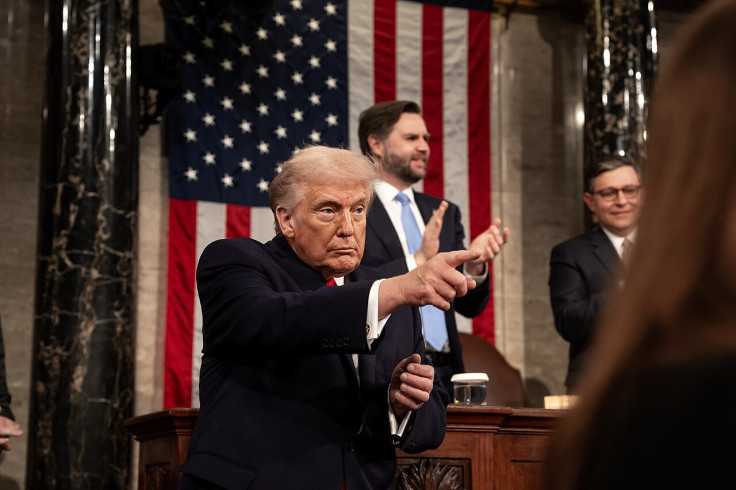
The death of Iran's supreme leader following US and Israeli strikes on Tehran has left a volatile power vacuum that threatens to draw the United States into a conflict it may not be equipped to sustain. While the precision of the initial strikes drew international attention, military experts are warning that America's long-term endurance is under serious strain. And that the success of recent operations may be masking a growing vulnerability in the US military-industrial complex.
Retired Air Force General Charles Wald has expressed grave concerns about the Pentagon's ability to maintain a high-intensity campaign, warning that America's capacity to defend itself and its allies may fall short if the conflict drags on for months.
'You Can Never Have Enough Defence'
The core of the problem, Wald argues, lies in the rapid depletion of precision-guided munitions and sophisticated interceptors. While offensive stockpiles could be replenished from global stores, defensive systems present a far more acute bottleneck. 'From a conventional munition standpoint, we can always fly in more weapons from around the world. There are a lot of weapons stored there with this type of mission in mind,' Wald said. 'The issue will be defensive weapons—Patriot, SM-3, and the Arrow system in Israel. You can never have enough defence.'
Each advanced interceptor such as the SM-3 costs approximately £7.9 million ($10 million), making a prolonged defensive campaign both fiscally and logistically draining. Wald warned that the US often assumes it can achieve victory through short, decisive engagements — but Iran's asymmetric warfare capabilities mean the conflict could easily transition into a war of attrition, testing the limits of American production lines that are not currently operating on a wartime footing.ld test the limits of American production lines, which are currently not at a wartime footing.
Donald Trump is dragging the United States into a war the American people do not want. Let me be clear: I am opposed to a regime-change war in Iran, and our troops are being put in harm’s way for the sake of Trump’s war of choice.
— Kamala Harris (@KamalaHarris) February 28, 2026
Read my full statement: pic.twitter.com/JmxZaC8vBr
The Fall of Ayatollah Khamenei
The geopolitical landscape shifted following the joint US-Israeli operation that killed Supreme Leader Ayatollah Ali Khamenei, plunging Iran into internal turmoil. Reports from Tehran suggest the transition of power has been met with both mourning and civil unrest, with pro-government militias reportedly clashing with protesters who see the leadership vacuum as an opportunity for change.
Iran has vowed to retaliate, though the loss of its central figurehead has complicated its command structure. Pro-government militias are reportedly clashing with protesters who see the leadership vacuum as an opportunity for change. This instability makes the prospect of a predictable military response from Iran increasingly unlikely and more dangerous.
Austin Shooting
The consequences of the strikes are being felt far beyond the borders of the Middle East. The FBI is currently investigating a mass shooting in Austin, Texas, to determine if there is a direct terrorism link to the events in Iran. Early evidence suggests the perpetrator may have been motivated by the recent military actions taken by Washington after they learned that the suspect, Ndiaga Diagne, is a Muslim naturalised citizen. He reportedly had an 'undershirt referring to Iran and had a Quran in his car.'
Security agencies have increased surveillance across major US cities, and if the shooting is confirmed as a terror attack, it would represent a significant escalation in domestic blowback from the strikes.
BREAKING 🚨
— Cinema Shogun (@CinemaShogun) March 1, 2026
Here’s a photo of the alleged mass shooter that killed 3 people and injured 14 others last night on 6th street in Austin Texas.
If you thought the war with Iran would only be fought in the Middle East you’re wrong.
The sleeper cells have been activated. pic.twitter.com/J1wc3KtABv
Strategic Rationale Behind the Strikes
US and Israeli officials argued that pre-emptive action was necessary to prevent a nuclear-armed Iran from dominating the region, with intelligence reports indicating Tehran was close to a breakthrough in its nuclear programme. President Trump also framed the operation as an opportunity for Iranians, saying: 'When we are finished, take over your government. It will be yours to take. This will be probably your only chance for generations.'
Despite the tactical success, critics argue that the strikes have ignited a fire that the US lacks the resources to extinguish. Without a robust surge in military production, the gains of the initial operation may prove short-lived.
© Copyright IBTimes 2026. All rights reserved.