

What Nine Mold Iterations Taught Gavin Yuan About Foundry Engineering
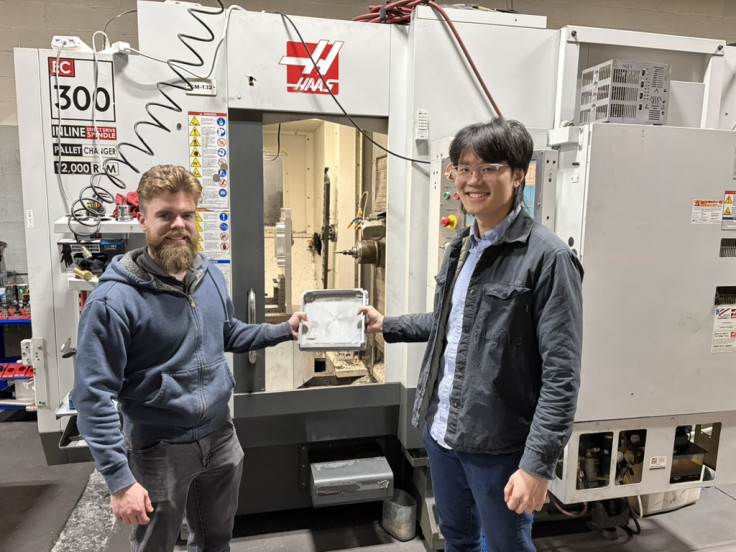
The aluminum housing kept sending Gavin Yuan and his team back to the mold. They changed venting, adjusted the channels that carried metal into the cavity, and reconsidered how the casting was fed as it cooled. The tooling went through nine total iterations: the original mold and eight reworks. The team was working through cold shuts, where streams of metal fail to join properly, and internal voids that could compromise the finished part.
Yuan, now founder and CEO of Aestus, initially approached the housing's gating design and defect diagnosis by consulting textbooks and experienced operators. The textbooks offered conflicting recommendations. He and veteran foundry operator Andy Baker also consulted six other foundries and received differing advice. The challenge was deciding which explanation fit the behavior of this particular mold and what to test next.
"That was the moment when I stopped thinking the industry simply needed a better answer to one casting problem," Yuan said. "There was a huge amount of expertise around us. The problem was that the expertise did not always accumulate in a form the next job could use."
Yuan has spent nearly two years learning casting on the production floor at CJ Aluminum, a permanent-mold foundry in Ontario operated by Andy Baker, who has run the business for more than 30 years. He chose a smaller operation to gain experience across the full process rather than in one narrow engineering function. He designed six parts and their molds, machined mold plates on CNC equipment, poured thousands of pounds of aluminum, built post-processing fixtures, quoted jobs, and introduced rapid prototyping into the shop. The breadth of that work put Yuan directly inside both the engineering and production decisions involved in getting a casting from design to finished part.
The experience gave him respect for how much judgment experienced foundry workers develop. Casting can appear deceptively simple from the outside. Molten metal enters a mold, cools, and becomes a part. In practice, producing the same acceptable part repeatedly requires controlling how a specific geometry fills, where the metal begins to solidify, how gases escape, how sections cool, and where defects may form internally.
"You can watch someone with decades of experience look at a defect and form an opinion incredibly quickly," Yuan said. "That ability is real. I became much more interested in how the company could preserve the reasoning behind those decisions rather than forcing someone else to rediscover it later."
The housing program exposed how difficult that preservation could be. Each mold revision produced information, but much of that information remained attached to the people involved in the job. A change might work because of several interacting variables, while the explanation for why it worked stayed in someone's memory, a notebook, or an informal rule passed between operators.
"Casting does not suffer from a lack of smart, experienced people," Yuan said. "What bothered me was how often the learning stayed local. One operator learned something about one mold, but the company did not necessarily become better at solving the next unfamiliar problem."
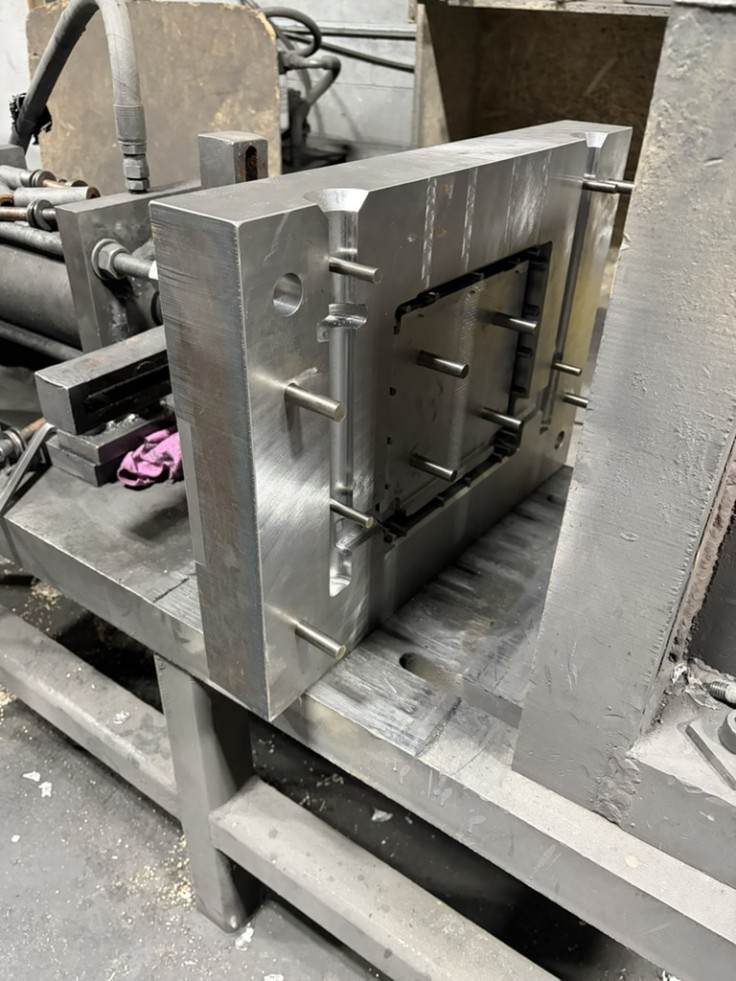
Yuan started Aestus in August 2025, operating from space inside CJ Aluminum. He moved directly from studying the process to leading a customer production program. The aim was to make each tooling change and pour produce evidence the team could carry into its next engineering decision.
Yuan led Aestus's first production program from tooling development through casting and machining to the shipment of validated first articles to a paying customer. Across development and production, he and his team poured about 2,000 pounds of aluminum and machined roughly 250 parts.
Yuan wants each tooling revision to leave a clear record of what changed, what the resulting casting showed, and why the team chose its next adjustment. The goal is to give the next engineer or operator access to the reasoning behind earlier decisions.
"The useful question is whether the next operator or engineer can start with more knowledge than the last one had," Yuan said. "If the answer is no, then we are still repeating the same learning cycle."
That cycle has consequences beyond one troublesome mold. Developing a casting can require weeks or months because a design change may trigger another tooling revision, production attempt, and round of diagnosis.
Yuan came away from his first housing program convinced that shortening that uncertainty requires control over the feedback loop itself. Tooling design, tooling fabrication, casting development, machining, process measurements, and simulation become more valuable when information can move quickly between them. Speed disappears when each tooling change has to leave the shop, wait on another vendor, and return before the team can test what it learned.
"I used to think the answer was going to be some specific technical insight about casting," Yuan said. "What I learned was that the speed at which you can test, measure, and carry the result forward changes the whole problem."
That belief also shapes how Yuan thinks about failure. A bad pour consumes material, machine time, labor, and attention. In a traditional development cycle, it can feel like another expensive step on the way to a usable part. Yuan wants it to leave something more durable behind.
"A failed pour costs material, time, and labor. If we don't understand why it failed and preserve what we learned, we risk paying for the same mistake again. The real waste is paying for the same lesson twice," Yuan said.
© Copyright IBTimes 2026. All rights reserved.