

Krish Mendapara Went From Dorm-Room Diagnostics to Building Matrix Full-Time in Eight Months

Eight months can be a short period in biotechnology, where product development often stretches across years. For Krish Mendapara, that was enough time to move from building diagnostic prototypes in a university dorm room to committing full time to Matrix, the company he co-founded and now leads as CTO. The transition was not built around a finished commercial product. It came from a sequence of experiments that convinced Mendapara and his co-founder that parts of diagnostic development could be approached differently.
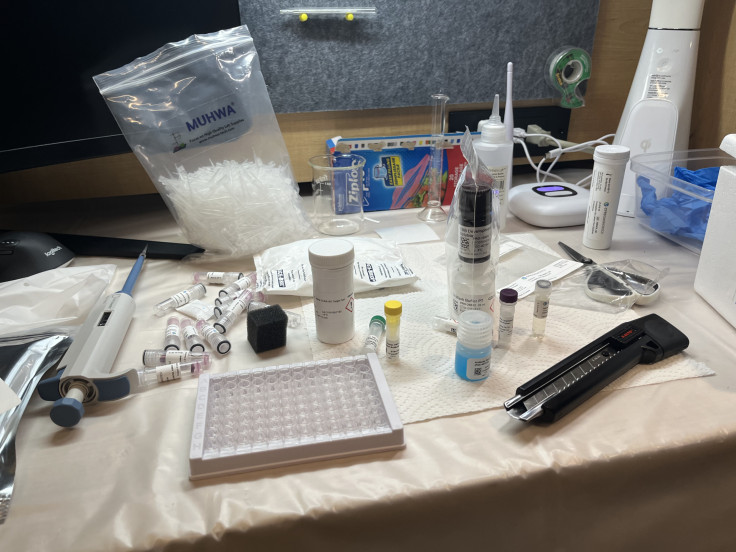
The two began experimenting in March 2025 after meeting at Queen's University, where they connected over technology, healthcare, and entrepreneurship. They developed several assay architectures before settling on lateral flow, the same broad testing format familiar from products such as pregnancy and COVID tests. Their early setup was far removed from a conventional biotechnology company. Mendapara describes building prototypes in a dorm room using household appliances and leftover reagents from chemistry labs.
"We did not have a large lab or a big technical team around us," Mendapara said. "We had to understand the problem well enough to keep moving even when equipment, materials, or money were limited."
One of their early prototypes focused on immunological tracking and muscle recovery. More important than that application was what the process taught them about how to develop the underlying diagnostic architecture. They tested multiple approaches before choosing lateral flow, gradually turning an experimental project into the technical foundation for Matrix. By October 2025, roughly eight months after those first experiments began, the founders had formally started the company and committed to building it full time.
For Mendapara, the transition into company building required learning beyond the science itself. Developing a diagnostic product meant confronting manufacturing, regulatory strategy, clinical validation, and the practical constraints of building physical technology with limited resources. He says those early constraints forced the team to question which parts of the development process were scientifically necessary and which reflected established industry habits.
That distinction became central to how Mendapara approached Matrix. He entered the company with experience across molecular biology, bioinformatics, machine learning, neuroscience, nanotechnology, and drug discovery. Rather than treating diagnostics development as a fixed sequence, he and the team began examining individual stages and asking whether they could be run differently, combined, or accelerated without compromising the underlying science.
"Being resource-constrained forces you to ask better questions," Mendapara said. "You cannot solve every problem by adding more people or more equipment, so you have to understand which part of the process is actually limiting you."
The founders were also testing whether they could convince outside investors that the project could become a company. In March 2025, while the work was still in its earliest stages, Mendapara and his co-founder cold emailed billionaires in an effort to secure initial capital. By October, Matrix had begun raising venture capital. The company has since raised a $1 million venture round from investors including Cory Levy, Founders Inc., and EWOR.
Mendapara was directly involved in that process alongside his co-founder. He pitched investors, met with prospective backers, and participated in diligence while continuing to develop the company's technical foundation. That meant translating the science into terms investors could evaluate while also answering detailed questions about whether the technology, product direction, and company could withstand scrutiny beyond the original experiments.
Limited equipment, materials, capital, and access to specialized expertise were not abstract startup challenges. They directly affected how quickly the team could test ideas and learn from failed experiments. The founders also had to develop an understanding of manufacturing and regulatory strategy while continuing to advance the underlying science, forcing technical and company-building decisions to develop in parallel.
Mendapara's role as CTO places him across the scientific, software, and product sides of Matrix. That breadth reflects the multidisciplinary background he brought into the company, but it also grew out of the practical demands of the early build. In a small diagnostics team, decisions about the underlying science can influence how a product is designed, manufactured, and prepared for later stages of development.
"We learned very quickly that a good assay by itself is not enough," Mendapara said. "You have to think about how the product gets made, how it gets validated, and whether the whole system can work outside the environment where you first built it."
That lesson has shaped Matrix's broader development philosophy. Mendapara says the company has looked for ways to shorten portions of diagnostic research and development that can traditionally extend across long timelines. The approach includes questioning inherited processes, surrounding the team with experienced operators, and separating genuine scientific constraints from steps that may be reorganized or accelerated.
The broader significance extends beyond the story of young founders working from a dorm room. Mendapara's experience shows how quickly a research project can begin demanding decisions about product design, manufacturing, fundraising, and company building once the underlying technical idea starts moving toward a real-world application. In diagnostics, where scientific rigor has to survive the transition from experiment to manufacturable product, those decisions can shape whether promising work advances at all.
For Mendapara, the eight-month transition from prototype experiments to building Matrix full time marked the point when an academic project became a larger technical undertaking. The same constraints that made the early work difficult also pushed him to examine each stage of development more closely and determine which limitations had to be accepted and which could be challenged. The result was not simply a faster path from experiment to startup. It was the beginning of a company built around testing how much of the diagnostics development process could be reconsidered without compromising the science.
© Copyright IBTimes 2026. All rights reserved.