

Google's Biggest Weakness Exposed by ChatGPT Maker Sam Altman
Despite Google's dominance, Sam Altman says its AI approach is fundamentally flawed
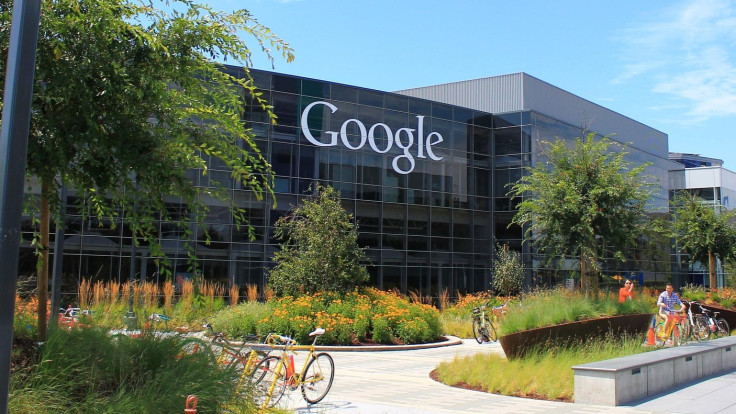
It is quite obvious that the AI race in 2025 is akin to the space race back in the 1960s. Instead of countries warring, it's now big tech competing. Now, in this competitive timeline of artificial intelligence, the rivalry between tech giants is very interesting to watch. Undoubtedly, in the very middle of this competition is OpenAI, the creator of ChatGPT, led by its CEO Sam Altman, as many people today think of ChatGPT the moment they hear the word AI.
Now, in a surprising interview, Altman gave a rare opinion into what he believes is the biggest weakness in OpenAI rival Google's strategy for artificial intelligence. This came after his acceptance of Google's awesome business model, as he seems to be of the opinion that the search giant's method of integrating AI may leave it at a disadvantage compared with competitors willing to build AI first products from the ground up.
What is Google Doing Wrong in AI?
According to Altman, Google's biggest weakness apparently is in its reliance on bolting artificial intelligence into existing products instead of designing entirely new AI experiences. So, speaking about Google's way of integrating AI with its main search service and other established tools, Altman said that simply adding AI as a feature is unlikely to unlock the full potential of the technology or win over users in the long term. This should be taken with some weight because ChatGPT is killing it currently.
Moreover, Altman has publicly credited Google as possessing 'probably the greatest business model in the whole tech industry', showing the company's almost immovable position and economic might. He also said that Google's enormous distribution advantage, built over years through its dominance in search, advertising, email, and mobile platforms, is both a strength and a weakness. This is because Google makes a whole lot of revenue from advertising and existing services, Altman reportedly believes it will be slow to abandon or fully change those systems for AI-first alternatives.
This opinion by the ChatGPT boss shows the biggest point of contention in the tech community about the future of AI products. Traditional software firms are still integrating AI into their existing suites of services, but the most transformative potential may actually be in products that are purpose built around AI and not AI as secondary.
Furthermore, Altman used the example of messaging apps or search tools that simply draft responses or summarise queries as being 'a little better', but not portraying the true promise of autonomous AI agents. So, it seems he looks at a future in which AI systems operate more like personal assistants that can make decisions, prioritise tasks, and interact with other intelligent agents on a user's behalf, which are features that he believes are hard to realise through simple enhancements to traditional applications.
However, while Google has already introduced its advanced Gemini 3.0 AI model into search and other services, Altman's remarks do imply that such integrations may not be enough to secure leadership in the long run. The main assumption here seems to be that users eventually will prefer systems built 'around AI' instead of tools that only augment what already exists.
Read More: ChatGPT App Store Launched - Here's How to Use OpenAI's New AI App Store
Read More: Tech War Between US & EU Ignites: Spotify in Danger After Google, Apple & Meta
ChatGPT Also Can't Rest Easy
Now, Altman's critique of Google does not come without context. This is because just a while ago, Google's efforts in AI, specifically the launch of Gemini 3.0, have reportedly put pressure on OpenAI and led to an internal crisis of sorts. OpenAI reportedly declared a 'code red' response to the competitive threat, showing that the company views Google's advancements as serious enough to lead to a big change.
Altman also acknowledged previously that if Google had taken OpenAI seriously earlier, the AI world might have looked very different today, implying that Google's early alleged mistakes allowed OpenAI to establish a foothold.
© Copyright IBTimes 2026. All rights reserved.