

Graphic Jeffrey Epstein Death Photos Continue To Fuel Murder Claims Amidst Epstein Files Controversy
Even without the autopsy debate, the conditions surrounding Epstein's death have long unsettled observers.
More than six years after Jeffrey Epstein was found dead inside a Manhattan jail cell, renewed scrutiny is once again fueling doubts about the official explanation.
As the Justice Department's gradual release of Epstein-related files once again puts his name back in the headlines, attention has returned to one of the most unsettling chapters of the case, in which it was questioned whether his death was truly a suicide or something far more sinister.
Those doubts were thrust into the spotlight in 2020, when 60 Minutes aired a detailed investigation into Epstein's death, featuring graphic images from inside his jail cell and from his autopsy. The segment did not change the official ruling; however, experts, family members, and a large portion of the public have never been convinced.
What the Autopsy Photos Show
The 60 Minutes investigation relied heavily on graphic autopsy photographs and images taken inside Epstein's cell after his death. Central to the scrutiny was Dr Michael Baden, a former New York City medical examiner who observed the autopsy on behalf of Epstein's family.

Baden pointed to a thin, bloodied mark running horizontally across the middle of Epstein's neck, arguing that its location was inconsistent with a typical hanging—particularly one involving a low-height bed. 'Most hangings, especially free hangings, the ligature slides up beneath the jawbone,' Baden said during the broadcast. 'Here it's in the middle of the neck.'
Photos from the cell showed bedsheets tied into nooses, yet Baden noted there appeared to be no blood on the fabric itself, despite visible bleeding around Epstein's neck. To him, the physical evidence raised more questions than answers.
The Neck Injury That Keeps Raising Doubts
Perhaps the most controversial detail highlighted in the 2020 investigation was Epstein's fractured hyoid bone, a small bone in the neck often discussed in cases of strangulation. Images shown on 60 Minutes revealed fractures not only to the hyoid but to other neck structures as well.
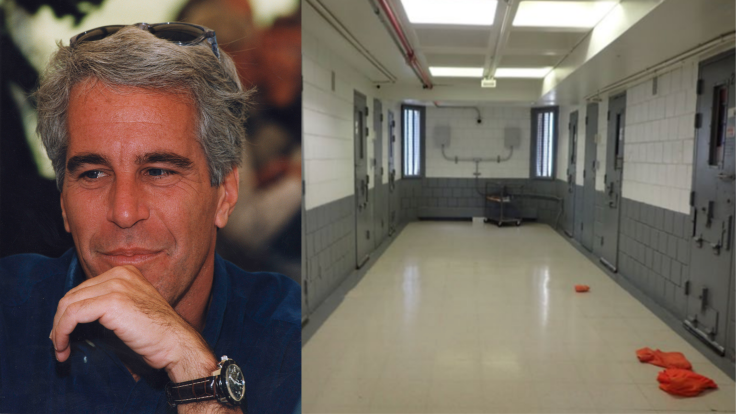
Baden said he had never encountered such a pattern in more than a thousand suicide hangings he reviewed during his career. 'I have never seen three fractures like this in a suicidal hanging,' he said, describing the injuries as more consistent with strangulation.
The New York City Medical Examiner's Office has consistently pushed back, maintaining that such fractures can occur in suicides, especially in older individuals. Still, the images shown in 2020 became a cornerstone of ongoing scepticism.
A Death Surrounded by Failures
Even without the autopsy debate, the conditions surrounding Epstein's death have long unsettled observers.
At the time, surveillance cameras outside his cell were not working, and the guards assigned to monitor him later admitted they had fallen asleep and falsified records. Some footage was eventually located, but gaps in the timeline only deepened public mistrust.

Combined with Epstein's ties to influential figures in politics, finance, and entertainment, those failures fed speculation that his death may have prevented damaging testimony. While no official investigation has overturned the suicide ruling, the circumstances ensured the controversy would not quietly disappear.
Although the 60 Minutes investigation aired in 2020, its impact continues to reverberate. Public doubt never subsided, and the phrase 'Epstein didn't kill himself' became shorthand for widespread disbelief in official narratives.
Now, as newly released documents revive scrutiny of Epstein's world and the people around him, the unresolved questions surrounding his death feel newly relevant.
© Copyright IBTimes 2026. All rights reserved.