

Here's Why Trump Seems To Be 'Taking Over' Countries Like Venezuela, Greenland — Social Justice Or Vested Interest?
US interest in both regions is tied to security, energy and geopolitical positioning, not formal expansion
Recent comments and actions by US President Donald Trump have prompted headlines suggesting the United States is seeking to assert control over foreign territories, particularly Venezuela and Greenland. The language has drawn criticism from political opponents and concern from international observers, who warn of echoes of past US interventionism.
Supporters of Trump argue that the rhetoric reflects strategic signalling. They say the administration's posture is driven by national security considerations, energy interests and heightened geopolitical competition, rather than a desire for formal territorial expansion.
Understanding the issue requires separating provocative language from policy reality. While Trump's statements have been unusually direct, international law, diplomatic pressure and alliance structures continue to limit what the United States can practically do beyond its borders.
Venezuela Claims Prompt Scrutiny
Attention has focused on Trump's remarks about Venezuela, where he has framed US involvement as necessary to address political instability, alleged criminal activity and regional security concerns. In early January, Trump claimed US operations had significantly weakened the government of President Nicolás Maduro and positioned Washington to oversee a transitional process, according to Reuters.
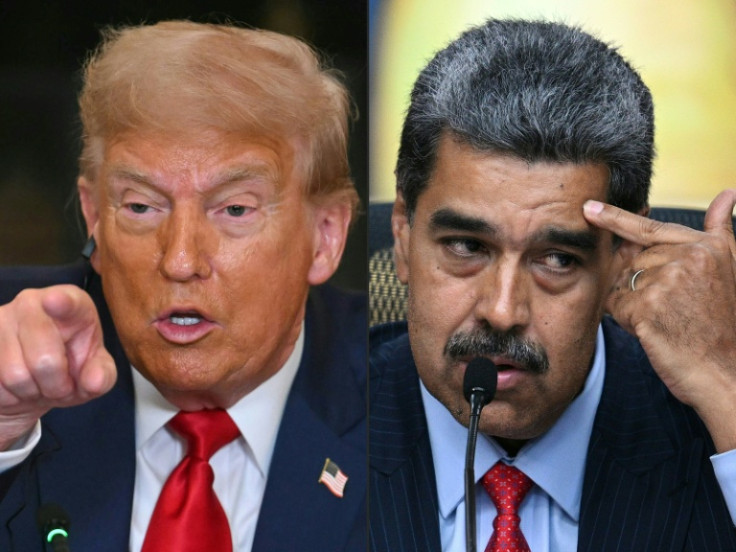
Those claims have been disputed, and independent reporting has not confirmed any form of US-controlled administration in Venezuela. While international media have documented increased diplomatic and economic pressure on the Maduro government, analysts note that rhetoric about 'running' another country does not equate to legal or operational control.
Russia and several Latin American governments have criticised Trump's language, warning that it risks destabilising the region. US officials have responded by describing their actions as limited and targeted, aimed at combating corruption and supporting democratic processes.
Greenland Rhetoric Resurfaces
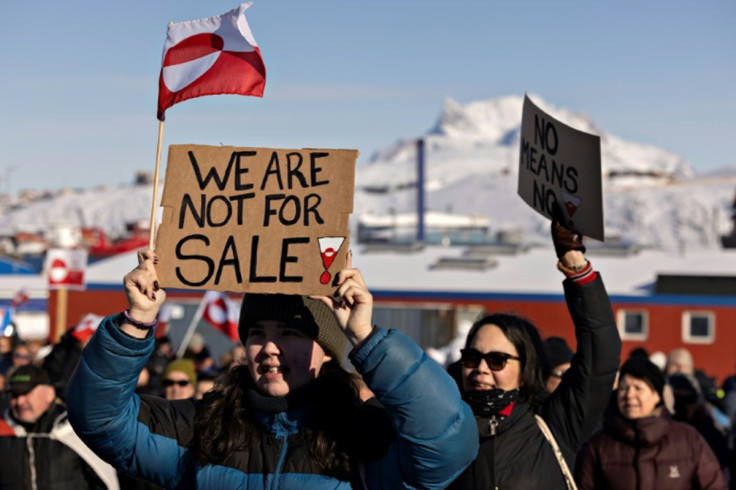
Trump's renewed comments about Greenland have revived controversy dating back to his 2019 proposal that the United States explore acquiring the territory, according to AP News. Greenland is an autonomous region within the Kingdom of Denmark and occupies a strategically significant position in the Arctic, where military and commercial competition has intensified.
Trump has described Greenland as vital to American security interests, citing its role in Arctic defence and surveillance. Danish leaders have firmly rejected any suggestion of annexation, reiterating that Greenland is not for sale and that its status is non-negotiable. Officials in Copenhagen have emphasised that existing NATO cooperation already provides a framework for shared defence in the region.
British and European analysts note that US interest in Greenland is longstanding and has historically focused on defence installations and early-warning systems. They argue the renewed debate reflects shifting global power dynamics in the Arctic.
Trump just issued threats to attack Mexico, Cuba, Colombia, Iran, Venezuela (again), and Greenland (which would be an attack on all of NATO). pic.twitter.com/WEYEXD0GWy
— No Lie with Brian Tyler Cohen (@NoLieWithBTC) January 5, 2026
Speaking with reporters aboard Air Force One tonight, Donald Trump:
— Republicans against Trump (@RpsAgainstTrump) January 5, 2026
-Threatened Colombia
-Threatened Cuba
-Threatened Iran
-Threatened Mexico
-Said the U.S. is “in charge”
of Venezuela and threatened it with a “second strike”
-Said the U.S. needs Greenland “from the standpoint… pic.twitter.com/ErJWbSkT2W
The Devils’ Deal: Autocrats’ Spheres of Influence#Trump takes #Venezuela, Greenland, threatens Cuba & Canada.#Putin takes #Ukraine, threatens Baltics, Finland.#Xi takes Taiwan, threatens Philippines, Aus.
— Mindful Primate (@MichellesDude) January 3, 2026
Just like Hitler, Mussolini, Tojo, Stalin back in the 1930s-40s. pic.twitter.com/FdmzDDO1ca
Trump takes what he wants. He wanted Venezuela’s oil, so he invaded that country.
— Geoffrey P. Johnston😎😷🇺🇦🏳️🌈🇨🇦💉 (@GeoffyPJohnston) January 3, 2026
Trump wants Canada & Greenland, too.
USA is an imperialist power that claims the Western Hemisphere as its domain.
Canada & our NATO allies must prepare to defend Canada & Greenland (Denmark). pic.twitter.com/f8SEn1TKWK
UPDATED LIST of countries the Trump administration has threatened to invade, annex, or otherwise attack in the 85 hours of 2026 so far:
— Seth Abramson (@SethAbramson) January 4, 2026
🇻🇪 Venezuela
🇨🇺 Cuba
🇬🇱 Greenland
🇮🇷 Iran
🇨🇦 Canada
🇨🇴 Colombia
🇲🇽 Mexico
Insane.
Strategic Interests Over Expansion
Foreign policy experts broadly agree that Trump's language is best understood as part of a strategy that prioritises leverage and visibility. Venezuela's vast oil reserves and Greenland's Arctic position both carry strategic value, but neither presents a realistic pathway to formal US control.
International law places strict limits on territorial acquisition, and any attempt to bypass those norms would face strong diplomatic resistance. For now, reactions from allies and rivals alike suggest that Trump's statements are viewed as political signalling.
While critics characterise the approach as destabilising, supporters see it as an assertive defence of US interests in an increasingly competitive global landscape. The reality, analysts say, lies somewhere between those interpretations, shaped as much by diplomatic constraints as by presidential rhetoric.
© Copyright IBTimes 2026. All rights reserved.