

ICE Agent Who Shot Renee Good 'Suffered Internal Bleeding' As Questions Mount Over Car Impact Claim
New Medical Updates On ICE Officer Internal Bleeding Deepen Controversy In Minneapolis Shooting Of Renee Good
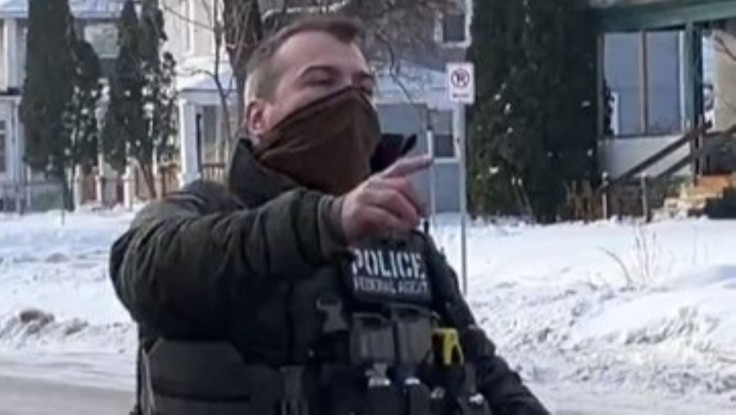
An ICE agent involved in the controversial shooting death of Minneapolis resident Renee Good has been reported to have suffered internal bleeding from an alleged vehicle impact, intensifying scrutiny of official claims and raising profound questions about use of force and accountability in federal policing operations.
Details that have emerged in recent days reveal that Immigration and Customs Enforcement officer Jonathan Ross, who fired the fatal shots that killed 37-year-old Good during an immigration enforcement action on 07 January 2026, was treated for internal injuries after the encounter and released from the hospital, though the severity of his condition remains unclear. Officials familiar with his medical status have conveyed this information to news outlets as official summaries continue to evolve.
The juxtaposition of the officer's reported injuries with the fatal outcome for Good, a mother of three, has sent shockwaves through Minneapolis and beyond, prompting protests, political responses, and legal actions by civil rights advocates demanding a full and transparent investigation.
Circumstances Of The Fatal Encounter
On 07 January 2026, federal ICE agents were conducting an enforcement operation in a residential neighbourhood in south Minneapolis when they encountered Good on a street near her home shortly after she had dropped her six-year-old child at school. Video footage and witness accounts show Good in her vehicle as agents approached, a brief verbal exchange, and then a rapid escalation ending with the officer firing multiple shots through the windshield, striking her in the head.
Cellphone and bystander video show moments before the shooting where Good, calm and compliant, said near the scene, 'I'm not mad at you,' even as agents ordered her to exit the vehicle. These visuals have been widely disseminated and analysed by legal experts and community leaders who dispute official narratives of imminent threat.
The Department of Homeland Security has characterised Good's actions as posing a serious threat to the safety of the agent and fellow personnel, asserting that her vehicle struck the officer, inflicting injury, before the shots were fired. Homeland Security Secretary Kristi Noem publicly confirmed the officer was treated in the hospital and is reportedly recovering from his injuries.
Local leaders, including Minneapolis Mayor Jacob Frey and Minnesota Governor Tim Walz, have rejected the federal account and called for accountability. Mayor Frey described the self-defence assertion as inconsistent with the video and demanded a halt to ICE operations within city limits.
JUST IN: The ICE agent who shot Renee Good suffered internal bleeding because of the incident, according to CBS News.
— Collin Rugg (@CollinRugg) January 14, 2026
According to two U.S. officials, Jonathan Ross suffered internal bleeding to the torso following the incident.
"The Department of Homeland Security confirmed… pic.twitter.com/qtM22Rr8OH
Medical And Official School Of Thought
According to multiple officials with direct knowledge of the situation, the ICE officer suffered internal bleeding to his torso from the vehicle interaction, though the extent and medical implications of these injuries remain subject to ongoing reporting. Internal bleeding can encompass a range of clinical outcomes from minor organ contusions to life-threatening haemorrhage, often requiring diagnostic imaging to assess.
The revelation of such injuries adds complexity to the federal government's narrative that the officer's use of deadly force was justified by a perceived imminent threat. Experts in use-of-force law point out that self-defence claims hinge on whether the officer reasonably believed he faced an imminent threat of death or serious harm at the time he discharged his firearm. These assessments often require meticulous reconstruction of events.
Former legal analysts and commentators have noted that interpretations of the video footage vary widely, with some asserting that Good did not make aggressive movements directly toward the agent at the point of the shooting. This has fuelled public debate about proportional response and the thresholds for lethal force.
While the Internal Affairs and Office of Professional Responsibility within ICE are standardly tasked with reviewing officer-involved shootings, the broader investigatory landscape now includes the Federal Bureau of Investigation, with state agencies reporting restricted access to critical case materials. The Minnesota Bureau of Criminal Apprehension announced it could no longer participate meaningfully in the investigation because it was denied access to key evidence.
If you want to say this woman's death is a tragedy, that we should pray for her soul as Christians and Americans, then I agree with you.
— JD Vance (@JDVance) January 9, 2026
But the media dishonesty about this officer is an all-time moment in shameless press propaganda.
Does this law enforcement officer have a…
Public Reaction And Ongoing Controversy
The fatal shooting of Good has catalysed sustained protests in Minneapolis, with tens of thousands rallying against federal immigration enforcement and calling for accountability and policy reforms. Demonstrators have clashed with law enforcement, and tensions remain high as community members and civil rights groups call for full transparency.
Good's family has publicly refuted misinformation circulating online alleging a criminal history, affirming that she had no documented criminal record and highlighting her roles as a devoted parent, spouse, and community member. These statements aim to counter narratives that seek to justify the use of deadly force.
The United States Department of Justice has stated that at present, there is no basis for initiating a criminal civil rights investigation into the incident. This decision has drawn criticism from civil liberties advocates, and at least six federal prosecutors in Minnesota have reportedly resigned in protest over the handling of the case.
Legal scholars have noted that such resignations, while symbolic, underscore broader tensions within prosecutorial and law enforcement institutions over accountability for federal officer conduct. Meanwhile, state officials have pursued civil litigation to challenge federal operations and seek systemic change.
As the Minneapolis community continues to grieve and seek answers, the case of Renee Good raises enduring questions about federal enforcement practices, the mechanics of use-of-force law, and the standards by which officers are held accountable when lethal force intersects with contested narratives of threat and harm.
In the wake of these revelations, the nation watches as legal, political, and human dramas unfold.
© Copyright IBTimes 2026. All rights reserved.