

The LEGO Group Unveils First-Ever Pokémon Sets — Fans Want Smart Bricks
The LEGO Group has revealed its first-ever LEGO Pokémon sets and a new Trainer Challenge, with fans already calling for Smart Brick compatibility
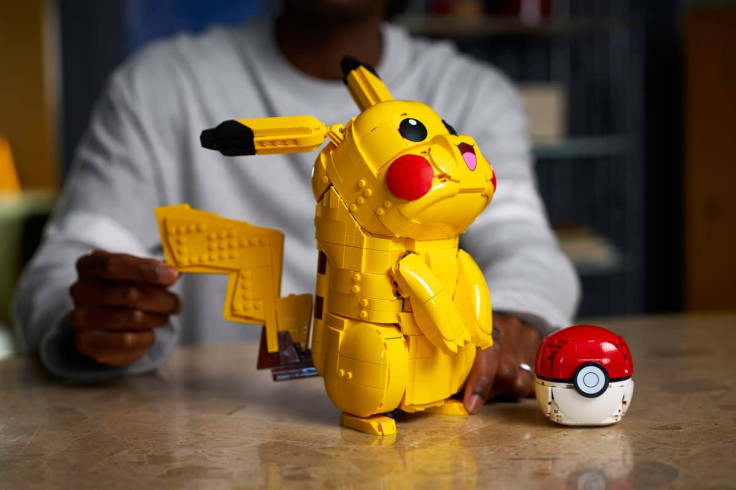
The LEGO Group has officially entered the Pokémon universe, unveiling its first-ever LEGO Pokémon sets in a collaboration with The Pokémon Company International that has been years in the making.
The announcement marks a major crossover between two of the world's most recognisable toy brands, instantly igniting excitement across fan communities. From nostalgic adults who grew up with Pokémon in the 1990s to younger builders discovering the franchise through games and animation, anticipation is running high ahead of the sets' release in early 2026.
Yet alongside the enthusiasm, fans are already asking for more. Social media reaction has shown that collectors and tech-savvy builders are eager for innovation beyond traditional bricks.
Read More: Here Are the Pokémon Cards Speculated to Be Part of McDonald's Happy Meal in 2026
Read More: Pikachu Getting Redesigned In Gen 10 Pokemon Games — Fans Not Happy
Many are calling for so-called 'smart bricks', with lights, motion, or digital integration that could bring Pokémon battles and abilities to life. For LEGO, the partnership opens a new frontier and raises expectations.
Building a New Pokémon Universe in Bricks
Set to launch on 27 February 2026, the first wave of LEGO Pokémon products allows fans to build and display iconic creatures in brick form. Pre-orders are already live through LEGO and Pokémon retail channels, with the launch timed to coincide with Pokémon Day, an annual celebration of the franchise's global impact.
The debut collection focuses on some of the most recognisable Pokémon from the franchise's long history. Five fan favourites — Pikachu, Eevee, Venusaur, Charizard and Blastoise — headline the initial release, each recreated with a strong emphasis on display and poseability.
According to LEGO, the goal is to let fans 'continue their Pokémon Trainer journey, brick by brick', blending creative building with nostalgia.
The flagship Pikachu and Poké Ball set is aimed squarely at adult fans and collectors. With more than 2,000 pieces, it depicts Pikachu leaping from a Poké Ball in a dynamic battle pose, complete with lightning-inspired details and hidden references for long-time fans.
A subtle '25' on the base nods to Pikachu's Pokédex number, reinforcing the attention to detail that LEGO believes will appeal to enthusiasts.
Another centrepiece is the combined Venusaur, Charizard and Blastoise set, one of the LEGO Group's largest display builds to date.
With nearly 7,000 pieces, it brings together the fully evolved forms of the original Kanto starter Pokémon for the first time in LEGO form. Each figure features articulation and biome-inspired base elements, allowing builders to display them individually or as a trio.
Eevee, one of the franchise's most beloved characters, rounds out the initial lineup with a smaller, more accessible build. Designed with expressive features and movable parts, the set also integrates with LEGO's Build Together app, encouraging collaborative building among families and friends.
Fans Demand Innovation Beyond Plastic Bricks
The calls from Pokémon fans for smarter, more interactive bricks may already be closer to reality than many realise. Earlier this year, the LEGO Group made a rare appearance at CES 2026 in Las Vegas, unveiling a technological leap that could fundamentally reshape how its products are experienced.
Stepping beyond its traditional role as a plastic-brick specialist, Lego introduced its new Smart Brick, signalling a shift that blends physical creativity with embedded technology.
Unveiled as part of a broader Smart Play system, the translucent two-by-four brick looks deceptively ordinary. Inside, however, sits a custom silicon chip equipped with sensors, motion detection, light recognition and a miniature speaker.
The brick can detect movement, colour and proximity, responding dynamically to how it is used, without relying on screens, cables or controllers. Lego chief product officer Julia Goldin described it as 'one of the most significant evolutions in the Lego system since the introduction of the minifigure in 1978'.
Demonstrations at CES showed how the Smart Brick can bring builds to life, from aircraft engines that grow louder as models swoop through the air to character-specific sound cues triggered by minifigures.
Crucially, Lego insists the technology reacts to play rather than directing it, preserving imagination while adding new layers of storytelling. While the first rollout focuses on Star Wars sets, the debut of Lego Pokémon has inevitably fuelled speculation that similar smart technology could soon power electric shocks, fire blasts and battle sounds, turning fan demands into the next phase of Lego's evolution.
© Copyright IBTimes 2026. All rights reserved.