

Look: White House Social Media Mocks Venezuela President Maduro by Making Memes of His Capture
Maduro's capture garnered reactions from several political figures
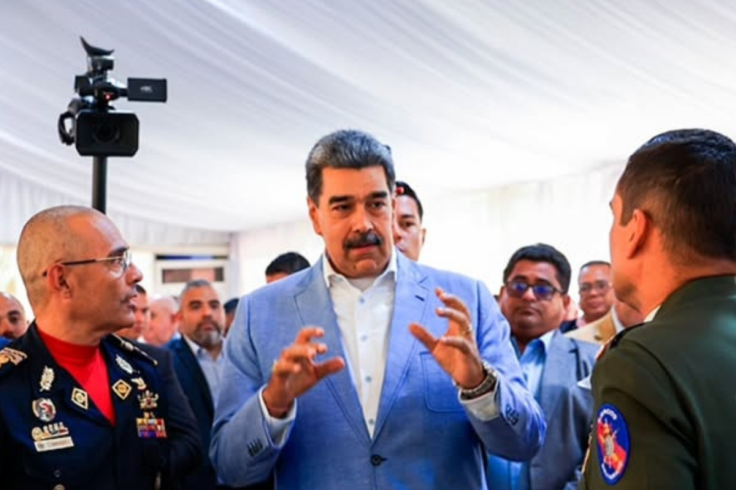
The capture of the Venezuelan leader Nicolás Maduro has not only reshaped geopolitics in Latin America but also triggered an unprecedented moment in modern US political messaging, as the White House used viral memes to mock the deposed leader's downfall.
Within hours of Maduro being flown to New York to face federal charges, the White House's official X account posted a series of meme-style messages that quickly spread across social media, drawing millions of views and igniting debate over whether state power had crossed into the realm of Internet spectacle.
The posts came as President Donald Trump confirmed that US forces had carried out what he described as a 'large-scale strike' inside Venezuela, culminating in Maduro's capture and transfer into American custody. Trump later said the United States would temporarily 'run' Venezuela until what he called a 'safe, proper and judicious transition' could take place.'
White House Turns To Internet Culture
The first viral post, shared on 3 January 2026, featured a stark black-and-white image of Trump stepping out of a vehicle, overlaid with the acronym 'FAFO', widely understood online to mean 'F*** Around and Find Out'. The caption was blunt: 'No games. FAFO.'
The post quickly gained traction, racking up more than 131,000 likes and millions of views within hours. While some supporters praised it as a show of strength and deterrence, critics condemned it as juvenile and unbecoming of official state communication.
A follow-up post escalated the tone. Set to a triumphant soundtrack, the video meme used sweeping patriotic imagery and ended with the caption: 'If you don't know, now you know 🦅.' That post drew even greater engagement, surpassing 320,000 likes and being widely shared across platforms.
Together, the posts marked a striking departure from traditional White House messaging, blending military triumphalism with internet slang and meme culture to celebrate the removal of a foreign leader.
No games. FAFO. pic.twitter.com/brCiNvCK8u
— The White House (@WhiteHouse) January 3, 2026
If you don’t know, now you know 🦅 pic.twitter.com/XrIps1OzY4
— The White House (@WhiteHouse) January 3, 2026
Reactions from US Senators and Congress Representatives
US politicians have responded sharply along party lines. Republicans largely praised the operation as a triumph for justice and security.
US Secretary of State Marco Rubio posted a previous statement of his on X saying that Maduro's regime is 'not legitimate,' proclaiming him as the head of narco-terrorist organisation Cartel de Los Sales.
Senator Joni Ernst of Iowa expressed gratitude for the servicemembers involved, stating on X: 'For years, Maduro and his thugs have wreaked havoc. Grateful for our brave troops who brought justice.'
Democrats, however, condemned the action as reckless and unlawful. Several lawmakers accused the administration of misleading Congress and bypassing authorisation for military engagement.
Representative Adam Schiff of California called it 'Iraq 2.0', warning of endless conflict without a clear plan. Senate Minority Leader Chuck Schumer criticised the move as an 'illegal war for regime change', arguing it risks pulling the nation into another quagmire.
— Marco Rubio (@marcorubio) January 3, 2026
For years, Maduro and his narcoterrorist cartels have illegally trafficked deadly drugs into our country, killing hundreds of thousands of our citizens.
— Joni Ernst (@SenJoniErnst) January 3, 2026
President Trump took decisive action to hold him accountable and stand up for American lives.
I am grateful for the swift…
Venezuelan Leaders' Responses to the Capture
In Venezuela, reactions from leaders and citizens reflect deep divisions. Opposition figures welcomed the capture as a turning point for democracy. María Corina Machado, a prominent opposition leader, hailed it as 'the end of tyranny', urging Venezuelans to seize the moment for free elections.
Edmundo González, another key opponent, expressed hope for a peaceful transition, though he cautioned against foreign overreach. Allies of Maduro, however, denounced the US actions as imperialistic aggression.
Diosdado Cabello, a high-ranking Chavista official, labelled it 'cowardly attack' in a televised statement, vowing resistance from loyalists. Prior to his capture, Maduro himself had condemned similar US pressures, such as the seizure of a Venezuelan oil tanker, as 'criminal piracy' that could lead to endless war.
Venezolanos, llegó la hora de la libertad. pic.twitter.com/ehy20V1xm9
— María Corina Machado (@MariaCorinaYA) January 3, 2026
Broader Implications and Global Echoes
The capture has reverberated internationally, with world leaders expressing concern. Brazilian President Luiz Inácio Lula da Silva condemned the bombings and arrest as 'a grave affront to international law', crossing an 'unacceptable line'.
Russian officials, allies of Maduro, reacted with fury, potentially straining US-Russia relations further. The European Union called for restraint, emphasising a peaceful resolution.
This event marks an aggressive stance in US foreign policy under Trump, aimed at curbing drug trafficking and promoting regime change. Yet, it raises questions about legality, regional stability, and the risk of broader conflict.
As Maduro faces charges in New York, the world watches Venezuela's uncertain future, hoping for democracy without chaos.
© Copyright IBTimes 2026. All rights reserved.