

Mamdani Taps Socialist Organiser for New 'Army' of 100,000 to Transform NYC Governance
Socialist mayor establishes new city office to embed public feedback into policy decisions
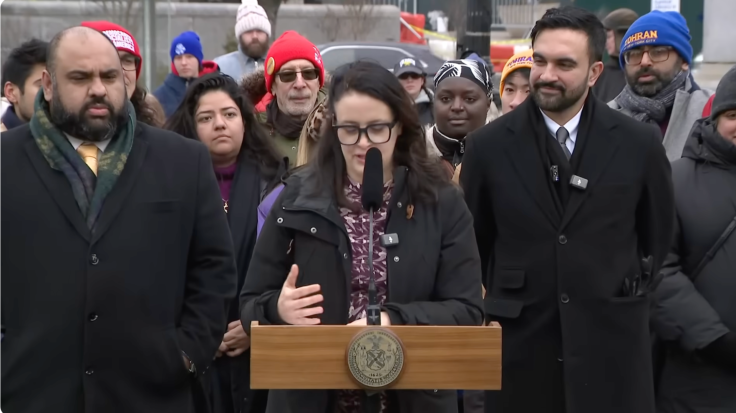
New York City Mayor Zohran Mamdani has established an Office of Mass Engagement, bringing the campaign apparatus that mobilised over 100,000 volunteers directly into City Hall through an executive order signed on 2 January.
The new office will be led by Tascha Van Auken, a Democratic Socialists of America organiser who orchestrated Mamdani's unprecedented field operation during his successful mayoral campaign. Van Auken's team knocked on more than 3 million doors across the city, mobilising what the mayor described as an 'army' of grassroots supporters.
Speaking at Grand Army Plaza in Brooklyn whilst surrounded by campaign volunteers, Mamdani said the office represents a fundamental shift in how city government will interact with residents. The new commissioner brings both organizing discipline and an unusual tolerance for chaos, having previously worked at the Blue Man Group.
Van Auken's appointment signals Mamdani's commitment to transforming campaign-style mobilisation into permanent governance structures, the mayor's press statement said.
'Clean Slate' Following Adams Indictment
The executive order creating the Office of Mass Engagement was accompanied by another directive that revoked all mayoral executive orders issued after 26 September 2024, the date former Mayor Eric Adams was indicted on federal corruption charges.
Mamdani described the move as providing his administration with a 'clean slate' to govern New York City. The revocations affected multiple Adams-era policies, including directives related to Israel and a measure adopting the International Holocaust Remembrance Alliance's working definition of antisemitism.
Israeli Consul General Ofir Akunis criticised the revocations on Friday, claiming they contradict Mamdani's pledge to govern inclusively and pose an immediate threat to Jewish communities.
However, Mamdani preserved Adams' Office to Combat Antisemitism and said his administration would combat hate through community engagement and what he termed 'a politics of universality', amNewYork Metro reported.
The mayor did not provide a direct answer when asked whether the Israel-related revocations were intentional, stating instead that new administrations must review all existing executive orders.
From Campaign Field Operation to Government Function
The Office of Mass Engagement will consolidate existing civic outreach functions scattered across multiple city departments, including the Public Engagement Unit, NYC Service, the Mayor's Office of Faith-Based and Community Partnerships, and the Civic Engagement Commission.
In his public address, Mamdani emphasised that the office's purpose extends beyond traditional community affairs. Working New Yorkers know what they need to thrive, he explained during the Friday announcement, framing public engagement as a core element of policy development rather than an afterthought.
Van Auken said the office will focus on three primary objectives: organising participation at scale, strengthening feedback loops to ensure public input shapes policy, and building the relationships and systems that make long-term co-governance possible.
The commissioner, who has spent more than a decade in progressive organising since President Obama's 2008 campaign, previously served as chief of staff to Assemblymember Phara Souffrant Forrest. She also led field operations for state Sen. Julia Salazar's campaign.
Measuring Success Through Policy Outcomes
Mamdani said the new office would not be judged by activity-based measures such as the number of meetings held or surveys distributed, but by whether public engagement leads to concrete policy outcomes. He added that residents should view themselves as active participants in governance rather than passive observers.
The mayor also rejected suggestions that the initiative was intended to support his re-election campaign, saying the administration was seeking to translate renewed public confidence in city government into tangible action. He said that belief in government would not be sustained without meaningful results.
When asked whether the office would mobilise volunteers to pressure state officials on Mamdani's legislative priorities, including higher taxes on wealthy New Yorkers, the mayor confirmed that his agenda would not be pursued solely through closed-door negotiations.
Initial staffing will draw from existing city employees working in engagement roles, with budget details to be released at a later date.
Judiciary Committee Recruitment Overhaul
In a parallel move, Mamdani appointed his election lawyer Ali Najmi to chair the Mayor's Advisory Committee on the Judiciary, tasked with expanding access to the judicial selection process.
Najmi, who has represented insurgent Democratic candidates for roughly 15 years, will lead efforts to recruit judges from public defenders, family court attorneys, and indigent legal services rather than relying solely on well-connected legal circles. The two first connected when Mamdani volunteered on Najmi's unsuccessful 2015 City Council campaign in eastern Queens.
An accompanying executive order directs the committee to increase transparency by releasing demographic data on judicial applicants and creating a searchable public database of upcoming appointments. Committee member terms were also extended from two to four years.
Najmi said candidates should be evaluated on the merits of their experience, qualifications, and commitment to public service. Too often, the ability for a New Yorker to become a judge has been determined by who they know, as opposed to the work that they do, Mamdani added.
The committee evaluates and appoints judges to the city's family and criminal courts, as well as interim judges for civil courts.
© Copyright IBTimes 2026. All rights reserved.