

Mass Shootings Expose Divide as Australia Moves to Act While US Offers 'Thoughts and Prayers'
Twin December attacks highlight sharply different political reactions to gun violence in Australia and the United States.

The 14 December 2025 twin mass shootings at Bondi Beach and Brown University revealed two starkly contrasting political responses: one legislative, one rhetorical.
On the same December weekend, Australia plunged rapidly into legislative reform after its deadliest attack in almost three decades, while the United States again faced calls for gun control amid presidential condolences and controversy over complacency-tinged remarks.
Swift Legislative Action After Bondi Beach Terrorist Attack
A father-and-son pair opened fire at a Jewish Hanukkah celebration at Bondi Beach on 14 December 202, killing 15 worshippers in what authorities described as a terrorist act inspired by Islamic State ideology.
The attack took place at approximately 18:47 local time after improvised explosive devices failed to detonate, and it ended when police shot one perpetrator dead and arrested the other.
Days later, Prime Minister Anthony Albanese issued a public apology to the Jewish community and pledged sweeping rule changes to tackle hate crime and extremism.
Authorities and lawmakers moved quickly. The New South Wales Parliament passed legislation that caps personal gun ownership at four firearms (ten for farmers) and mandates gun club membership for licence holders. They also ban public display of extremist symbols, with prison sentences for offenders, as well as grant wider police powers over protests after terrorist incidents.
Premier Chris Minns defended the laws as necessary emergency action after a massacre that had 'changed forever' the state's security outlook.
Australia enacted gun control laws in 1996 after 35 people were killed in a shooting. It only took ONE shooting for politicians to protect their citizens and implement gun control. They immediately saw a sharp decline in homicide and suicide rates via guns. This is the first mass… https://t.co/pJKRMjhOxR
— 𝓔𝓶 ♡ (@emkenobi) December 14, 2025
At federal level, the government announced Australia's largest gun buy-back since 1996, intended to reduce the availability of dangerous weapons and modernise existing restrictions.
Australia's political response has been collective and immediate. National cabinet leaders unanimously agreed to strengthen gun laws within days of the attack, demonstrating a coordinated multi-jurisdictional approach.
The changes build upon Australia's 1996 Port Arthur reforms, widely credited with reducing mass-shooting frequency, which removed hundreds of thousands of firearms from circulation.
A Different Response in the United States After Brown University Shooting
Just hours before the Bondi attack, a gunman opened fire inside Brown University's Barus and Holley building in Providence, Rhode Island, killing two students and injuring nine others during final examinations.
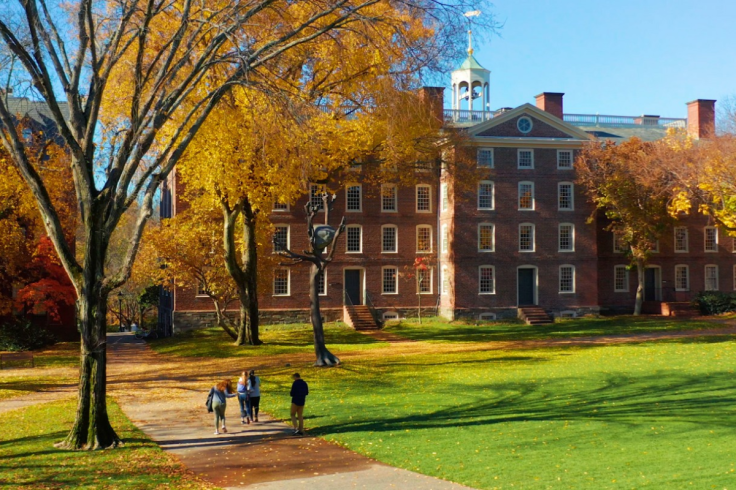
The suspect, a former student, was later linked to the murder of an MIT professor and found dead after a multi-day manhunt.
At a holiday event the following day, President Donald Trump paid tribute to victims, telling guests: 'Before we begin, I want to just pay my respects... two are looking down on us right now from heaven... things can happen.'
🚨 JUST IN
— Brian Allen (@allenanalysis) December 14, 2025
Trump on the Brown University shooting: “Things can happen.”
Families are shattered. Lives are permanently altered.
And that’s the response.
No empathy. No gravity.
Just emptiness where leadership should be. pic.twitter.com/Gea5aoj7IY
The phrase 'things can happen' spread widely online and became a symbol for critics of Washington's inertia on gun control.
Other officials demanded bolder action. Senator Elizabeth Warren said students should be able 'to learn in peace, not fear gun violence.'
However, the most substantive federal response was not a gun-law overhaul but an administrative review of campus safety and a decision to pause the Diversity Visa lottery because the suspect had once held such a visa.
As calls for reform grew, the United States again found itself divided between competing narratives: protecting constitutional gun rights or responding to mass-shooting violence as a public-safety crisis.
Data Reveal Ongoing American Crisis Versus Australia's Rare Mass Attacks
In Australia, mass shootings remain rare due to strict regulations imposed since the 1996 Port Arthur massacre.
By contrast, the United States continues to experience mass shootings at significantly higher rates. According to Gun Violence Archive data, there were 398 mass-shooting incidents in 2025, killing 390 people and wounding 1,778.
Despite the scale of violence, the US Congress did not enact new major federal gun-control legislation in 2025, while the Justice Department even created a dedicated office to protect Second Amendment rights as part of a shift in policy priorities.
The US has yet another school shooting and Trump says “things happen”.
— Kelly (@broadwaybabyto) December 15, 2025
He calls it a “situation”.
He gives “thoughts and prayers”.
Australia has a mass shooting and their Prime Minister immediately announces plans for stricter gun control.
That’s how it should be.
Statistical analysis underscores how deeply embedded mass shootings are in American life. One major university study suggested one in 15 US adults has witnessed a shooting firsthand, illustrating the breadth of the experience across communities.
Australian responses typically prioritise rapid bipartisan action in the wake of violence, rooted in a national tradition of consensus gun control.
In the US, policymaking on firearms is profoundly polarised, and research shows that even nearby mass shootings rarely alter lawmakers' voting behaviour on gun legislation.
Both tragedies exposed national precedents: Australia's reflex is to tighten rules; America's reflex is to argue over causes without altering the legal status of guns.
© Copyright IBTimes 2026. All rights reserved.