

Minister Promises AI Will Save You Money—After £12.7B NHS IT Disaster and Track & Trace Fiasco
New G7 agreement targets £400B growth from small business AI adoption, but 43% of SMEs have no plans to use the technology
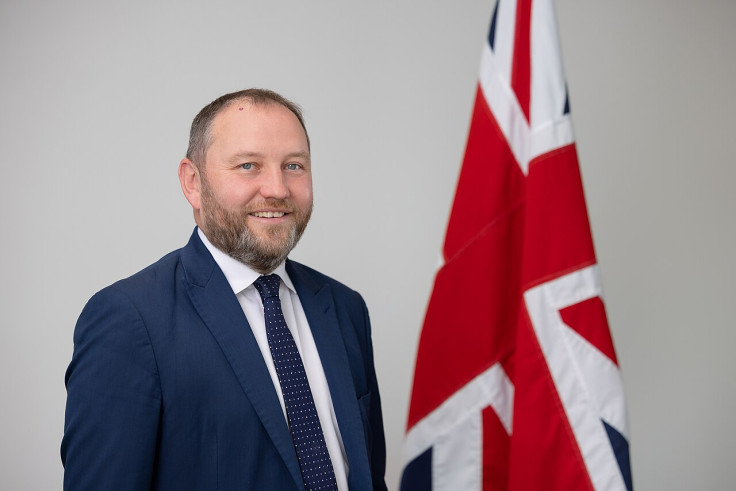
UK Technology Minister Ian Murray returned from Canada today with a bold promise: artificial intelligence will save taxpayers money. The £1.16 million deal with Canada, signed at the G7 summit in Montreal, aims to accelerate AI adoption among British businesses. Murray pledged that the partnership would 'cut costs for hardworking people.'
However, the government's track record on technology promises warrants scepticism: the NHS National Programme for IT collapsed after nine years. Parliament's spending watchdog described it as one of the worst contracting fiascos in history. Similarly, the COVID Track & Trace app was abandoned midway through development after months of delays. Both initiatives were heralded as cost-saving measures, yet both ultimately resulted in wasted taxpayer funds.
The Canada Commitment
So what exactly did Murray promise this time? The UK-Canada semiconductor research network, backed by £1.16 million, will bring together experts to develop faster, greener computer chips. The two nations will also share AI tools used in public services.
'The UK and Canada are working hand in hand to shape the future of technology,' Murray said. 'By sharing expertise, we'll create jobs and cut costs by bringing public services into the modern age.' This will involve public-private partnerships and new skills programmes.
Canada's AI Minister Evan Solomon called the partnership 'a huge win for both countries.' The deal builds on a Growth and Innovation Partnership agreed in June. Other G7 nations signed similar AI adoption agreements at the Montreal summit.
When Government Tech Failed
These promises sound familiar — because the government has made similar pledges before. In 2002, Tony Blair's government launched the NHS National Programme for IT, promising to revolutionise healthcare with digital patient records.
The bill? £12.7 billion. The real return? Just £2.6 billion, according to a case study by software analyst Henrico Dolfing. That equates to just 20 pence in benefits for every pound spent — before the Coalition scrapped the project in 2011. The Public Accounts Committee condemned it as 'one of the worst and most expensive contracting fiascos in public sector history.'
What went wrong? Rushed timelines, no consultation with healthcare professionals, an overambitious centralised design, and a failure to deliver functional systems, Dolfing's analysis found. Billions were burned on systems that were never fully deployed. Less than a decade later, the government repeated similar mistakes with COVID-19 contact tracing.
In May 2020, Westminster launched its Test and Trace programme, with plans for a contact tracing app. The project eventually cost £36 million — including £11 million wasted on a centralised version that never worked, according to academic studies. By June, the government abandoned that version after it failed to function on iPhones, then spent months developing a replacement.
MIT Technology Review called it 'a master class in mismanagement'. In October 2020, an Excel error led to the omission of over 15,000 COVID cases. Thousands of exposed individuals were never traced.
The SME Reality Check
This time, ministers insist it will be different. The G7 agreement commits the UK to ramping up AI adoption among small and medium-sized enterprises (SMEs). Yet, many SMEs face significant barriers — barriers acknowledged by the government itself.
According to the Institute of Directors, 51% of business leaders lack AI expertise. Half of them do not trust AI outcomes at all. Furthermore, 43% of SMEs have no plans to adopt AI, according to the British Chambers of Commerce. The government's own Skills England report states that £400 billion in growth depends on businesses adopting AI.
Jarmila Yu, founder of YUnique Marketing, warned: 'AI presents significant challenges, especially for SMEs who are resource-light, time-poor, and budget-constrained.' In simpler terms, most small businesses do not understand AI, nor can they afford to learn it. This makes the government's goal of widespread AI adoption seem unrealistic at best.
The Reality Test
The question is not whether AI can boost productivity — it clearly can. The real issue is whether the UK government can overcome its own history of failed IT projects and persuade cash-strapped small businesses to invest in unfamiliar technology.
The G7 agreement commits the UK to 'accelerating public-private partnerships' and 'investing in skills programmes.' Yet, the NHS spent nine years and more than £10 billion trying to digitise patient records before the programme was dismantled in 2011. Similarly, the COVID-19 contact tracing app was developed and abandoned in 2020 after technical failures. Now, ministers are promising that this time, with AI, it will be different.
However, small businesses remain unconvinced. Until the government can demonstrate an understanding of how to deploy technology without wasting billions, its £400 billion AI ambitions appear more wishful thinking than a credible plan.
© Copyright IBTimes 2026. All rights reserved.