Minnesota School Adds ICE 'Harassed' Migrants Slide to Year 8 Curriculum — Education Watchdog Says It's 'Biased'
Hermantown Middle School's anti‑ICE slides for eighth graders draw pushback over political content in geography class.
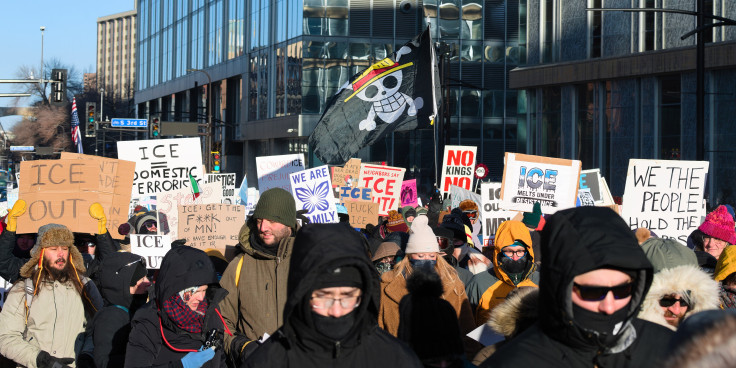
Hermantown Middle School in northern Minnesota is facing criticism after Year 8 geography pupils were shown anti-ICE phrases.
In the slide, it was written that the US Immigration and Customs Enforcement (ICE) has 'harassed' migrants and legal residents. Students were also offered extra credit for watching a video critical of immigration enforcement policies.
Opponents, including an education advocacy group, say the lesson was politically one‑sided and unsuitable for middle school students.
However, school officials push back and say the materials were aligned with state standards. According to them, it encourages discussion of how different governments and power structures affect places and people, not activism.
What Pupils Were Taught in Minnesota
In the lesson, FOX News shared that pupils were shown a series of PowerPoint slides that depicted ICE as behaving aggressively towards migrants. Besides 'harassing migrants,' the presentation showed that they were using 'tricky & violent tactics.'
One slide reportedly suggested agents might wear masks to hide their identity and offered examples of people being 'dragged, tackled, beaten, tased, and shot.' The video in question for the extra credit is a 19‑minute video titled 'ICE and Trump's $170 billion deportation machine.'
Critics say this went beyond explaining immigration policy and veered into delivering a partisan view.
Defending Education, a nonprofit that advocates for parents and students, called the lesson 'biased.' They complained that it presented a politically loaded narrative instead of helping pupils think critically about a complex topic.
The group's president said pupils were being 'told what to think, rather than how to think. Some suggested such content could push families away from public schooling.
Supporters of the curriculum maintain that discussing ICE's actions and immigration policy can be part of teaching how power and policy influence places, a legitimate component of a geography class under state academic standards.
They emphasise that the question of how national policy affects communities is relevant to understanding real‑world geographic and societal issues.
How The District Frames Its Curriculum
Hermantown Community Schools says its K‑12 plan for 2024‑2027 is designed to teach students about different viewpoints and the experiences of all members of the community.
The district wants lessons to be antiracist and culturally sustaining. This can include teaching about immigration and law enforcement in a way that is suitable for students' age.
In this context, 'antiracist' means working to remove racism from school policies and practices. Meanwhile, 'culturally sustaining' means including stories, languages, and history from groups who have often been left out of education.
Supporters say this helps students see how lessons relate to real-life society.
Not all people think the same. Some critics worry that using strong political language, like saying ICE 'harasses' people, without showing both sides can feel more like activism than teaching, which may be confusing for students who are still learning how to think critically.
What Parents Are Saying: Is it Legal?
Some parents have voiced concern that a middle school geography class, intended to teach about places and regions, should avoid presenting controversial political narratives as fact.
They want lessons that help pupils understand how immigration and enforcement policies work rather than materials that could feel like a complaint or protest.
School officials have not provided detailed examples of how the lesson was taught or whether alternative viewpoints were discussed. But maintain the content met state requirements and was intended to help pupils understand how national policies shape the world around them.
It's worth noting that schools in the US generally have wide leeway to teach about social, political, and historical issues, including immigration and law enforcement, as long as they follow curriculum standards. What matters legally is that the material doesn't break state education rules, indoctrinate students in a coercive way, or discriminate against anyone.
© Copyright IBTimes 2026. All rights reserved.
- MOST POPULAR IN World