'No Dip Buyers' as Bitcoin Slumps Below $87k
Analysts forecast Bitcoin dropping as low as $80,000 amid ongoing market volatility

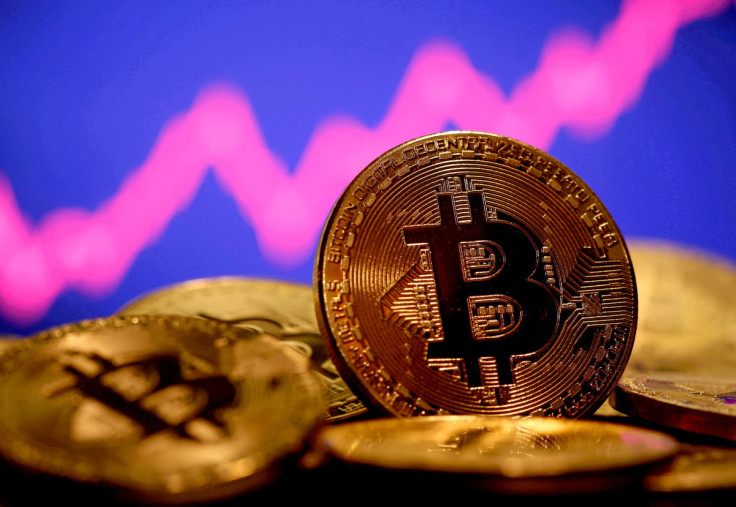
Bitcoin prices tanked over 5% in the past 24 hours, trading around $86,261 (£65,252) during Monday premarket hours. The months-long selloff appears to have gained momentum, with traders increasingly concerned about further declines.
Top cryptocurrencies also declined today, led by Dogecoin, XRP, Cardano, and Solana. Last week, easing selling pressure allowed Bitcoin to recover slightly, climbing above $90,000 (£68,080). However, today's sharp fall has traders bracing for larger liquidations.
Lack of Dip Buying and Structural Roadblocks
Sean McNulty, head of APAC derivatives trading at FalconX, highlights that meager inflows into Bitcoin ETFs and the absence of BTC dip buyers suggest persistent structural roadblocks. He added, 'It's a risk-off start to December... We are watching $80,000 on Bitcoin as the next key support level.'
The absence of dip buyers — normally a stabilising force — is what stands out to market veterans. In typical downturns, confident investors step in when prices retreat, creating a cushion that slows declines. This time, that layer has vanished.
Exchange inflows have jumped roughly 20 percent as smaller holders send coins to sell, while ETF inflows have collapsed to around $50 million a day — a 90 percent drop from mid-year levels.
Whale accumulation, usually a sign of long-term confidence, has also stalled. Retail traders, who account for about 40 percent of recent Bitcoin purchases, are facing margin calls, and social media forums are filled with posts from UK traders reporting £10,000 to £15,000 losses on leveraged bets.
Analytics firm Santiment notes that, unlike past dips, when online hype and heavy volumes signalled opportunistic buying, sentiment today is dominated by fear and hesitation.
This significant decline may have disrupted typical investor behaviour, where falling prices often attract buying interest. With analysts predicting a further drop to around $80,000 (£60,516), many investors are opting to stay on the sidelines, awaiting clearer market signals.
The massive losses could have altered the typical pattern of crypto investors buying more BTC and other cryptocurrencies when prices fall. With analysts forecasting prices to drop further to $80,000 (£60,516), many investors are likely staying away from the markets for now, hoping headwinds will ease in the near term.
Corporate Holdings and Potential Sell-offs
Meanwhile, Strategy CEO Phong Le raised concerns about the possibility of large-scale sell-offs. During a recent podcast, he stated that the company could sell its Bitcoin holdings if the market net asset value (mNAV)—the ratio of enterprise value to BTC holdings—turns negative.
'We can sell Bitcoin, and we would sell Bitcoin if we needed to fund our dividend payments below 1x mNAV,' Le said. He added this would be a last resort. Currently, Strategy's website reports its mNAV has fallen to 1.19, reflecting increased pressure on its holdings.
Rising Regulatory Pressure on Crypto in Asia
In Asia, cryptocurrency markets were hit hard, attributable to toxic regulatory stress and looming macroeconomic headwinds.
While China advanced its crackdown on stablecoin, the sell-off in Asian markets was fueled by growing expectations for a Bank of Japan interest rate hike.
The People's Bank of China reaffirmed this week that virtual currencies, including stablecoins, will remain illegal. The institution explained that its stance is based on increasing risks linked to anonymous fund flows and fraud. Additionally, the bank's move to enforce stricter regulations and enhance inter-agency coordination added more uncertainty to already volatile crypto markets.
Elsewhere, interest rate expectations in Japan have shifted significantly, which could further weigh on investor sentiment.
Swaps now price over a 70% chance of a 25 basis-point hike from the BOJ this month, up from 57% last week, after BOJ governor Kazuo Ueda highlighted a strong case for normalization. Meanwhile, higher yen funding costs could pressure carry trades, and risk assets are already feeling the impact, with US equity futures down in Asia.
USDT Stability Under Threat
Last week, S&P Global Ratings downgraded its assessment of USDT's stability to its lowest rating, warning that declining Bitcoin values could leave the stablecoin undercollateralised. These concerns come amid ongoing market turbulence and uncertainties surrounding the broader crypto ecosystem.
Meanwhile, US economic data scheduled for release this week will provide insights into the country's economic momentum and influence expectations for interest rate movements heading into 2026. US President Donald Trump recently said he had already decided on his pick for the next Federal Reserve chair, after stating that he expects his nominee to deliver rate cuts.
Disclaimer: Our digital media content is for informational purposes only and not investment advice. Please conduct your own analysis or seek professional advice before investing. Remember, investments are subject to market risks and past performance doesn't indicate future returns.
© Copyright IBTimes 2026. All rights reserved.
- MOST POPULAR IN Invest