

Fields Medallist Says OpenAI's 700 AI-Generated Maths Papers Have 'Annihilated' His Research Field
Hugo Duminil-Copin says the technology could undermine research careers, while academics debate its impact and OpenAI funds efforts to verify the work
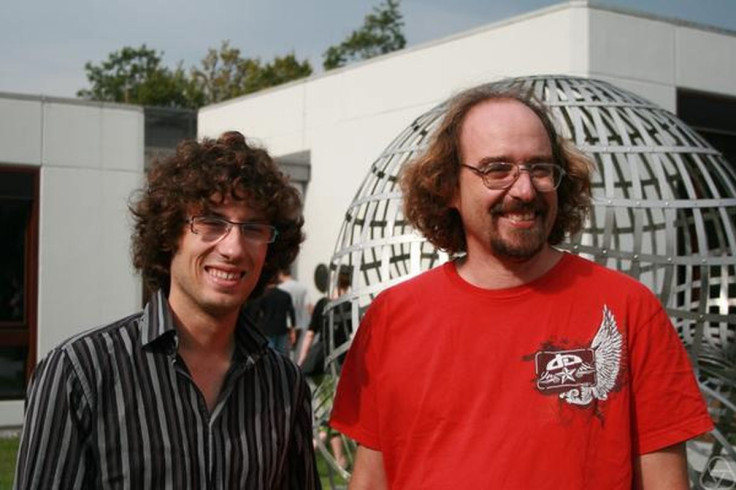
Hugo Duminil-Copin, the mathematician who won the Fields Medal in 2022, says OpenAI's release of more than 700 AI-generated research papers has 'annihilated' his field. Duminil-Copin received mathematics' highest honour for his work on the probabilistic theory of phase transitions in statistical physics.
He said he cried on Tuesday night, waking his daughter, after OpenAI used an unreleased proprietary model to publish claimed solutions to hundreds of mathematical problems. In a single release, the company published 377 claimed mathematical results, including solutions to 16 questions Duminil-Copin had spent years trying to solve.
'They Wanted to Prove They Could Massacre Us'
Duminil-Copin said he believed OpenAI wanted to demonstrate that it could 'massacre' mathematicians. In an essay published on 30 August, before the release, he wrote that AI proofs 'nuke the mathematical landscape', making it 'increasingly difficult to inhabit after each blast'. He has also acknowledged AI's mathematical capabilities.
For researchers, open problems can shape years of study and provide direction for doctoral work, post-doctoral projects and grant applications. Academic observers said Duminil-Copin's experience illustrated the human cost when the questions that motivate people are suddenly resolved.
Association Urges Boycott Over Mass Publication
The Association for Human Mathematics called for a boycott of OpenAI, describing the release as 'not a demonstration of scholarship, but a demonstration of power'. It said mathematicians had not requested work on this scale.
Twenty-five Fields Medallists had previously signed an open letter warning that mass-producing solutions bypasses the years of human deliberation that yield fundamental theories, methods and insights for entire fields.
They said the pace left the mathematical community little time to digest the underlying concepts, connect new proofs to existing knowledge or credit earlier human contributions.
Academics Warn of Threat to Young Scholars
Some academics warned that automating major discoveries could remove a central intellectual motivation for young scholars entering research. They said this could damage research careers and shrink the human community's ability to understand mathematics.
Academic leaders also warned that the release had harmed junior researchers whose doctoral dissertations, post-doctoral projects or grant applications were built around the open problems. Fields Medallist Timothy Gowers declined to sign the open letter. He said a flood of new results was not inherently disastrous if it expanded knowledge.
His main concern was that automating discoveries could undermine the talent pipeline. The prospect of solving open problems attracts young people to research, and removing that incentive could threaten the future of the field.
OpenAI Retracts Papers and Pledges Funding
The volume of work created an unprecedented verification burden. OpenAI retracted three papers because of errors, although the company maintains that mistakes are rare.
It has pledged financial support for verification programmes, including academic conferences and study programmes lasting days or months. Software known as Lean has already been used to verify several proofs formally.
Lean is a computer-based system that checks mathematical proofs against formal logical rules. Researchers have used it to independently verify some of OpenAI's AI-generated proofs and assess their mathematical accuracy.
OpenAI has also consulted an independent advisory group of leading academics to address the disruption. Its members include Fields Medallists Gowers and Martin Hairer, alongside physicist Edward Witten.
© Copyright IBTimes 2026. All rights reserved.