'Most Published Science Is Fake,' Says Michael Burry After Accusing OpenAI of Hyping AI Fears
Michael Burry explains why it could be 'self-serving' for AI companies to talk about pacing the progress of AI

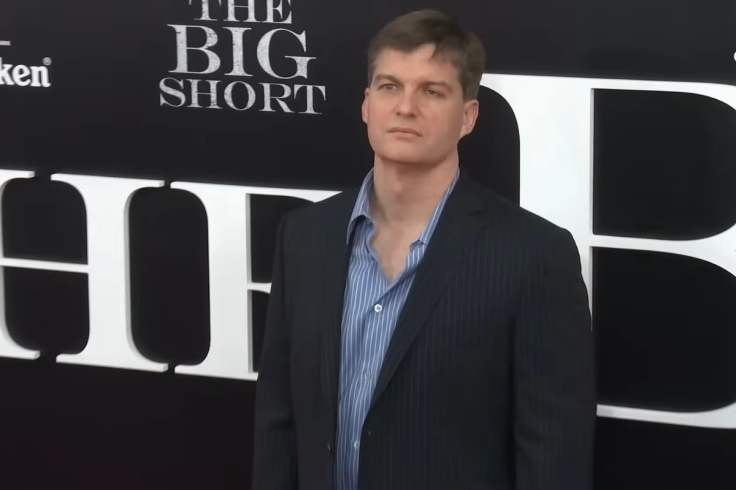
The Big Short investor Michael Burry stated in a late Monday X post that most published science is fake or false, citing a research essay from reportedly one of the most cited authors, John P. A. Ioannidis.
In the 2005 essay titled 'Why Most Published Research Findings are False,' the author had mentioned that a research finding is less likely to be true when study sample sizes and effect sizes in a scientific field are smaller.
The essay's framework also assumes that the probability of research findings is false when there is a greater number and lesser preselection of tested relationships, greater flexibility in designs, outcomes, or definitions, when there is higher financial and other interest and prejudice, as well as when more teams are involved in a scientific field in chase of statistical significance.
Overall, the essay has been cited 9,774 times and viewed by over 3.4 million people.
Regarding “the science,”this is something you all need to know.
— Cassandra Unchained (@michaeljburry) September 14, 2026
Most published science is fake or false
This is out of Stanford University and the author here John P. A. Ioannidis is one of the most-cited individuals on Earth. pic.twitter.com/jWKC8YBuHP
Burry's explosive X post comes a day after he claimed that major AI companies, led by OpenAI and Anthropic, are hyping fears related to AI to protect their businesses as growth slows and highly-anticipated IPO plans face delays.
OpenAI CEO Sam Altman and Anthropic CEO Dario Amodei recently concurred that AI companies must pace the rapid development of frontier AI models, while urging the need for independent evaluators for robust guardrails.
Altman had specifically mentioned two ways AI could go 'very badly' for humans in a separate X post: one is that we could lose control of the future to AI, and the other way is to end up in a world with too much concentration of power.
There are two ways AI progress could go very badly and that we must avoid.
— Sam Altman (@sama) September 14, 2026
First, we could lose control of the future to AI. This is unacceptable; we are unapologetically on Team Humanity, and AI must always serve people. To ensure that, we need ways to ensure that alignment and… https://t.co/GK7XcoOh3v
Even Elon Musk concurred with the views of Altman and Amodei. These new statements come after multiple OpenAI and Anthropic employees resigned from their respective companies over fears of AI taking over the future of humanity.
However, Burry, who has repeatedly warned about what he sees as excessive valuations and speculative behaviour surrounding AI stocks, claimed that it is 'self-serving' for OpenAI, Anthropic, and other big hyperscalers to talk about slowing the supposedly rapid progress of AI.
He bluntly said that large language models are not AI and won't be artificial general intelligence, so there is nothing meaningful left for AI leaders to slow down.
Burry added that competition is rising fast, and pacing benefits generally prove to be favourable for incumbents, while warnings of danger serve as hype ahead of IPOs. In all, the call to pace AI amid a global race could mask growth that is already slowing as IPOs get pushed back.
Altman reportedly said last week that OpenAI's highly-anticipated IPO has been postponed to 2027 from 2026 earlier.
Barack Obama Disagrees With Burry
Former US President Barack Obama stated in a late Monday X post that he was encouraged to see AI leaders agree on the need to slow down the pace of AI development, considering the high stakes.
I was encouraged this week to see the leaders of the frontier labs agree on the need for them to slow down the pace of AI development. Given the stakes, it’s a good and necessary first step.
— Barack Obama (@BarackObama) September 14, 2026
But I’m even more encouraged by the growing recognition that how this powerful new…
He claimed to have closely watched AI progress over a decade and that the potential impact of this technology is not overhyped. 'It's also moving at lightning speed – and even faster than those who are engineering it can keep up with,' he wrote.
Obama added that he is not an AI accelerationist who believes it will lead to some techno-utopia, or a doomer who thinks it will inevitably lead to humanity's destruction.
However, Burry had continued to warn about an AI bubble and how some major technology companies may be understating depreciation by using longer useful-life assumptions for computing equipment, arguing that this could make balance sheets appear stronger than they actually are.
He had even warned earlier that leading companies like Nvidia and Elon Musk's xAI are leveraging GPU-backed securities deal structures to secure funding to power their growing AI data centres, while potentially exposing the retirement funds of Americans to higher market risks.
© Copyright IBTimes 2026. All rights reserved.
- Recommended For You