

Protesters Share Concerns After ICE Agents Were Caught Infiltrating Anti-ICE Protests in Minnesota
Federal agents appear embedded in protest crowds, sparking concerns over infiltration tactics
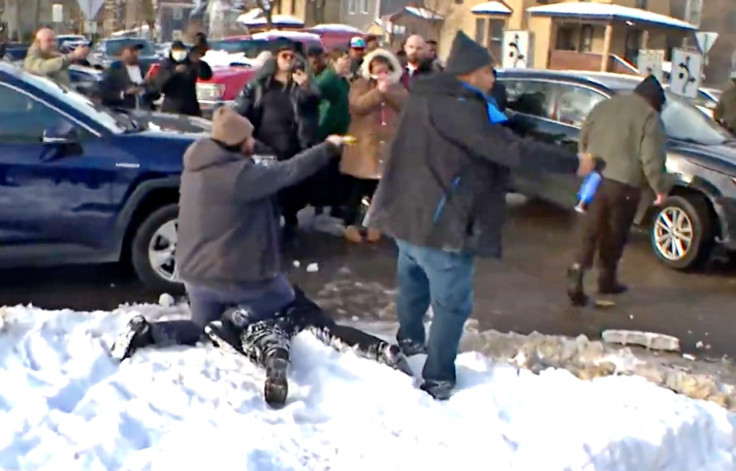
Several videos circulating online appear to show federal agents mixed in with protest crowds during demonstrations against Immigration and Customs Enforcement (ICE) operations in Minneapolis. Footage shared on social platforms shows a man being pulled from a crowd into an unmarked white van, while another person in the group seems to be defending him, prompting speculation that undercover federal officers are blending into the protests.
In Minneapolis, thousands of federal agents have been deployed in what has been described as one of the largest immigration enforcement operations ever, following the fatal shooting of Renee Nicole Good by an ICE agent. A federal judge has ruled that ICE and related agents must curb violent tactics against peaceful protesters and ban the use of pepper spray and arrests when demonstrators pose no threat after constitutional rights complaints were filed.
Undercover Agents in Protest Crowds
Online discussions, particularly on Reddit, have treated specific footage as evidence that federal agents may be operating in plain clothes among protesters. One widely shared thread suggested that a person pulled into a white van was not a protester but an undercover operative, noting that another individual who shouted 'he's one of us' seemed unusually ready to defend the man.
Commenters pointed to several details to support this interpretation. One observer said the man defending the extracted individual appeared suddenly from a distance shortly before federal personnel arrived, suggesting he was not part of the original crowd.
Another noted the defender stood calmly rather than reacting to the arrival of a van full of armed figures, which some saw as unexpected behaviour for an ordinary protester. One user suggested it was not surprising to assume federal agents might pose as civilians at protests, claiming 'ICE is impersonating all kinds of people and armed forces'. Others in the thread discussed whether these individuals were actually sheriff's deputies or other local law enforcement, complicating the question of who was present and why.
It is important to note that no official confirmation exists from the Department of Homeland Security or Immigration and Customs Enforcement acknowledging that agents are embedded in protests dressed as civilians or acting undercover among demonstrators. Government agencies typically state that federal officers wear identification and that unmarked vehicles or plain clothes are used only in specific operations such as protective details or evidence gathering. Commenters in the thread also criticised the use of masked federal agents, saying anonymity can undermine accountability and inhibit civil rights protections during protests.
Why ICE Agents Are Going Undercover in Protests
A commenter from Minnesota suggested that ICE's presence at protests is intended to provoke confrontations with demonstrators so authorities can justify stronger responses. Such views echo wider conspiracy theories about 'agents provocateurs', although they remain unsubstantiated by verified evidence. Other users expressed fear or anger at what they described as federal overreach, pointing to past incidents in which Department of Homeland Security or Customs and Border Protection officers allegedly detained or moved protesters into unmarked vehicles without clear identification.
Are ICE Agents Allowed to Go Undercover in Protests?
Federal agents, including those from Immigration and Customs Enforcement, are legally permitted to operate undercover in the United States, including blending into crowds, but there are strict limits. They may observe and gather evidence if they reasonably suspect someone is committing a federal offence or violating immigration law.
Wearing plain clothes or using unmarked vehicles is not inherently illegal, provided officers identify themselves when making arrests and comply with constitutional requirements. However, if officers arrest people without probable cause — especially peaceful demonstrators or bystanders — that could violate constitutional protections, such as the Fourth Amendment against unlawful searches and seizures and the First Amendment rights to freedom of speech and assembly.
© Copyright IBTimes 2026. All rights reserved.