

US Citizen Detained by ICE Border Patrol Over Their Accent in Shocking Exchange
Border enforcement in Minnesota faces renewed scrutiny after video shows agent detaining a US citizen over his accent

In a tense roadside encounter captured on video, a US citizen was detained by Border Patrol agents who cited his accent as the basis for questioning his citizenship. The man was confronted near his home by federal agents before they confirmed his citizenship and released him in the Minneapolis suburb where the incident occurred. The episode has prompted renewed national scrutiny of immigration enforcement tactics and the use of subjective indicators, such as accent and language, in assessing citizenship status.
Border Patrol Encounter Sparks Outrage
A viral video posted on social media this week shows Border Patrol agents stopping a man outside his residence in a Minneapolis-area suburb and demanding to see his identification. The footage opens with at least one agent repeatedly pressing the individual for documents and questioning his place of birth. A transcript attached to one version of the video reflects the agent saying they had 'reason to believe' the man was not a US citizen because of his accent.
The man's citizenship was later verified by agents, who found records indicating he held a valid US passport card and had been recognised as a citizen since 2019. Law enforcement officials have not publicly identified the individual beyond footage released online, but the incident's immediate dissemination has prompted civil liberties advocates and lawmakers to demand clarity on Border Patrol procedures for questioning and detaining those deemed suspicious.
Accent, Profiling and Enforcement Protocols
Immigration enforcement agencies, including the US Customs and Border Protection (CBP) and Immigration and Customs Enforcement (ICE), are authorised to detain individuals within the United States when they have reasonable suspicion that a person is unlawfully present. However, federal guidelines require that any investigative stop be based on specific and articulable facts, not solely on race, ethnicity, or language.

Critics of the recent detainment argue that using factors like accent in the absence of other evidence can veer into unlawful profiling. Civil rights groups have documented a long history of similar encounters, especially involving persons of Latino or other ethnic backgrounds, where language or perceived nationality contributed to immigration checks.
Historic court precedent also cautions against overbroad reliance on national origin or linguistic cues. In United States v. Brignoni-Ponce (1975), the US Supreme Court held that apparent ethnicity cannot alone justify a stop; speaking English with an accent can be considered among multiple legitimate factors, but it cannot serve as the sole basis for reasonable suspicion.
Immigration advocates also note systemic issues with data and verification processes. For instance, ICE databases have previously misidentified US citizens as non-citizens, leading to wrongful detentions, and officers are not always required to correct records when later confirming citizenship. Notably, Border Patrol and ICE personnel should be required to update immigration records to reflect citizenship confirmations, to prevent individuals from being repeatedly questioned or detained due to database errors.
Community Response and Broader Enforcement Context
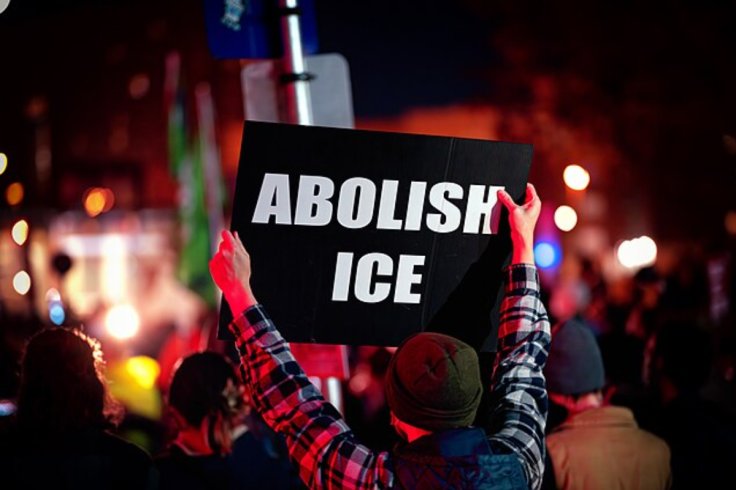
The accent-based detainment comes amid a broader and controversial federal enforcement operation in Minnesota known as Operation Metro Surge, involving thousands of immigration agents deployed across the state. This operation grew out of efforts to arrest individuals suspected of immigration violations, but it has also been marked by several high-profile confrontations with residents who are legal citizens. In recent weeks, videos emerged of two US citizens being forcibly detained by ICE inside a Minnesota Target store, prompting protests and claims of unconstitutional conduct.
Federal agents forcibly detained 2 Latino Target workers in Minneapolis who claimed they were US citizens. After confirming their IDs, they were dumped at a WalMart miles away. 1 is only 17 yrs old. This is not law enforcement, it’s civil rights harassment based solely on race. pic.twitter.com/thohZKadOU
— La Prensa San Diego - LaPrensa.org (@LaPrensaSD) January 12, 2026
In one related incident, a US citizen in Minneapolis was filmed being dragged from her car by ICE officers. Authorities labelled her behaviour as obstructing operations, though her attorneys contest that characterisation and allege excessive force was used.
ICE agents violently assaulted and restrained a woman in Minneapolis, gouged her face, and threw her into an unmarked car while witnesses shouted, “She’s a U.S. citizen!”https://t.co/XYDKqFTR1B
— WarMonitor (@TheWarMonitor) January 10, 2026
Minnesota officials have taken legal action against federal authorities for alleged warrantless detentions and civil rights violations during enforcement operations, asserting that agents have overstepped legal authority. Court filing documents related to such actions accuse the Department of Homeland Security of conducting detentions that lacked reasonable suspicion or probable cause.
Federal authorities, for their part, have defended enforcement efforts as necessary to tackle immigration violations, emphasising the challenging conditions under which agents operate. In the wake of this incident, the debate over how federal agencies balance security and individual rights shows no sign of abating.
© Copyright IBTimes 2026. All rights reserved.