

Quick Facts About Bob Weir's Wife, Natascha Münter: Private Life With Rock Icon, Motherhood, Family and More
Who is Natascha Münter? Learn about Bob Weir's wife, their 26-year marriage, two daughters, and her work supporting social causes and family.

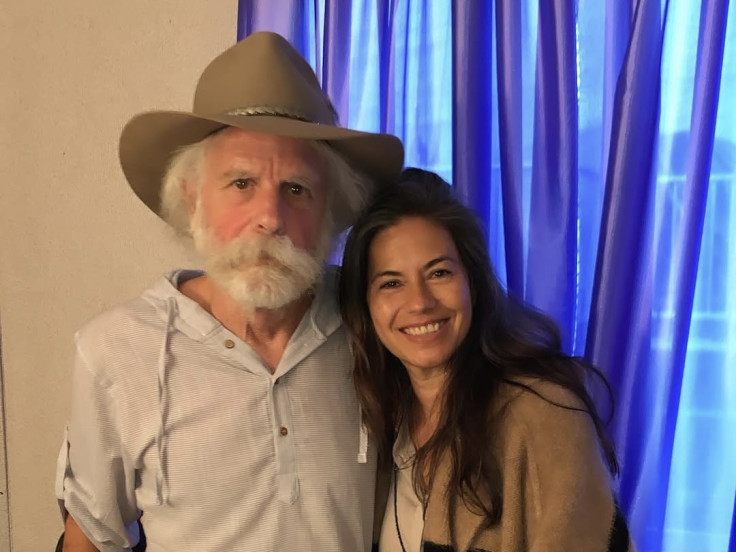
When Bob Weir took the stage at Golden Gate Park last summer, few in the crowd realised it would be his final performance. The Grateful Dead founding member, who had just begun undergoing cancer treatment weeks earlier, was too focused on the music to dwell on mortality.
Yet backstage, supporting him through the gruelling three-night run, was Natascha Münter—the woman who had stood by his side for 26 years of marriage, raising two daughters and building a life far removed from the glare of rock and roll stardom.
On Saturday, 10 January, Weir passed away peacefully at the age of 78, surrounded by loved ones, after succumbing to underlying lung issues that followed his summer cancer diagnosis.
In the immediate aftermath of his death, as tributes flooded social media from fellow musicians and devoted fans worldwide, Münter and their daughters, Shala Monet and Chloe Kaelia, requested privacy during this devastating time.
Yet their request for solitude only underscores a crucial truth: while Weir's legacy as the rhythm guitarist who helped define six decades of American rock music will endure indefinitely, it was Münter who provided the emotional anchor that allowed him to continue creating until his final days.
The Private Life Of Natascha Münter: The Woman Who Grounded A Rock Icon
Remarkably little is publicly known about Münter, a fact that speaks volumes about her deliberate choice to remain largely out of the spotlight. The couple met in circumstances that seem almost scripted by Hollywood: Münter was just 15 years old when she attended her first Grateful Dead concert.
Years later, after several years of dating, they married on 15 July 1999 in Mill Valley, California—a community nestled in the Marin County hills where Weir would eventually establish his family's primary residence. The couple's 20-year age gap never seemed to trouble them, a testament to the genuine connection they shared.
What emerges from available accounts is a portrait of a woman deeply committed to advocacy and wellness. Münter maintained an active presence on social media, using her platform to champion causes ranging from women's reproductive rights to LGBTQ+ equality—causes that clearly aligned with Weir's own progressive values.
Her commitment to health and wellbeing was deeply personal: her mother worked as a hypertension nurse at the prestigious Mayo Clinic in Rochester, whilst her father was a neurologist who co-founded the Department of Neurology at the Mayo Clinic's Phoenix branch.
These professional credentials suggest Münter grew up in an environment that valued both scientific rigour and compassionate care, values she appeared to bring into her own life.
The Weirs' family life was far from conventional. Their first daughter, Shala Monet, was born in 1997 and was barely 18 months old when her parents married—she was present at the ceremony itself.
Later, they welcomed Chloe Kaelia, whose artistic talents would eventually shine through her work as a photographer. Chloe received her first camera, a Polaroid, at just seven years old and carried it with her on her father's tours, documenting the world of live performance from childhood.
This early exposure blossomed into a sophisticated photographic practice; she would go on to document performances by Dead & Company, alongside high-profile artists including Willie Nelson, Billy Strings, and Susan Tedeschi.
Natascha Münter's Legacy: Motherhood, Activism, And Supporting A Musical Institution
By all accounts, Münter created space for her daughters to flourish artistically whilst maintaining her own commitment to social and environmental causes. Shala Monet pursued acting, appearing in films including Bully High and Everything Is Melting, whilst studying at Chapman University.
The family's dynamic suggests a household that valued creative expression, intellectual engagement, and spiritual growth—values consistent with the countercultural ethos that had defined the Grateful Dead itself.
Yet perhaps Münter's greatest gift was knowing when to remain visible and when to fade into the background. Even as Weir's final tour approached, even as he began his cancer treatment, she provided the stability and support that allowed him to return to the stage.
The family statement released on Saturday captures this elegantly: 'His loving family, Natascha, Monet, and Chloe, request privacy during this difficult time and offer their gratitude for the outpouring of love, support, and remembrance.'
In those measured words lies an entire narrative of quiet strength—a woman who had chosen to build her life not through the pursuit of fame, but through the depth of her commitment to family.
Weir's death leaves Münter and their daughters as custodians of his musical and personal legacy. For 26 years, she was the counterbalance to a life spent perpetually on the road, the steady presence that made homecoming meaningful.
As the world mourns the passing of a rock icon, it is worth pausing to acknowledge the woman who stood quietly beside him, making it all possible.
© Copyright IBTimes 2026. All rights reserved.