

Royal Navy Warship Sent to Defend Ireland's EU Meeting From Air Attack but Must Stay 22km Offshore
Britain is deploying a Royal Navy warship to support air defence during an EU defence ministers' meeting in Ireland
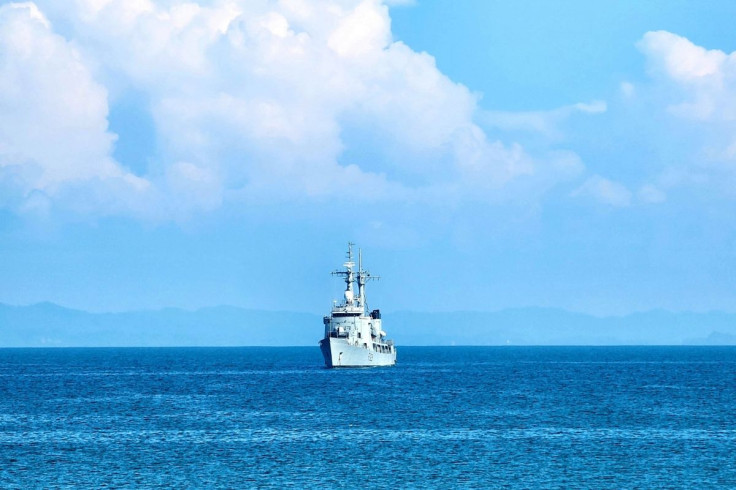
A Royal Navy warship is being deployed to provide air-defence protection for Ireland during a major European Union security meeting, but an unusual constitutional restriction means the British vessel must remain outside Irish territorial waters.
The warship is expected to operate in the Irish Sea during the 31 August and 1 September 2026 meeting of EU defence ministers in County Wicklow, where officials will discuss European security, support for Ukraine and wider defence priorities.
Ireland has requested assistance from both Britain and France as it hosts events during its six-month presidency of the Council of the European Union. However, legal restrictions mean the foreign warships cannot enter Ireland's territorial waters while carrying out their air-defence duties.
The arrangement highlights the unusual balance Ireland is attempting to maintain between its longstanding military neutrality and growing security challenges across Europe.
British Warship Must Remain Offshore
The Royal Navy vessel will reportedly remain approximately 22 kilometres offshore, outside Ireland's territorial waters, while providing air-defence cover for the Wicklow meeting.
Despite the restriction, its position allows it to contribute to the protection of the event without formally entering Irish waters.
The deployment is particularly notable because Ireland does not operate the same level of naval air-defence capability available to larger European militaries.
British and French assistance was requested specifically to strengthen security during Ireland's EU presidency, with the Wicklow meeting bringing together senior European defence officials.
Why Ireland Needs Foreign Defence Support
Ireland's decision to seek assistance from Britain is significant because of its historical relationship with the UK and its policy of military neutrality.
However, Ireland's security environment has changed considerably in recent years. European governments have become increasingly concerned about threats to critical infrastructure, maritime routes and airspace, particularly amid heightened tensions with Russia.
The UK and Ireland have also strengthened defence cooperation. In March, the two governments agreed to update their defence cooperation framework, including cooperation against threats to undersea cables and other critical infrastructure.
That growing cooperation provides important context for the latest naval deployment.
EU Ministers to Discuss Ukraine and Security
The Royal Navy operation coincides with an important European security gathering.
The informal meeting of EU defence ministers in Wicklow will take place on 31 August and 1 September, hosted by Irish Defence Minister Helen McEntee in cooperation with EU foreign policy chief Kaja Kallas.
The agenda includes discussions on EU support for Ukraine, space security and defence, Lebanon and maritime security.
The meeting is taking place against a backdrop of continuing war in Ukraine and growing European concern about the continent's ability to protect its infrastructure and territory.
A Symbolic Change in UK-Ireland Defence Relations
The Royal Navy's involvement carries significance beyond the immediate security operation.
For decades, Ireland's neutrality has limited its participation in military alliances, while Britain remains one of Europe's major military powers.
Yet the decision to request British air-defence assistance demonstrates how security pressures can create practical cooperation despite political and constitutional boundaries.
The fact that the warship must remain outside Irish territorial waters illustrates that tension clearly.
Ireland is accepting military assistance from Britain while maintaining restrictions designed to protect its constitutional position.
For the UK, the deployment represents another example of its armed forces taking on a wider security role in Europe.
With European defence officials gathering in Wicklow, the unusual naval arrangement underlines how closely Britain's security interests are becoming connected with those of its nearest neighbour, despite the legal and historical limits that remain.
© Copyright IBTimes 2026. All rights reserved.