Russian Warship Now Patrols UK Waters, Puting Britain in Missile Range; Royal Navy Struggles To Respond
A Russian frigate is patrolling near Britain as a stretched Royal Navy struggles to shadow it, exposing gaps in UK warships, missiles and air defences
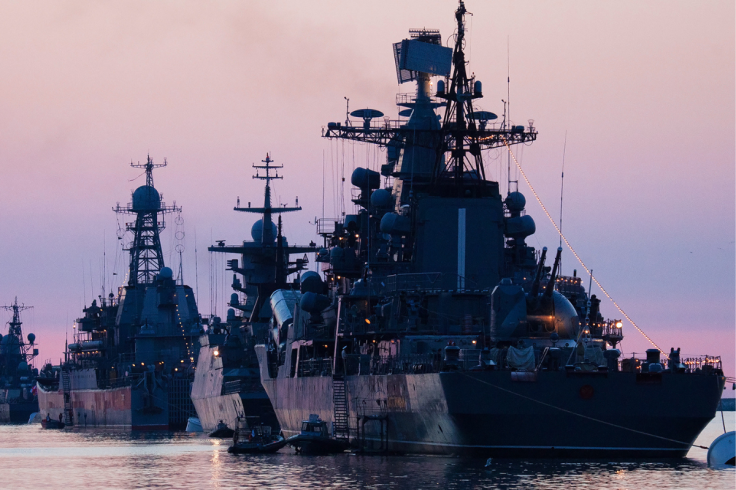
The geopolitical tension around the British coastline reached a critical flashpoint this week as defence insiders revealed that a Russian warship has maintained a semi-permanent patrol position within potential missile range of the UK mainland for nearly a month.
The Russian frigate has spent weeks shadowing British waters near the southern and eastern coasts, exposing deep-seated resource shortages within Her Majesty's surface fleet.
Operating out of the bustling maritime corridors of the Channel, the warship's prolonged presence has forced senior military analysts to confront uncomfortable truths regarding national defence capabilities.
While Whitehall officials attempt to downplay the operational strain, defence sources privately concede that the Royal Navy currently lacks enough active destroyers and frigates to properly shadow foreign vessels without dangerously depleting escorts for critical nuclear deterrents and undersea communication cables.
The Neustrashimy, now acting as Moscow's semi-permanent guardship in the Channel, has been repeatedly tracked close to Britain's southern and eastern coasts since mid-July.
A Calculated Russian Show of Presence
The frigate took over Channel patrol duties from another Russian ship, the Admiral Grigorovich, earlier this summer. Both vessels have escorted so-called 'shadow fleet' tankers – sanctioned oil carriers used by Moscow to move Russian crude around global markets.
Earlier this year, the Neustrashimy carried out an unannounced live-fire gunnery exercise around 40 miles south of Plymouth, in one of the world's busiest shipping lanes. Her crew fired shells from a 100mm main gun capable of ricocheting up to ten miles beyond the target area. The Defence Secretary condemned the drill as 'performative and irresponsible'.
The ship is currently armed with anti-air missiles, anti-submarine torpedoes and her main gun, but lacks the launch tubes needed to fire Kalibr land-attack cruise missiles.
Her likely successors – Grigorovich, Gepard or Gorshkov-class frigates – do carry them, meaning Britain could soon face a Russian vessel in the Channel capable of striking anywhere in the UK. London has no dedicated layered air defence system to counter such a threat.
Russia has also demonstrated it can sustain a long-term presence off Britain's coast. The Neustrashimy has been photographed taking on supplies from a Russian intelligence vessel just 15 miles off Suffolk, while her predecessor was seen refuelling alongside a repair ship mid-Channel.
Observers this week also spotted a Ka-27 'Helix' helicopter aboard the frigate, extending her surveillance range by hundreds of miles, useful for tracking tankers approaching from the Atlantic and North Sea.
Royal Navy's Fragile Cover Exposed
The episode has highlighted long-standing concerns among Royal Navy insiders about a shortage of available warships.
The Fleet Ready Escort, the on-call frigate or destroyer tasked with shadowing Russian vessels, can monitor only one area at a time. In May, HMS Somerset spent 25 days continuously escorting Russian ships. Of Britain's small frigate fleet, only around four vessels are realistically available for operations at any one time, and keeping a single ship continuously on station typically requires three.
Frigates are also needed as Towed Array Patrol Ships, tasked with hunting Russian submarines near UK undersea cables and shadowing Britain's nuclear deterrent submarine. Meanwhile, only two Type 45 destroyers are currently fit for sea, with one already committed to duties in the Gulf of Oman.
Just three Royal Navy warships currently carry any form of anti-ship missile, leaving most surface vessels outgunned by their Russian counterparts. As a result, day-to-day monitoring of Russian activity often falls to ageing Batch 1 River-class patrol boats, minehunters and Royal Fleet Auxiliary support ships, vessels armed with little more than light guns and vulnerable in any serious confrontation.
Senior naval officers warn the gap will widen before new frigates enter service. Some are pushing for 'persistent uncrewed aviation' – drones and sensors – to help monitor Russian movements while the surface fleet is rebuilt. One naval analyst said Britain is 'one breakdown away' from failing to meet its core frigate commitments.
With a Russian warship now maintaining a semi-permanent presence off the British coast, ministers face pressure to decide how to respond within a constrained defence budget, and how much risk they are willing to accept.
As military leaders push for uncrewed aviation and automated drone sensors to bridge the widening gap, the British government faces urgent decisions regarding defence spending and national security risk.
© Copyright IBTimes 2026. All rights reserved.
- Recommended For You