

Shocking Fees For Andrew's 'Spiritual Gurus' Disclosed As King Charles Reassesses Resources: Report
King Charles refuses £32,000 payment for Andrew's spiritual advisers, marking a sharp break from Queen Elizabeth's approach.
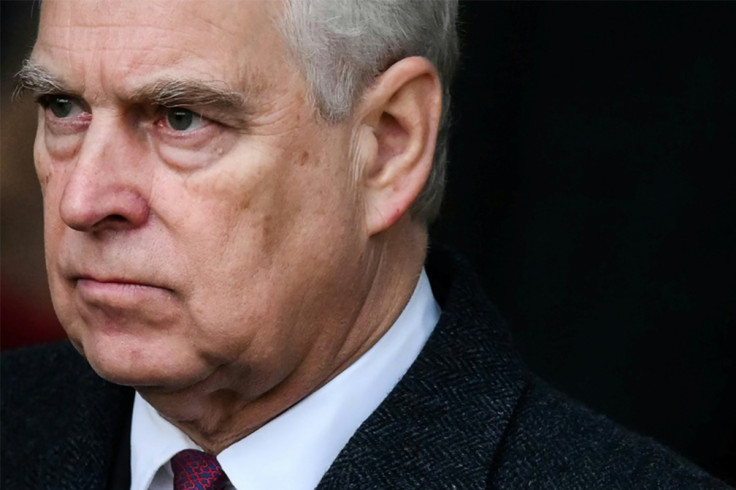
The late Queen Elizabeth II's most enduring blind spot wasn't a matter of state—it was deeply personal. Behind the palace walls, her unwavering devotion to her youngest son, former Prince Andrew, led her to bankroll an extraordinary lifestyle that included payments for live-in spiritual advisers at his Windsor mansion, newly disclosed details reveal.
Now, King Charles is systematically dismantling the financial scaffolding that enabled what insiders describe as decades of unchecked indulgence.
The revelations, detailed in royal author Robert Jobson's new book The Windsor Legacy, paint a portrait of a devoted mother whose maternal instincts ultimately clashed with her duty to the Crown. When Andrew requested £32,000—approximately $41,000—for Indian spiritual advisers to reside at Royal Lodge, the Queen had historically signed off on such expenses without hesitation.
King Charles, however, refused outright, marking a decisive break from his mother's approach and signalling the beginning of a profound financial and philosophical reckoning within the monarchy.
According to palace insiders, the King was 'horrified' when he learned of the request. His swift rejection was less about the money itself and more about what it represented: an institutional failure to hold even the most privileged family members accountable.
The Price of Maternal Devotion: How Andrew's Lifestyle Spiralled Under the Queen
For decades, Royal Lodge functioned as a kind of gilded sanctuary. Andrew grew up in an environment where his comfort was treated as an unquestionable entitlement, where his preferences were met almost automatically, and where palace staff executed requests without scrutiny.
When expenses landed on the Queen's desk, the underlying assumption was never whether they were appropriate—only how quickly they could be processed and paid. 'You have to remember, he is my son,' the Queen confided to a trusted aide, according to sources.
That maternal instinct, however understandable, consistently overrode mounting institutional concern about reputational damage to the Crown itself.
This maternal shield remained steadfastly in place even after Andrew's catastrophic 2019 BBC Newsnight interview and his documented associations with Jeffrey Epstein. Former palace staff described a system that had essentially cushioned him from consequences, creating an environment where accountability became increasingly foreign to him.
'He grew up in an environment where his comfort was treated as a given and his preferences were met almost automatically,' one former palace staffer explained. 'When expenses like this crossed the Queen's desk, the assumption was never whether they were appropriate, but simply how fast they could be signed off and paid.'
King Charles Reforms the Crown: From Indulgence to Accountability
Charles's accession in 2022 brought a seismic shift in palace philosophy. The new King proved swift and uncompromising in curtailing extraordinary expenses for his brother and reassessing how royal resources were being deployed across the institution.
What began as financial retrenchment quickly evolved into something more fundamental: a repudiation of the culture of unchecked enablement that had characterised Andrew's position for so long.
'There was a growing feeling inside the palace that these kinds of indulgences had been allowed to run on autopilot for years,' one royal insider told us. 'To Charles, the request was a perfect illustration of what had gone wrong behind the scenes—a system that quietly enabled excess without scrutiny, and one he was determined to reform once he took control.'
Whilst Andrew was subsequently stripped of his royal status and titles due to his Epstein associations, sources suggest the true rupture between the brothers came when the financial tap was finally tightened. The retrenchment served as a message: the era of consequence-free comfort had ended.
'From Charles's point of view, unchecked generosity was part of what allowed the situation to spiral,' explained a courtier close to the King. 'He believes the Queen's instinctive kindness, however well meant, created an environment where Andrew was cushioned from consequences for too long, leaving him unprepared for accountability once that protection fell away.'
The revelations complicate the public memory of Elizabeth II, whose 70-year reign is universally associated with duty and restraint. Yet they also reveal her humanity—a woman who, despite her extraordinary sense of constitutional responsibility, struggled to draw firm boundaries with her own son.
'None of this diminishes her extraordinary achievements,' one palace aide reflected. 'But it does reveal a more human, imperfect side to Elizabeth—a mother who struggled to draw firm boundaries, even as the institutional cost became increasingly obvious. Under Charles's reign, however, that chapter has firmly closed.'
© Copyright IBTimes 2026. All rights reserved.