

'Bad Art Is Better Than AI Slop': Small Businesses Say No to AI, Turn to Messy Hand-Made Signs
When AI can make anything look polished, businesses are discovering the power of deliberately keeping things personal
For years, businesses have been told that polished, professional marketing is the best way to grab attention. Now, some small businesses are finding that the opposite can be just as effective. Messy handwriting, cardboard signs, and intentionally imperfect flyers are racking up attention online as businesses make a point of saying they will not use artificial intelligence to market themselves.
The shift comes as social media becomes increasingly packed with lookalike AI-generated posters, menus, and promotional images. Some anti-AI posts have drawn tens of thousands of likes, turning rejection of the technology into a marketing strategy of its own.
The Handwritten Sign Making a Statement
The Salutation, a pub in Tynemouth, England, took its anti-AI message to Instagram, where it shared a handwritten notice alongside job vacancy posts. The handwritten notice said the pub would not use AI-generated posts to promote its vacancies.
Other businesses have embraced the same deliberately homespun approach. Chugwater Soda Fountain, a food and soda fountain business in Chugwater, Wyoming, US, paired a real photo of its hand-dipped chocolate shake with a cardboard sign declaring, 'We will not be using AI flyers or photos to promote ourselves. Instead we will use this cardboard + marker.' Its caption was just as blunt: 'From-scratch food and from-scratch marketing.... That's just how we roll.'
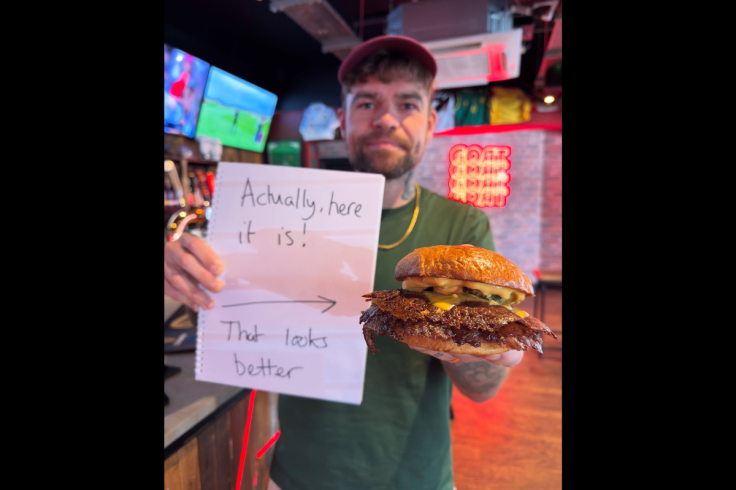
GOAT Nantwich, a bar and food venue in Nantwich, Cheshire, also joined the trend, posting a real-life image of its Jordan burger alongside an anti-AI message. No polished campaign. Just the actual food and a decision to show it exactly as it is.
When Every Ad Starts Looking Like AI
Social media is increasingly crowded with AI-generated posters and menus, as well as promotional images, creating a growing backlash among some businesses and creatives. For small businesses on tight budgets, AI is an easy draw: it can produce images and copy quickly. However, critics argue that the convenience can come at the expense of personality and local flavour, as well as the imperfections that make human-made work distinctive.
Freelance graphic designer Frances Smyth says the problem is not simply visual. 'As soon as savings are mentioned now, one of the first things businesses think is, "Could we use ChatGPT to do that?"' Smyth said AI can help with 'a quick turnaround,' but described much of its output as 'regurgitative and soulless.'
Smyth argues that even imperfect human-made work can have more creative value than AI-generated material. 'Even bad art is better than AI slop. I'd much rather see, like, a gig poster or a menu done on a Post-it note than I would see it put into ChatGPT.'
The Growing Resistance to AI
The backlash is moving beyond social media. The American Bar in Belfast recently announced a boycott of AI use in the pub and on its social media, including AI-generated creative material such as music and gig posters. Co-owner Tómas Gorman described AI as 'a deeply damaging technology,' particularly for local artists and creative workers.
Three Rivers Restaurant owner Mal Houston followed a similar path. Like many businesses during the Fleadh, Houston had previously used AI posters for entertainment and food promotions. Then someone placed 'Say no to AI' stickers on a few of his flyers. 'I don't know who had time to do that during the Fleadh, but it did make me think,' he said.
Houston said AI remained attractive because it was convenient and cheap for businesses under financial pressure but argued that those savings could come at the expense of graphic-design jobs.
'But the other side of that is that it is putting graphic designers out of jobs. And just like the hospitality industry is struggling because of challenges we're facing, they're struggling because of AI,' he added.
For small businesses, saying 'no' to AI may be more than a creative protest. It could be a surprisingly effective way to stand out in a marketplace where everyone else is beginning to look the same.
© Copyright IBTimes 2026. All rights reserved.