AI Layoffs Boost Demand for Small Businesses: 5 Startup Ideas That Could Replace Your Salary in a Year
Service trades and expertise firms top the list of promising startup ideas amid mounting tech cuts
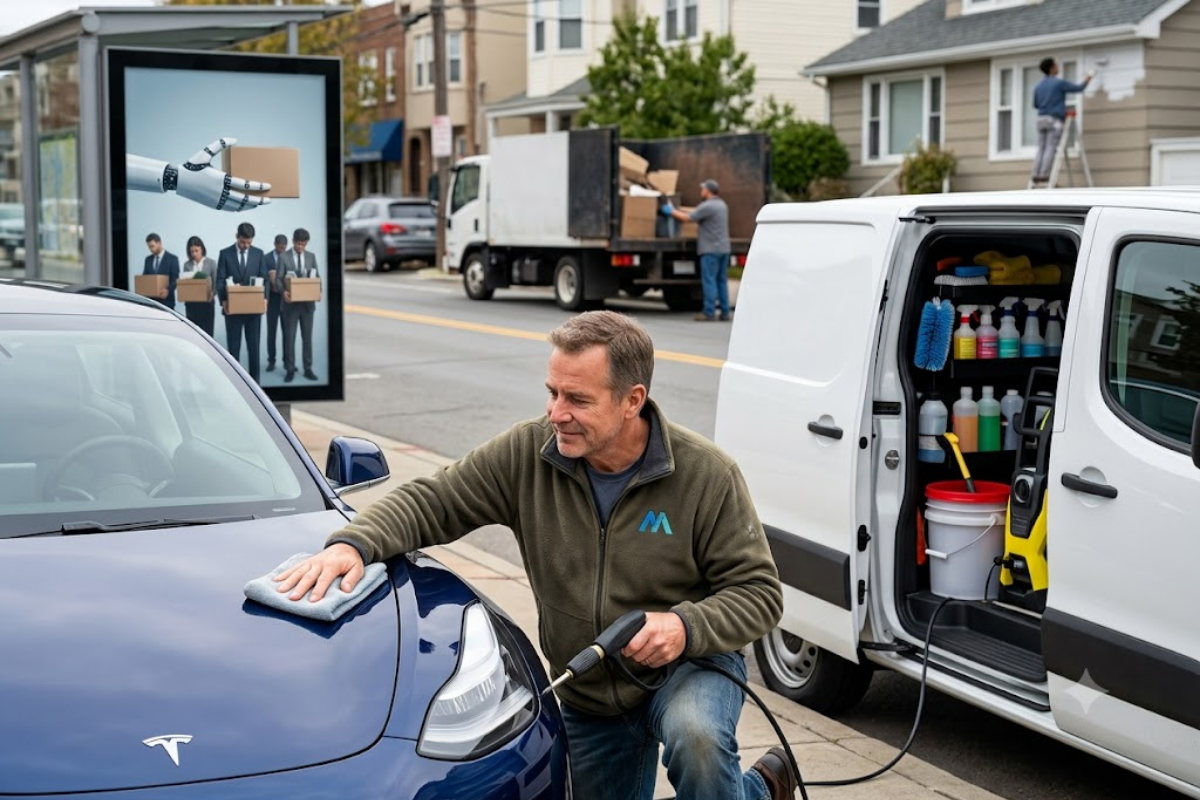
A wave of AI-linked layoffs has swept the technology sector through 2026, and for many of those affected, working for themselves is now one of the options on the table.
A handful of small businesses stand out for how quickly they can scale, with the potential to replace a full-time salary inside a year rather than the several years a new venture usually needs to match a steady paycheque. Most cluster in two areas: hands-on service trades and expertise-led consulting.
How AI Layoffs Are Pushing Workers Toward Small Business
The numbers frame the shift. More than 120,000 technology roles have been cut so far this year, according to the tracker Layoffs.fyi, with May the heaviest single month in years. Outplacement firm Challenger, Gray & Christmas found that AI was the most cited reason for that month's reductions. The heaviest losses have fallen on customer support, data entry, and routine software roles, the tasks current AI tools handle most readily.
Several of the biggest cuts have come from firms posting record revenues. Oracle accounts for the single largest reduction of the year at about 30,000 roles, while Meta shed around 8,000 staff, close to a tenth of its workforce. Amazon has removed more than 30,000 corporate posts since October, even as it commits about $200B (£150B) to AI infrastructure this year.
New business creation has held up against that backdrop. The US Census Bureau counted 531,423 new business applications in June 2026, up 1.1% on May, with filings from corporations rising 5.5%. Retail trade led all sectors, ahead of professional services and construction, categories that overlap with several of the businesses now in demand.
Five Startup Ideas With the Growth to Replace a Salary
The fields drawing the most interest share a common trait. They are hard to automate and can scale quickly.
Mobile car detailing sits near the top, with low overheads and flexible hours that let a founder build a client base while still employed. Future Market Insights forecasts the global mobile car wash market will reach just under $283B (£212B) by 2035, more than double the $126B (£95B) expected last year. The sector can attract serious capital. Spiffy, a North Carolina detailing and car-care firm, raised a $30M (£23M) Series C in 2023, and chief executive Scot Wingo said in the funding announcement that the company was 'scaling faster than any of my previous start-ups.'
Junk removal is another low-barrier option, driven by households clearing bulky items and firms outsourcing their waste. Market Reports World estimates that more than 63% of homes generate bulky waste at least twice a year, while 58% of small businesses need removal help. Recurring commercial contracts and subscription cleanouts offer steadier income, in a market valued at $1.2B (£900M) this year and forecast to reach $3.4B (£2.6B) by 2034.
Residential painting rounds out the trades. Industry forecasts put the field at $47.8B (£36B) in 2025, rising to about $51.2B (£38B) by the end of this year, with homeowners typically paying between $3,800 (£2,850) and $16,500 (£12,375) a job.
Two expertise-led paths complete the picture. Executive coaching suits former senior managers, with a wave of retirements set to open succession gaps across companies, though credibility takes time to build and rests on a track record of enterprise-level leadership rather than marketing.
Cybersecurity is the most directly tied to the forces reshaping the jobs market. Ransomware attacks rose 20% year on year in the first half of 2026, with 5,275 recorded incidents, according to a NordStellar report. Fortune Business Insights expects the cybersecurity market to grow from $219B (£164B) last year to more than $248B (£186B) in 2026. A shortage of specialists means someone with a strong IT background can move quickly, ideally on recurring contracts rather than one-off jobs.
The common thread is that each can be built alongside a day job and scaled toward full-time income, a route that keeps a wage and benefits coming in while the business finds its feet, and one that does not depend on the employers now trimming their ranks.
© Copyright IBTimes 2026. All rights reserved.
- Recommended For You