

Treasury Secretary Bessent 'Shamed In Public' While Eating Out For 'Economic Warfare' Sanctions
Protesters accuse Bessent of 'economic warfare' in viral restaurant confrontation
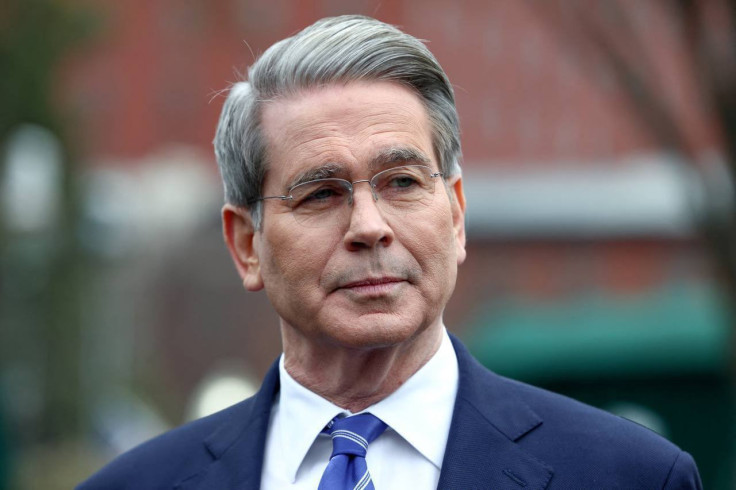
Treasury Secretary Scott Bessent was publicly confronted and heckled by protesters in a Washington, DC restaurant this week over the Trump administration's sweeping sanctions policies. The incident, captured on video by bystanders and widely shared on social media, shows activist criticism of Bessent's role in enforcing sanctions that opponents label 'economic warfare'. It crystallises an intensifying debate over the humanitarian effects of sanctions regimes, and reflects the heated politics surrounding the Treasury Department's expanding global economic role.
Public Confrontation Over Sanctions Policy
Treasury Secretary Scott Bessent was dining at Reveler's Hour, a restaurant in Washington's Adams Morgan neighbourhood, on the evening of Dec. 18, 2025, when a protester stood and addressed him directly.
According to witness accounts and footage posted online, Olivia DiNucci, an organiser with anti-war group CODEPINK, stood and tapped her glass to command attention. She accused Bessent of overseeing sanctions that she claimed caused widespread suffering abroad. The protester told diners that Bessent was responsible for what she described as 'economic warfare' and alleged that US sanctions resulted in hundreds of thousands of deaths annually.
Several diners reportedly reacted with boos and jeers, illustrating the sharp divide among the public. A bystander's clip (widely reposted though not directly accessible via official channels) shows parts of this confrontation. Bessent became visibly agitated and, according to witnesses, argued back with the protester before leaving the restaurant when the staff declined to remove her.
@fox4newsdallasfortworth Activists confronted US Treasury Secretary Scott Bessent while he dined at Reveler’s Hour in Washington on Wednesday, December 17. This footage shows Code Pink DC organizer Olivia DiNucci “toasting” Bessent during dinner. “We wanna make an announcement! We have a special guest here, and we wanna make a toast for the Secretary of the Treasury, Scott Bessent,” she says. “So let’s give it up for the man who is eating in peace as people starve across the world based on his sanctions, which are economic warfare.” Bessent responded by raising his wineglass and yelling back, “You are ignorant and you have no idea how ignorant you are!”
♬ original sound - Fox4News
Sanctions, Humanitarian Concerns and Political Backlash
The protester's remarks referenced broader criticism of sanctions regimes that human rights researchers and development economists have highlighted for years. Multiple academic studies have linked comprehensive sanctions to adverse effects on civilian populations, particularly in low-income countries.
Independent research, including peer-reviewed analyses, has reported associations between broad sanctions and increased mortality due to shortages of medicines, food and basic services. These effects are especially acute where exemptions are poorly enforced. CODEPINK, which organised this action, is a grassroots anti-war group that advocates ending US military interventions and sanctions policies, and prioritising peace and humanitarian aid.
This protest is not an isolated expression of frustration with US sanctions policy. Calls for reevaluation of sanction mechanisms have grown among humanitarian organisations, global health advocates, and some economists, who argue that poorly targeted sanctions can inflict severe harm on ordinary people without achieving political ends.
Treasury's Role in Sanctions and Sanction Enforcement
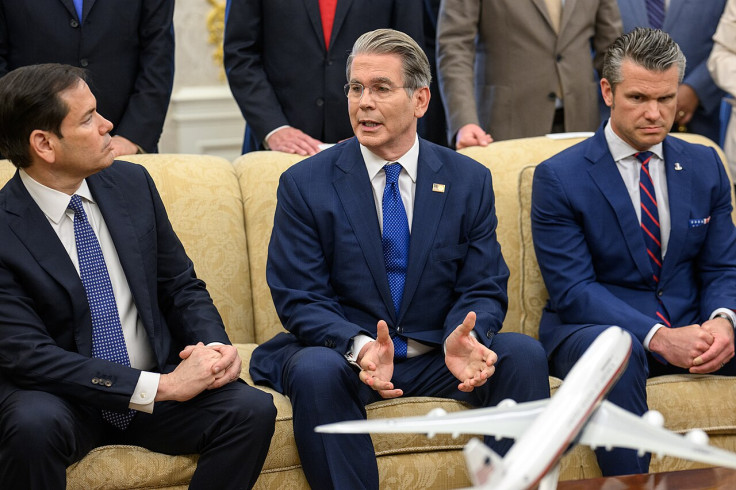
As US Treasury Secretary, Scott Bessent oversees the department's sanctions strategy alongside broader economic policy under President Donald Trump. The Treasury's Office of Foreign Assets Control (OFAC) administers and enforces sanctions against foreign actors, including state entities, militant groups and individuals linked to illicit finance or human rights abuses.
In September 2025, Bessent issued a Joint Statement on an emergency G7 finance call, pushing allied finance ministers to expand sanctions aimed at cutting off revenues to Russia's war effort. He framed these actions as essential to forcing negotiations to end conflict, insisting on a unified international front.
Earlier in June 2025, Bessent's Treasury released a formal statement celebrating the termination of Syria sanctions, a policy shift tied to political change in Damascus, but confirming that sanctions against destabilising actors would continue.
Critics contend that the Treasury's sanctions mechanisms are too blunt and lack effective humanitarian safeguards. Proponents argue they are vital non-military tools for exerting pressure on bad actors when diplomacy fails. The debate has intensified as sanctions have expanded in scale and scope, particularly in response to Russia's invasion of Ukraine.
The Bessent incident confirms that the politics of economic power: sanctions, tariffs and financial coercion, are no longer contained within government corridors. They are spilling into the public domain, as citizens demand accountability for policies with global consequences.
© Copyright IBTimes 2026. All rights reserved.