

Trump Administration Dispatches $90 Medicare Cheques but 40 Million Seniors Will Miss Out Entirely
The Trump administration is sending $90 Medicare rebates to 20.8 million seniors this October, but 40 million enrollees will not qualify under strict eligibility rules
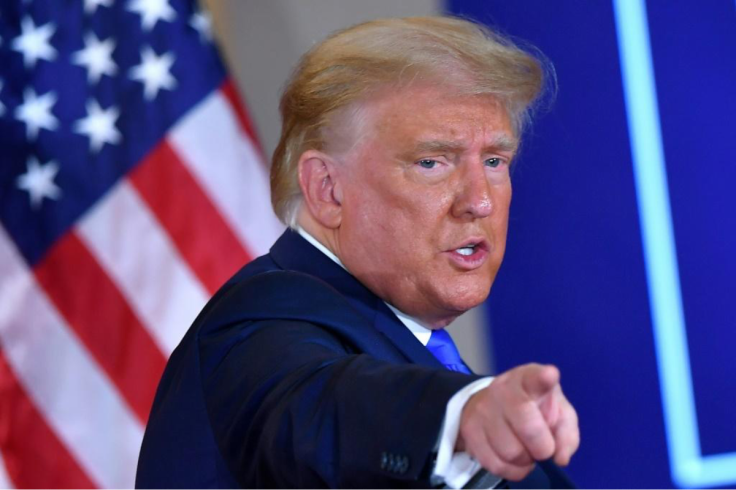
Trump administration is sending out $90 (£70) Medicare cheques this week, but about 40 million seniors will not receive a penny despite being enrolled in the programme. The one-time payments, drawn from the Medicare Improvement Fund, target around 20.8 million traditional Medicare Part B enrollees who meet strict income and residency criteria.
President Donald Trump announced the rebate on Friday, 2 October, framing it as relief against rising Part B premiums that have climbed more than $200 (£151.39) annually in 2026. The White House says the money should arrive by direct deposit on or around 8 October, with paper cheques following later in the month.
Who Qualifies for the $90 Medicare Payment
Eligibility hinges on three conditions. Beneficiaries must live in the United States, not receive premium assistance through Medicaid, and not pay the income-related monthly adjustment amount that higher earners face. People enrolled in Medicare Advantage plans are also excluded, a detail that has caught many off guard.
That leaves roughly 20.8 million eligible out of 62.9 million Part B enrollees, according to a CMS fact sheet published 3 October. Put simply, if your Part B premium is already subsidised or you are in a private Medicare Advantage plan, you will not see the $90 (£70).
'People who are paying the income-related premium have higher incomes to begin with, so the thinking is that they may be better able to absorb higher costs,' Juliette Cubanski, vice president and director of the Program on Medicare Policy at KFF, told CBS News.
She added that Medicare Advantage operates differently from traditional Medicare, which likely explains the exclusion.
Why 40 Million Seniors Won't Receive the Cheque
About 40 million Part B enrollees fall outside the rebate's scope. The ineligible groups include seniors in Medicare Advantage, those paying income-adjusted premiums, beneficiaries living abroad, and people whose premiums are covered by Medicaid.
Critics argue the rebate's design undercuts its own aim. 'This is particularly true because lower-income Medicare enrollees, for whom every dollar is most important, are not eligible for the checks,' health policy analyst Dow told Time. The point is notable when you consider that Medicaid recipients, by definition, are among the most financially vulnerable.
Advocates also worry paper cheques could be overlooked amid the flood of insurer mail during open enrollment. The Treasury Department's cheques will carry the message: 'Medicare Improvement Fund Payment; $90 (£70) Payment to Offset October Premium.' Even so, some seniors may toss it as junk without realising what it is.
How to Check Eligibility and Payment Status
Eligible beneficiaries can call 1-800-MEDICARE (1-800-633-4227) to confirm whether they qualify for the rebate. Those wanting to check payment status should ring the Social Security Administration at 1-800-772-1213 from 15 October onwards.
The funding comes from the Medicare Improvement Fund, established by Congress in 2008 with an initial $2.2 billion (£1.51 billion) allocation to support the traditional fee-for-service programme. This marks one of the first times the fund has been tapped for direct beneficiary rebates, according to White House materials.
Experts caution the $90 (£70) will not fully offset rising costs. Part B premiums are projected to increase by nearly $80 (£60.43) again in 2027, per the Medicare trustees' latest annual report. For households already stretching budgets, the rebate helps but does not address the underlying pressure.
Nothing is confirmed yet so everything should be taken with a grain of salt regarding individual payment timing, as some seniors reported seeing deposits as early as Tuesday while others await 8 October. IBTimes UK cannot independently verify these claims, so take everything lightly.
© Copyright IBTimes 2026. All rights reserved.