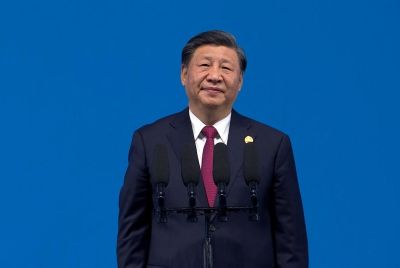
Trump Calls American General For Ukraine Negotiations An 'Idiot' For Saying Zelensky Was 'Courageous'
Clash over Ukraine strategy exposes internal tensions in US foreign policy leadership.

Trump reportedly called his special envoy for Ukraine negotiations, General Keith Kellogg, an 'idiot' after the envoy's public praise for Ukrainian President Volodymyr Zelenskyy contrasted sharply with Trump's own rhetoric.
Kellogg's comments, praising Zelenskyy as a 'courageous leader of a nation at war' after his visit to Kyiv, stressed a deepening policy rift within the administration over US engagement in the Russia-Ukraine conflict.
Internal Disagreement Over Ukraine Strategy
General Keith Kellogg, a retired U.S. Army lieutenant general who served as Special Presidential Envoy for Ukraine, made headlines in February 2025 after he publicly described President Zelenskyy as 'embattled and courageous' following intensive discussions in Kyiv.
Kellogg's remarks appeared on the social platform X, where he wrote that the meeting involved 'extensive and positive discussions with @ZelenskyyUa, the embattled and courageous leader of a nation at war and his talented national security team.'
A long and intense day with the senior leadership of Ukraine. Extensive and positive discussions with @ZelenskyyUa, the embattled and courageous leader of a nation at war and his talented national security team. https://t.co/kLu9roZ5z1
— Keith Kellogg (@generalkellogg) February 21, 2025
This stance was a striking departure from Trump's contemporaneous public criticism. In separate remarks before US and international audiences, Trump had labelled Zelenskyy a 'dictator without elections' and suggested that Ukraine bore responsibility for prolonging the conflict with Russia.
While the United States has historically offered military and financial support to Kyiv since Russia launched its full-scale invasion in February 2022, these contrasting statements revealed fissures in Washington's foreign policy messaging.

The dispute reportedly reached a flashpoint when Kellogg pushed back against Trump's contention that Russia was invincible, asserting internally that 'the Russians aren't invincible'.
Kellogg's Mission and Broader Diplomatic Context
General Kellogg's appointment as envoy followed previous senior defence and national security roles, including service as acting National Security Advisor in an earlier administration. His role in 2025 focused on pushing forward diplomatic engagement aimed at ending the long war in Ukraine.
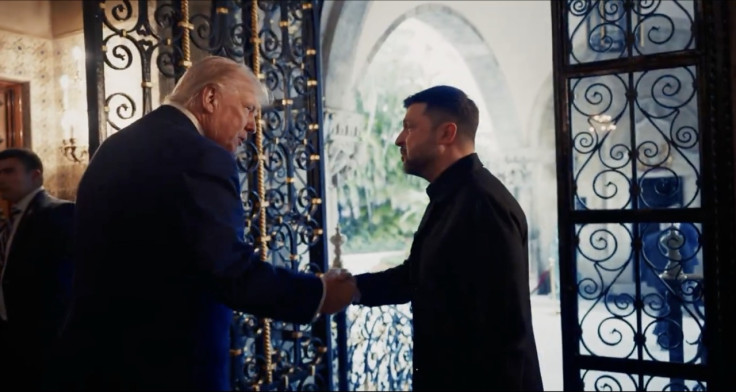
The situation was complicated by broader peace negotiation efforts that involved multiple US officials and international partners. In late 2025, Trump hosted Zelenskyy at Mar-a-Lago in Florida, where both leaders said they had made progress toward a peace deal but acknowledged outstanding 'thorny issues' related to territorial disputes and security guarantees.
Meanwhile, US special negotiators, including envoys Steve Witkoff and Jared Kushner, met with Ukrainian officials to discuss next steps and potential frameworks for ending the armed conflict between Kyiv and Moscow.
Despite ongoing negotiations, tensions over messaging persisted. European allies voiced alarm at inconsistent US positions: while some US envoys stressed strong support for Ukraine's sovereignty, others suggested different priorities in talks with Russia focused on ending hostilities. These contradictions contributed to a sense of uncertainty among allies.
Implications for U.S. Foreign Policy and Global Perceptions
The reported exchange between Trump and Kellogg has reverberated beyond Washington. European partners, often reliant on clear US leadership, have publicly questioned the coherence of American strategy. Polish and French officials, among others, have called for stronger transatlantic unity to sustain long-term aid and security guarantees for Ukraine.
In Kyiv, Zelenskyy has emphasised the critical role of security assurances and international cooperation in ending the war. He described engagements with US envoys as positive and said that discussions 'restore hope' for an agreement that would prevent a resurgence of Russian aggression.
Analysts believe that internal disagreements within the U.S. administration, as highlighted by this clash, complicate the diplomatic posture of the United States, especially during a pivotal moment in negotiations aimed at achieving durable peace in Eastern Europe.
© Copyright IBTimes 2026. All rights reserved.
- MOST POPULAR IN World