

Trump Pushes Venezuela Invasion After Being 'Personally Offended' by Maduro Dancing
US military strikes, leadership capture and diplomatic crisis follow months of rising tension

The United States has dramatically escalated its confrontation with Venezuela, culminating in a January 2026 military operation that ousted President Nicolás Maduro and prompted his transfer to US custody on charges of drug trafficking and related allegations.
Months of mounting pressure from Washington against Caracas, including sanctions, naval blockades and public threats, erupted into direct action this week, marking the most significant US engagement in the Western Hemisphere in decades. The actions followed a contentious period of diplomatic breakdown between the two governments, with Venezuelan public performances by Maduro becoming a point of frustration for some US officials.
From Sanctions to Military Strikes
Under President Donald Trump's second administration, US policy toward Venezuela shifted from diplomatic isolation and economic sanctions to overt military pressure.
Since late 2025, the US Navy blockade and air strikes targeting vessels linked to Venezuelan oil exports and alleged drug operations have intensified. The Trump administration labelled Venezuelan elements, including Maduro's inner circle, as involved with narcotics trafficking and regional destabilisation. US officials also imposed new tariffs and sanctions aimed at crippling Caracas's export economy.
The investigation into Maduro has been ongoing for more than a decade, but President Trump made the bold brilliant action to go in and arrest him.
— Homeland Security (@DHSgov) January 4, 2026
Under the leadership of @Sec_Noem, Homeland Security Investigations uncovered a drug-trafficking syndicate involving members of the… pic.twitter.com/TFC1aWGvXw
The decisive military action began with strikes on Venezuelan territory and the capture of Maduro and his wife, Cilia Flores, in Caracas. The Venezuelan leader was flown to the United States and is expected to face indictments in the Southern District of New York on narcotics and terrorism-related charges.
This operation, labelled by Trump's administration as a law-enforcement mission justified by longstanding criminal cases, bypassed congressional approval and has drawn intense legal and geopolitical scrutiny.
Maduro's Public Dances and Perceptions in Washington
In the months preceding the military operation, Maduro made several highly visible public appearances where he danced and celebrated with supporters during rallies.
According to reports, these appearances included dancing salsa and other performances set against messages rejecting war and mocking external military threats. US officials reportedly interpreted these scenes as indications that Maduro was dismissive of Washington's escalating warnings.
Maduro’s constant dancing reportedly pushed Trump to storm Caracas
— Complex (@Complex) January 4, 2026
Trump’s team reportedly grew so annoyed by Venezuelan leader Nicolás Maduro’s public dancing that they took it as mockery and decided to act. After Maduro ignored a U.S. ultimatum and kept brushing off threats &… pic.twitter.com/fE1GlNXmZM
International affairs analysts caution against overstating the role of symbolic gestures in statecraft, noting that long-standing geopolitical factors, including control of energy resources, hemispheric influence and narcotics policy, were foundational to US strategic decisions. Nevertheless, within the Trump administration, such public displays were characterised by some advisors as emblematic of Caracas's resistance to US pressure.
Maduro’s dancing was heavily responsible for Trump’s decision to strike -NYT https://t.co/rxPhtSvody
— OSINTtechnical (@Osinttechnical) January 4, 2026
Outlook for Venezuela and US Foreign Policy
In Venezuela, Vice-President Delcy Rodríguez has been designated acting president under Article 233 of the Venezuelan constitution following Maduro's removal. Rodríguez has demanded proof of Maduro's status and rejected US claims that she consented to US directives.
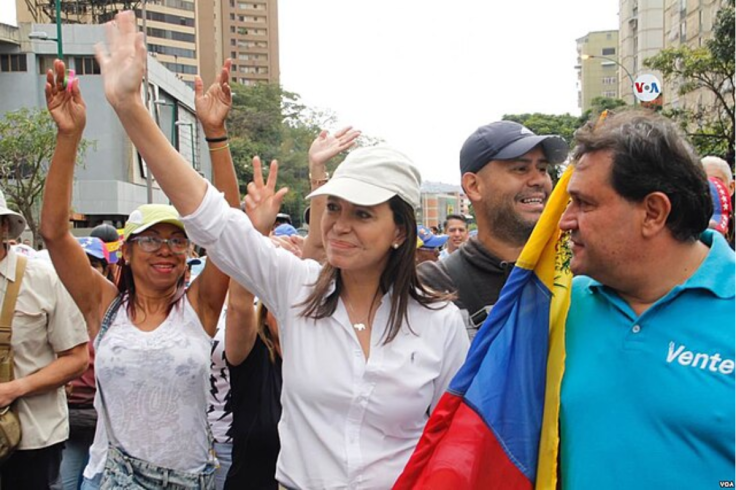
Domestically, Venezuelan opposition leaders have offered mixed reactions. Some condemn the US military action as an infringement on national sovereignty, while others welcome the removal of Maduro as a long-sought end to authoritarian rule. Nobel Peace Prize laureate María Corina Machado has reiterated calls for a politically negotiated transition.
The outcome of these developments remains deeply uncertain. Venezuela's military and governmental institutions remain capable of prolonged resistance, and the legitimacy of the interim leadership is contested both domestically and internationally. The US assertion that it will 'run' Venezuela until a transition is organised has raised additional legal and ethical debates.
What is clear is that decades of strained US–Venezuela relations, shaped by ideological divides, resource competition and geopolitical rivalry, have entered a new and volatile chapter. The crisis will test existing frameworks of international law, regional cooperation, and the role of military force in addressing transnational challenges.
The US intervention in Venezuela, sparked by a complex mix of strategic priorities and symbolic provocations, has transformed hemispheric politics and ignited a profound debate over sovereignty, legality and global order.
© Copyright IBTimes 2026. All rights reserved.