

US Foreign Policy Outsourced? Vance Calls Jared Kushner, Trump's Son-in-Law, The Peace 'Investor'
Vance's remark exposes informal influence of Kushner in Trump administration's Middle East diplomacy
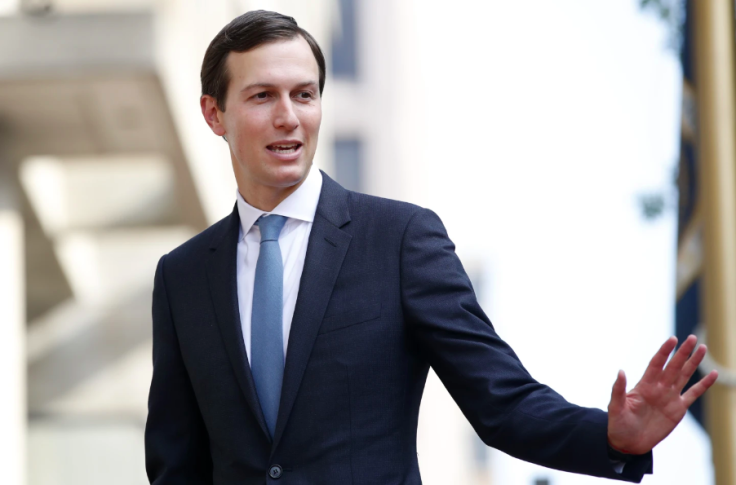
US Vice President JD Vance's public remark that Jared Kushner is 'the investor' in the Israel-Gaza peace process captured global attention and raised profound questions about the role of private actors in shaping United States foreign policy outcomes.
Vance's statement appeared to acknowledge an unprecedented position for a private citizen in directing diplomatic efforts traditionally managed by career officials.
A Surprising Admission in Jerusalem
During a press event in Kiryat Gat, when asked to assess the sustainability of a fragile ceasefire between Israel and Hamas, Vance said that 'Jared's the investor here' – a phrase that immediately drew scrutiny because Kushner holds no official government title in the current administration.
The exchange was part of a longer transcript released by Rev, where Vance elaborated that recent progress gave him 'great optimism' the ceasefire would hold, but warned that 'there are going to be hills and valleys'.
JD Vance just said the quiet part out loud.
— Brian Allen (@allenanalysis) December 28, 2025
On camera, he admitted that Jared Kushner — Trump’s son-in-law, with no official government role — is “the investor” in Middle East “peace” talks.
Read that again.
U.S. foreign policy outsourced to a family business deal. pic.twitter.com/mupNlG1Cr0
This comment on Kushner was quoted widely on social platforms and picked up by commentators analysing the unusual nature of Kushner's role.
In normal diplomatic settings, peace negotiations are led by appointed envoys, State Department officials or military leadership. That a sitting vice-president publicly framed a private individual as central to diplomacy, without clarifying the precise scope of that influence, triggered alarm among policy experts.
Kushner's Informal Foreign Policy Role
Jared Kushner's involvement in Middle East diplomacy is not new. He served as a senior adviser during Donald Trump's first presidential term, where he had a leading role in negotiating the Abraham Accords, a set of normalisation agreements between Israel and several Arab states.

In 2025, Kushner resurfaced as a key figure in the Trump administration's efforts to secure a ceasefire and a broader peace framework following years of conflict between Israel and Hamas. According to multiple sources, Kushner joined US special envoy Steve Witkoff in negotiations in Sharm el-Sheikh and notably attended an Israeli cabinet meeting in Jerusalem that ratified a ceasefire.
Despite this prominent presence, Kushner holds no formal diplomatic or government title, and his role is characterised by its informal nature. Officials told The National that Kushner's participation was driven by his longstanding relationships in the region and personal commitment to the peace plan, rather than any formal appointment by the White House.
The White House has defended Kushner's role. Press secretary Karoline Leavitt described criticism of his involvement as 'despicable', emphasising that Kushner is 'donating his energy and his time to our government... to secure world peace'.
Private Interests and Public Diplomacy
What fuels debate among scholars and policymakers is the overlap between Kushner's foreign policy influence and his private business interests. After leaving government in 2021, Kushner founded a private equity firm, Affinity Partners, which has attracted significant investment from Middle Eastern sovereign wealth funds, including those from Saudi Arabia, the United Arab Emirates and Qatar.
This nexus of business and diplomacy has drawn criticism from analysts and ethics watchdogs who highlight the potential for conflicting incentives when economic interests intersect with international peace efforts.
Opponents point to the fact that foreign sovereign investors are now financially linked to Kushner's firm, which also has stakes in regional enterprises, while Kushner simultaneously participates in or influences diplomatic negotiations.
They argue that these dual roles could blur the line between national interest and private gain. Voices from advocacy groups such as the Center for International Policy have termed this arrangement an 'enormous conflict of interest'.
While specific financial arrangements are not public in detail, transparency advocates have called for full disclosure of Kushner's business ties in the context of his diplomatic influence, a call the White House has consistently rebuffed.
© Copyright IBTimes 2026. All rights reserved.
- MOST POPULAR IN World


