

The Winds of Winter: Brandon Sanderson Warns George RR Martin's TWOW Risks 'Star Wars' Mistake
George R.R. Martin's The Winds of Winter faces major storytelling crisis as Brandon Sanderson warns against 'Last Jedi' mistake
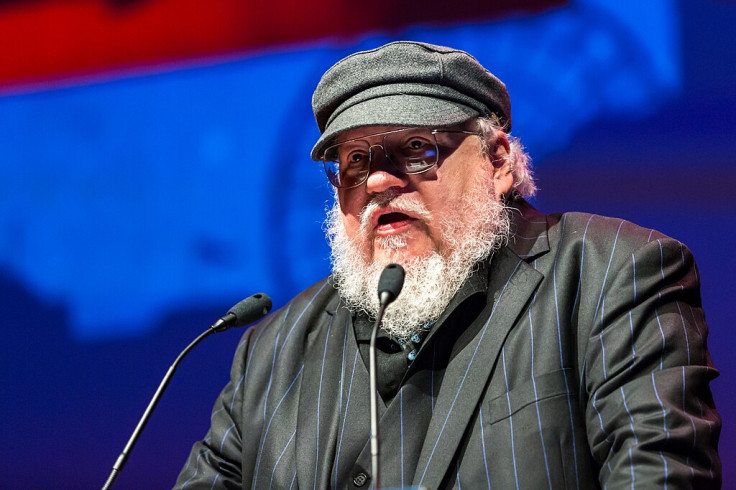
After nearly a decade and a half of waiting, readers of George R.R. Martin's A Song of Ice and Fire series face a peculiar kind of agony. Not merely the torment of delayed gratification — though plenty of that — but the growing concern that when The Winds of Winter finally arrives, it might not be worth the wait. The sixth instalment was originally expected to release in 2016, yet Martin has provided no official publication date, with the manuscript still reportedly unfinished as of late 2025.
The sixth instalment has become something of a literary phantom, endlessly promised yet perpetually absent. Yet whilst fans anxiously refresh Martin's blog for even the faintest hint of progress, a more insidious fear looms: that the book, when it emerges, could repeat a fundamental storytelling mistake that renowned fantasy author Brandon Sanderson identified in the critically divisive Star Wars: The Last Jedi.
The warning came during a 2022 panel at New York Comic Con, where Sanderson dissected the peculiar narrative ailment plaguing both blockbuster films and sprawling novels. Sanderson, whose Mistborn series and Stormlight Archive are celebrated for their tightly plotted narratives and satisfying payoffs, has become something of a de facto storytelling authority in the fantasy community. His critique wasn't simply that the casino planet sequence in The Last Jedi existed — it was that it served no discernible purpose.
'Watch for extraneous plot elements, or just extraneous info dumps, or extraneous stuff where you go for three chapters to a casino planet and no one understands why you're there,' Sanderson observed. The problem, he explained, wasn't side quests themselves, but rather side quests that contradicted what characters had explicitly promised to do. If Finn declares his mission is to find and help Rey, then forcing him down an unrelated detour leaves readers feeling as though the narrative is 'spinning wheels to get back to a main storyline'. That sensation, Sanderson suggested, is 'another version of slowness'.
'You've done something and the reader feels like the whole thing is spinning wheels to get back to a main storyline and that's another version of slowness,' Sanderson explained, emphasising that the issue isn't necessarily the existence of detours, but their perceived irrelevance to the larger narrative promise made to the audience. For A Song of Ice and Fire devotees, these words carry uncomfortable weight.
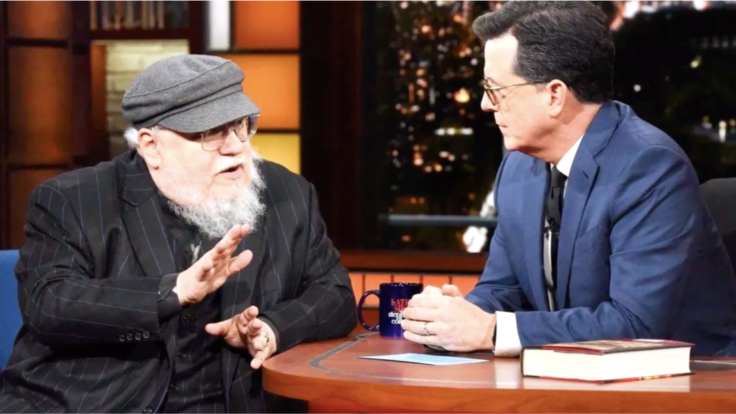
How The Winds of Winter Inherited a Series Already Losing Focus
The series that began with razor-sharp focus has, over seven published books, become something altogether different. A Game of Thrones and its immediate successors delivered relentless momentum — political intrigue, shocking deaths, and clear stakes that drove the narrative forward with inevitable force.
The first book introduced readers to the Stark family and the machinations surrounding the Iron Throne with brutal clarity; each subsequent instalment built towards what felt like an inevitable, catastrophic reckoning. The first three books were genuinely page-turning affairs, where events cascaded with devastating consequences and character arcs intertwined with brutal efficiency.
Then came A Feast for Crows and A Dance with Dragons, and something fundamental shifted. The story, once tightly wound, began to sprawl. Readers found themselves tracking dozens of characters scattered across impossible distances, with entire chapters dedicated to characters of questionable importance.
Books four and five introduced numerous new POV characters — including Cersei's perspective as Queen Regent, Brienne's wandering quest, and Theon's capture and torture — whilst existing characters like Tyrion were scattered across Essos, seemingly divorced from the central conflict in Westeros. New lands materialised. Lesser-known figures received extensive development. The narrative, instead of charging towards a conclusion, started meandering through tangents that felt distant from the central conflict at stake.

The Winds of Winter Must Deliver Payoff, Not More Sprawl
This expansion is, ironically, what worries fans most about The Winds of Winter. Martin himself acknowledged in interviews that the book will prioritise resolution, with the author stating: 'Obviously, I'm going to continue the story. There were a lot of cliffhangers at the end of A Dance with Dragons. Those will be resolved very early. I'm going to open with the two big battles that I was building up to, the battle in the ice and the battle at Meereen — the battle of Slaver's Bay. And then take it from there.' Martin has confirmed that the book will open with two major battles — the Battle of Ice and the Battle of Slaver's Bay — which were originally intended to conclude A Dance with Dragons.
This is promising; it suggests momentum might be restored immediately. Yet given that A Dance with Dragons was published in 2011, this represents an extraordinary fourteen-year gap between narrative payoff for these cliffhangers and the book's eventual release.
Yet with decades separating this announcement from its realisation, and with the sheer proliferation of unresolved character arcs still requiring attention, readers cannot help but wonder whether Martin will once again allow secondary plotlines to consume narrative oxygen.
The fear is not irrational. The series now contains an unwieldy number of POV characters, each with their own tangential storylines scattered across the map. Jon Snow's apparent assassination at the Wall, Daenerys's uncertain position in Meereen following the destruction of the Great Pyramid, and Arya's continued training in Braavos remain unresolved.
If too much space is devoted to minor characters or digressions, The Winds of Winter risks becoming precisely what Sanderson warned against: a book that feels like it's marking time rather than building towards payoff. After thirteen years of waiting, readers are not craving additional world-building or narrative setup. They're craving progress.
This is where Sanderson's lecture on 'promises, progress and payoff' becomes darkly relevant to Martin's predicament. Readers made a promise to themselves when they invested in this series. The books promised payoff to their investment.
If The Winds of Winter delivers merely more sprawl — more characters to track, more distant lands to explore, more delays before the central conflict reaches its crescendo — it won't matter how long the book is or how meticulously crafted its prose. It will feel like slowness. It will feel like failure.
© Copyright IBTimes 2026. All rights reserved.