

Workers Get a $10 Million 401(K) Windfall but Cash Bonuses Could Put Social Security Cheques at Risk
A welcome retirement reward reveals how the way workers receive extra money can shape their financial security
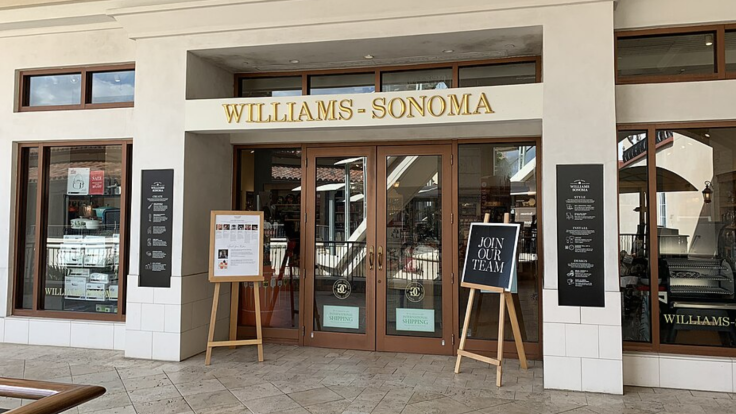
San Francisco-based Williams-Sonoma announced a $10 million (€8.9 million and £7.5 million) 401(k) contribution for eligible workers on 26 August 2026. Its employer-funded reward highlights a Social Security risk that cash bonuses can pose to Americans claiming retirement benefits early.
The announcement followed the retailer's recovery of $200.2 million (€178.2 million and £150.6 million) in tariff refunds and related interest during its second quarter. The money concerned tariffs imposed under the International Emergency Economic Powers Act. On 20 February, the US Supreme Court ruled that the law did not authorise those tariffs.
In its financial disclosures, Williams-Sonoma described the award as a one-off contribution to all eligible employees' retirement accounts. President and chief executive Laura Alber told investors, 'We're so appreciative to have the money back and to be able to reward our employees with part of it.'
The company credited staff for their work during the tariff disruption. It did not say Social Security rules influenced its decision. Nor is there evidence that its contribution caused any employee's retirement benefits to be withheld.
Why Williams-Sonoma's 401(k) Contribution Differs Under Social Security
The crucial question is who pays the money into the retirement plan, and how that payment is classified. According to the Internal Revenue Service, employer matching and nonelective 401(k) contributions generally are not treated as Social Security wages.
Employee contributions funded through salary deferrals are different. A worker might choose to place part of a bonus into a 401(k), but that money generally remains subject to Social Security and Medicare taxes. Moving wages into retirement savings does not automatically remove them from the earnings test.
The Social Security Administration counts wages, including most bonuses and commissions, when assessing benefits for people who claim retirement before full retirement age. The rule does not apply to someone who has already reached that age.
Cash and retirement contributions also serve different purposes. A cash award can pay for food, rent or repairs now. A contribution to an employer retirement plan builds savings subject to withdrawal and plan rules. They are not interchangeable, even when the amount matches.
There are exceptions. Certain bonuses and commissions received after retirement for work completed beforehand can be treated as special payments. The SSA says those payments generally do not reduce retirement benefits, although eligibility depends on the individual's circumstances.
How Cash Bonuses Can Affect Social Security Cheques in 2026
For someone below full retirement age throughout 2026, the earnings threshold is $24,480 (€21,790 and £18,410). The SSA withholds $1 (€0.89 and £0.75) in benefits for every $2 (€1.78 and £1.50) of earnings above that amount.
Consider a hypothetical worker receiving $2,000 (€1,780 and £1,500) each month in retirement benefits and earning $22,000 (€19,580 and £16,540) annually. Their employment income is below the threshold. Add a $5,000 (€4,450 and £3,760) cash bonus, however, and annual wages reach $27,000 (€24,030 and £20,300).
Assuming all earnings count, that is $2,520 (€2,240 and £1,900) above the limit. The standard formula produces $1,260 (€1,120 and £950) in benefit withholding. It is a calculation, not a report of anything that happened to a Williams-Sonoma employee.

The agency may initially stop a whole monthly cheque when applying deductions. Actual payment adjustments, including any later reconciliation, depend on the beneficiary's record and the SSA's procedures. Withheld benefits are not necessarily lost permanently, because the agency recalculates payments at full retirement age.
A separate rule covers those reaching full retirement age in 2026. Their threshold is $65,160 (€57,990 and £49,000), with $1 (€0.89 and £0.75) withheld for every $3 (€2.67 and £2.26) above it. Only earnings before the month they reach full retirement age are counted.
The SSA also has a special monthly earnings rule, generally useful during the first year of retirement. Workers expecting a bonus can check whether it counts as current wages or a qualifying special payment, and report changes in expected earnings to the agency.
© Copyright IBTimes 2026. All rights reserved.