

3I/ATLAS Mystery: Is Interstellar Object 14 Billion Years Old? Elusive Evidence Sparks Debate
3I/ATLAS may be 14 billion years old, revealing mysteries and anomalies in the latest interstellar visitor

A silent traveler has recently made its presence known in the dark velvet of our solar system. This has sparked a debate that goes back to the very beginning of time. 3I/ATLAS, the third interstellar visitor ever recorded, has spent the last few months doing things that no one expected and going against the basic ideas of astrophysics. The Asteroid Terrestrial-impact Last Alert System in Chile found the object on July 1, 2025.
At first, they thought it was a common near-Earth asteroid, but its hyperbolic trajectory showed that it was actually a galactic interloper. The scientific community is used to strange things happening in space, but the latest news about this icy interloper has taken a turn for the extraordinary: someone says that this object is not only old, but possibly 14 billion years old, which would make it older than the Sun and maybe even the universe itself.
The theory, spearheaded by astronomer Michele Bannister and her investigative team at the University of Canterbury in New Zealand, has sent ripples through premium scientific circles. If true, 3I/ATLAS would be a relic from a dead star system, a 'messenger from afar' that predates our own cosmic neighbourhood by aeons.
But as the object starts its long journey back into the empty space between stars, a more realistic picture is starting to emerge. The difference between these shocking age estimates and the hard evidence that is out there is still as big as the vacuum that 3I/ATLAS calls home.
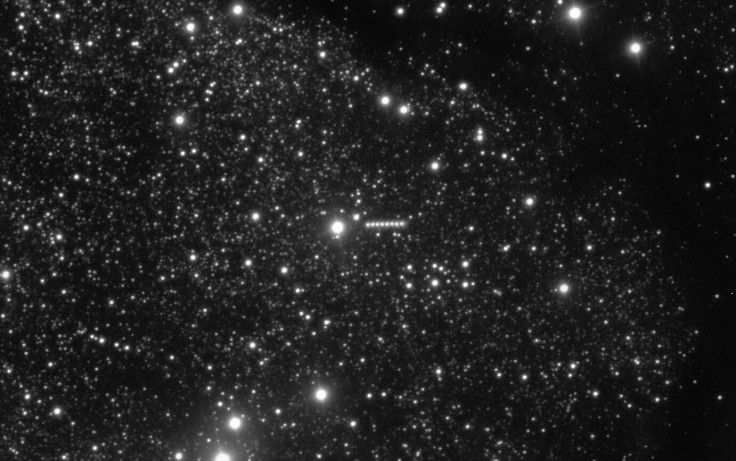
The Speculative Science Behind 3I/ATLAS
The primary hurdle for researchers is a simple matter of physics. To date an object with true precision, one typically requires a physical sample to perform isotopic analysis — a luxury we do not have. Instead, we are left with distant, low-resolution imagery and indirect velocity measurements.
Dating an object based on its 'hyperbolic' trajectory and speed — currently clocked at roughly 137,000 miles per hour relative to the sun — is an exercise in complex modelling rather than empirical proof. Bannister's model suggests the object originated from the Milky Way's 'thick disk', a region populated by stars formed shortly after the Big Bang, which serves as the basis for the 14-billion-year figure.
Public discussions have occasionally drifted toward radiocarbon dating, yet experts are quick to dismiss this as categorically impossible. Carbon-14 dating is only effective for organic materials up to 50,000 years old; for a metallic, icy wanderer like 3I/ATLAS, it is as useful as a sundial at midnight. Without material samples to isolate decay products, the claim that the object is eight to fourteen billion years old remains, for now, a compelling piece of speculation.
It is an inspiring thought, certainly, but one that lacks the 'extraordinary evidence' required to rewrite our history books. NASA has remained more conservative, noting that while 3I/ATLAS is clearly an outsider, it shares several characteristics with Oort Cloud comets, suggesting it could be a far more 'youthful' 4.5 billion years old.

Anomalies and the Alien Chemistry of 3I/ATLAS
While its age remains a mystery, the physical behaviour of 3I/ATLAS is undeniably bizarre. Observations from the James Webb Space Telescope (JWST) have revealed a chemical fingerprint that is 'distinctive' compared to anything born in our solar system. The object is remarkably rich in carbon dioxide —with a CO2-to-water ratio that is among the highest ever recorded — alongside surprising emissions of nickel and iron.
These metallic signatures, typically found in the hearts of stars or rocky planets, are appearing in the comet's 'coma' at distances from the Sun where they should, by all rights, be frozen solid. The Very Large Telescope (VLT) in Chile confirmed these findings, detecting atomic nickel vapor at 3.3 astronomical units, a distance where such sublimation was previously thought impossible without extreme heating.
Adding to the intrigue are the object's physical eccentricities. Over the past seven months, astronomers at the Teide Observatory in Tenerife have tracked 'wobbling' jets and anti-tail structures that seem to misalign with solar radiation pressure. Analysis of these jets showed they shift every seven hours and 45 minutes, a rhythmic pattern that Harvard's Avi Loeb argues could suggest a technological origin, though most peers attribute this to a slow 'wobble' or precession of the nucleus.
These intermittent brightness pulsations and non-gravitational accelerations have even prompted some to whisper of artificial origins, though most scientists, including those at the University of Canterbury, maintain it is a natural, albeit highly unusual, comet.
On Dec. 19, 2025, 3I/ATLAS made its closest approach to Earth, passing safely at a distance of 1.8 astronomical units — roughly 170 million miles away. While the lack of a 'dramatic event' brought relief to many, the scientific intrigue is far from over. As of January 2026, the comet has faded to magnitude 13 and is currently located within the constellation of Leo.
The wanderer leaves behind a trail of questions as it drifts away and gets ready to leave our system for good. 3I/ATLAS has been a humbling reminder that every time we think we've mapped the heavens, something unexpected comes out of the dark to show us how little we really know. It could be a piece of a bigger progenitor or a single ghost of a dead galaxy.
© Copyright IBTimes 2026. All rights reserved.