

3I/ATLAS Shock: Harvard Scientist Avi Loeb Highlights Strange Anomalies In Comet Jet
Avi Loeb highlights strange 3I/ATLAS anomalies: Is this comet an interstellar probe?
When the interstellar traveler 'Oumuamua sped through our solar system in 2017, it left behind a lot of unanswered questions and a lot of scientific debate. Avi Loeb, an astrophysicist at Harvard, is now looking into a new cosmic mystery that could help us figure out what these strange extrasolar objects are.
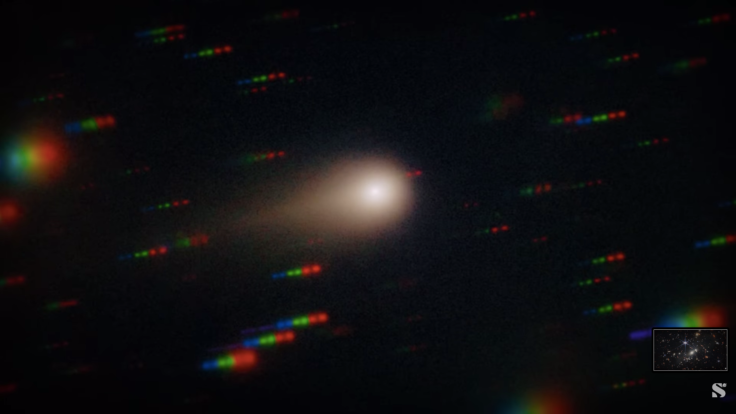
His most recent investigation is centred on the comet 3I/ATLAS. This celestial body is doing things that don't fit with what we know about astronomy and are putting our current models of the universe to the test. On July 1, 2025, the ATLAS survey telescope in Chile found this monster that was 20 kilometres wide. This is only the third object found in space.
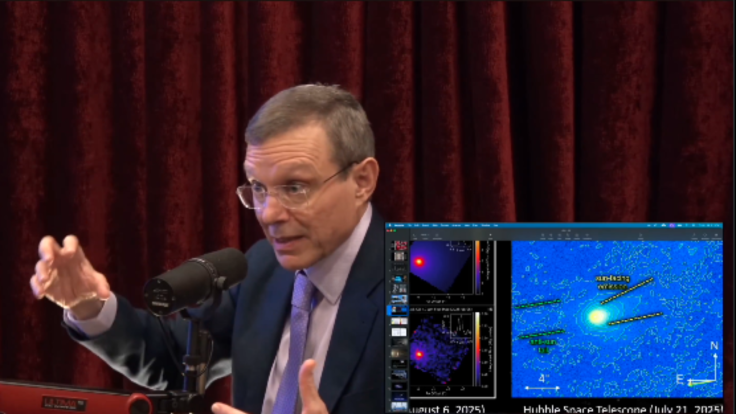
Loeb, who is known for his unusual and often controversial views on interstellar phenomena, says that 3I/ATLAS is not just a ball of ice and dust. His study shows that this object is sending out a 'sunward jet,' which is when material is pushed back towards the sun instead of away from it. What matters more is that this jet seems to be made up of 'unusually large particles.'
This has caused a stir in the scientific community and brought up old arguments about what objects that come from outside our own stellar neighbourhood are really like. Loeb says that solar radiation pressure would normally push these particles away because they are much bigger than the fine, micron-sized dust that is usually found in comet tails.
The Mystery Of The Sunward Jet And 3I/ATLAS
The fact that 3I/ATLAS has a sunward jet is especially interesting because comets usually have tails and jets that point away from the sun because of solar wind and radiation pressure. But data shows that 3I/ATLAS is following a different set of physical rules. Loeb says that these big particles, which are thought to be much heavier than the fine dust that is usually seen in comet tails, need a lot of force to be thrown in such a specific direction.
Hubble Space Telescope images from July 2025 were very important because they showed that this 'anti-tail' was not just an optical illusion caused by the Earth's perspective. It was a real physical feature that stayed the same even after the comet was deflected 16 degrees during its perihelion passage.
Loeb has been thinking about the comet's makeup and where it came from because of this strange event. If the particles are as big as the data says, it means that 3I/ATLAS has a different level of structural integrity or a different geological history than the 'dirty snowballs' we usually track.
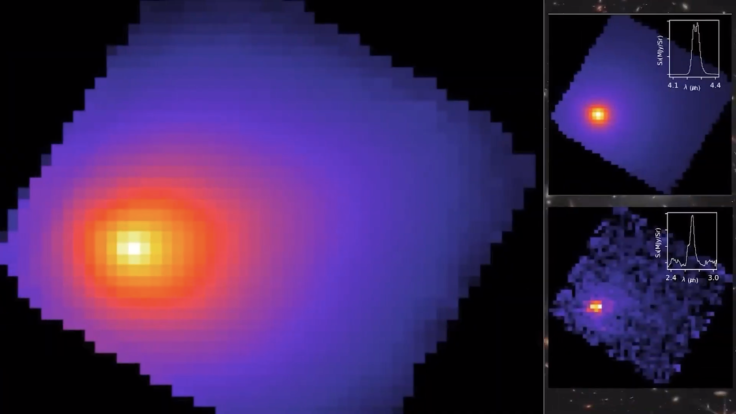
Also, chemical tests have shown a shocking difference: the comet's gas plume has a nickel-to-iron ratio and a nickel-to-cyanide ratio that are orders of magnitude higher than any other known comet. This makes it look more like industrial alloys than natural cosmic ice.
Loeb isn't just talking about one comet; he's talking about all interstellar objects. These visitors, whether they are natural pieces of far-off planetary systems or something more unusual, give us a rare chance to study the chemistry of other stars without leaving our own backyard.
Why 3I/ATLAS Could Redefine Our Search For Interstellar Life
The implications of Loeb's findings extend far beyond simple classification. If 3I/ATLAS is indeed carrying unusually large particles in a sunward trajectory, it forces astronomers to reconsider the 'drag' and 'push' forces at play in the vacuum of space.
Loeb has even calculated a tiny 0.0025 per cent probability that such a tightly collimated sunward jet would occur at random, leading him to question if the 'jet' is actually a beam of particles used for propulsion or to clear micrometeorites.
Critics often argue that Loeb's theories lean too heavily toward the sensational, but he remains steadfast in his 'people-first' approach to science: making complex data accessible and questioning the status quo.
'The diversity of interstellar objects might be much larger than we expected', Loeb noted, highlighting that each new discovery like 3I/ATLAS acts as a puzzle piece for a much larger picture. By focusing on these anomalies, researchers hope to build better detection systems—like the upcoming Vera C. Rubin Observatory—to spot these intruders much earlier.
As the object made its closest approach to Earth on 19 December 2025, passing at a distance of 268.91 million kilometres, projects like Breakthrough Listen even scanned it for radio signatures to rule out 'technosignatures' from an artificial source.
As the scientific world continues to pore over the data from 3I/ATLAS, one thing is certain: our solar system is a lot busier and more mysterious than we once thought. Whether this comet is a unique natural wonder or a hint of something more structured, Avi Loeb has once again ensured that we are looking up with renewed curiosity.
As 3I/ATLAS starts its long journey out of our solar system, it leaves behind a huge amount of data that could change how we think about the universe forever. The comet has shown us that our celestial backyard is much more active than we ever thought possible, whether it's a strange natural relic from a distant star or something more organised.
Avi Loeb's findings are a strong reminder that the most important discoveries often start with the courage to ask, 'What if?'
© Copyright IBTimes 2026. All rights reserved.