

Private ChatGPT Conversations Are Increasingly Turning Up as Evidence in US Court Cases
Exploring the legal implications of AI chatbot conversations in court cases
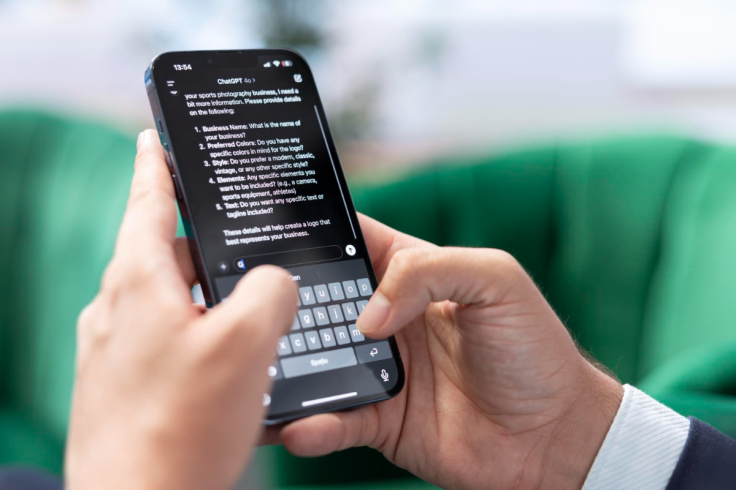
Millions of queries are sent to AI chatbots every day, with users often assuming their conversations will remain private. But a growing number of Americans are discovering that those conversations may not remain confidential once police or opposing lawyers come looking.
A review by The Washington Post of public records and local news reports found that chatbot logs had been cited in a dozen court cases over the past two years, spanning criminal prosecutions, custody disputes and corporate litigation.
Confessions and Threats Logged by AI
In one Florida case, a man identified in court documents as Darren Zhou allegedly spent months telling ChatGPT that he planned to rape and murder his ex-girlfriend, according to court records. OpenAI flagged the conversations and alerted the FBI, which passed the information to local police.
Zhou wrote that he was going to kill her by the end of the month and that if he could not have her, no one could, according to court records. Zhou was arrested in May and pleaded guilty in August to stalking and making electronic threats, receiving eight years of probation.
In a separate Missouri case, Missouri State University student Ryan Schaefer typed a message into ChatGPT at 3:47 a.m. after allegedly damaging 17 cars in a campus parking lot, according to police records.
He later consented to a police search of his phone, which recovered the chat. Schaefer pleaded guilty to felony property damage and was sentenced in July to five years of probation.
🚨 The CEO of OpenAI just admitted your ChatGPT chats can be used against you in court.
— Guri Saroy (@HeyGurisaroy) August 26, 2026
Sam Altman said it out loud on a podcast.
Talk to a therapist, a lawyer, or a doctor and the law protects that conversation. Privilege. Confidentiality.
Talk to ChatGPT about the exact same… pic.twitter.com/TJY3GnJJQ3
No General Legal Privilege for Chatbot Users
Unlike conversations with a lawyer, ordinary conversations with an AI model do not currently have a generally applicable attorney-client privilege.
A federal judge in New York addressed the issue directly in February in the case of financial executive Bradley Heppner, who had consulted the AI model Claude about defense strategies after learning he was under federal investigation.
The judge found that attorney-client privilege did not apply to the AI conversations because Claude was not a lawyer and Heppner's attorneys had not directed him to use the service. Heppner was convicted of securities fraud and wire fraud in May.
Law professor Laura Abelson of Southern Methodist University said that in an area where the law has yet to establish a specific privilege for AI conversations, courts are unlikely to treat ordinary chatbot exchanges as equivalent to protected communications with attorneys.
OpenAI Can Refer Some Cases To Police
OpenAI has said it may refer certain conversations to law enforcement. In a statement about its safety practices, the company said that when it detects users planning to harm others, it routes their conversations to specialised pipelines for review by a trained team.
If human reviewers determine that a case involves an imminent threat of serious physical harm to others, OpenAI may refer the matter to law enforcement.
OpenAI chief executive Sam Altman has separately argued that conversations with AI need protections similar to those given to conversations with doctors or lawyers, given how often people turn to chatbots with sensitive questions. That position sits in tension with the company's current practice of referring some cases to law enforcement.
Sam Altman, CEO of ChatGPT, says people share their personal information with ChatGPT without realizing that their conversations could potentially be used as evidence in court in legal cases. pic.twitter.com/DCAfHqOFfC
— GBC (@GBC_Press) August 2, 2026
Civil Cases Add Another Layer of Risk
The risk extends well beyond criminal cases. Michael Price, litigation director at the Fourth Amendment Center at the National Association of Criminal Defense Lawyers, said chatbot logs can be more revealing than typical digital evidence because they may capture a person's reasoning and intentions rather than simply a search term.
In one Michigan lawsuit, a tyre salesman used ChatGPT to ask whether deleted emails could be recovered.
His former employer later used the conversation to argue that he had tampered with evidence during a non-compete dispute.
A judge subsequently awarded the employer attorneys' fees for additional work resulting from the conduct.
The wider implication is that people who use ChatGPT or other AI chatbots should not assume their conversations will remain confidential if a legal dispute or police investigation arises.
Depending on the circumstances and jurisdiction, chatbot data may be sought through legal processes including warrants, subpoenas or civil discovery.
Unlike attorney-client communications, ordinary conversations with AI chatbots do not currently have a generally applicable privilege under US law, although the legal treatment of AI-generated material can depend on the circumstances.
As chatbot use grows and AI 'agents' gain access to more personal data, legal experts expect such conversations to become a larger source of evidence in future cases.
© Copyright IBTimes 2026. All rights reserved.