

Former Cornell Student Leaders Say They Officially Warned of 'Rape Culture' Before Jane Doe Case
Former Cornell student leaders say they warned the university about fraternity rape culture two years before Jane Doe's alleged assault at Chi Phi
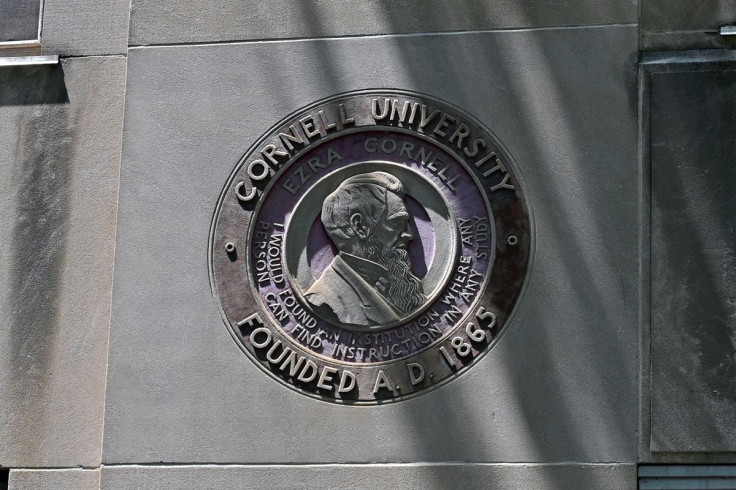
Former student leaders at Cornell University say they formally warned administrators of a 'known rape culture' in fraternities two years before a former student, identified in court filings as Jane Doe, alleged she was gang raped at the Chi Phi fraternity house.
They point to a December 2022 Student Assembly resolution that urged Cornell to confront sexual assault, drugging and what it described as a failure to hold perpetrators accountable.
The resolution, passed by Cornell's Student Assembly, demanded that university leaders address 'a known rape culture where victims are silenced and perpetrators are often never held accountable for their actions'. It added: 'Cornell needs to do better in supporting survivors and fighting the persistent rape culture on campus.'
For context, Jane Doe alleged in a lawsuit filed last month that she was plied with alcohol and ketamine before being sexually assaulted by seven members of Chi Phi in October 2024.
She said she later left Cornell because of how the university handled the matter. The allegations remain contested, and none of the men named in the suit has been criminally charged.
What Cornell Students Said in 2022
Amisha Chowdhury, a Cornell graduate who served on the Student Assembly when the resolution passed, said the details of Doe's case were painful but not unexpected. 'This goes back years and years, and there's a paper trail,' she said.
The former assembly members said they were prompted to act after Cornell police sent campus-wide emails reporting five cases of drugging and two reports of sexual assault in a single week. The incidents were reported between 3 and 9 November 2022 and, according to the resolution, all occurred at fraternity addresses.
Kelly Chan, then the Student Assembly's vice president for external affairs, said the police figures confirmed what many students had been hearing privately about fraternity culture. 'It was really a time where a few of us, including myself, were like, "enough",' she said.
The resolution also cited nicknames allegedly used for three Cornell fraternities. According to the measure, Theta Delta Chi was known as 'Thumpty', Sigma Alpha Epsilon as 'Sexual Assault Expected', and Pi Kappa Alpha as 'Spike', a reference to spiking women's drinks.
Those descriptions were presented in the resolution as examples of what it described as a normalised culture of sexual assault, not as findings by the university or police.
Pi Kappa Alpha spokesperson Aranda Hanks Gehringer said in a written statement that sexual misconduct violated fraternity standards. 'More importantly, it is a crime, and we support holding individuals accountable to the fullest extent of the law,' she said.
National representatives for Theta Delta Chi and Sigma Alpha Epsilon did not immediately respond to requests for comment.
How Cornell Responded
Then Cornell president Martha Pollack responded to the resolution a month later by pointing to the university's code of conduct, a temporary ban on fraternity social events and encouragement for students to report allegations to campus police. Former student representatives said the response disappointed them.
'Had the administration acted on our proposals and expanded survivor resources and services, Jane Doe might have stayed in school and graduated,' Chowdhury said. 'It's heartbreaking that survivors like her are forced to leave because the university failed to protect them.'
Cornell representative Rebecca Valli did not answer questions about the 2022 resolution or the administration's response. She said, however, that the university had expanded prevention, education and accountability efforts for fraternities and sororities since 2024. Pollack, who retired in June 2024, did not immediately respond to a request for comment.
The Student Assembly has 37 elected members and describes itself as the principal liaison between undergraduate students and Cornell's administration. Seven members signed the 2022 resolution condemning aspects of Greek life. Its charter requires the university president to respond formally to resolutions passed by the assembly.
Chowdhury accused the administration of prioritising fraternity alumni donors over survivors. 'Sure, they might just ban one or two fraternities or organizations on campus, but the reality is the underlying issues are never addressed, so everyone gets to get away with it,' she said. That is her assessment, not an established finding about Cornell's motives.
Chan said the experience left her disillusioned with student government and she resigned shortly afterwards. 'We didn't really have a say,' she said.
What Happens Next
The case has now drawn intervention from New York's highest state offices. Governor Kathy Hochul appointed state Attorney General Letitia James as special prosecutor earlier this month.
Cornell has also retained former US Deputy Attorney General Sally Yates to lead an independent review of its response to sexual misconduct, including the allegations involving Jane Doe and Chi Phi.
Yates and her team will examine whether Cornell followed its own policies and procedures in responding to the October 2024 allegations. The review will report directly to a special committee of Cornell's Board of Trustees.
Chowdhury said she hoped the scrutiny would produce practical reform rather than another cycle of statements. 'The biggest change comes out of public shame,' she said. 'I hope the only good thing that comes out of it is the scrutiny that they're facing, which will hopefully lead to some tangible changes.'
Whether Cornell's earlier warning could have changed the outcome remains unproven. The question now sits at the centre of a case that has already forced the university to defend its record in public.
© Copyright IBTimes 2026. All rights reserved.