

Akshay Petta Is Engineering AI for Enterprise-Scale Audit Evidence

A spreadsheet may appear orderly when it opens on a screen. The challenge becomes clearer when one control test depends on information spread across hundreds of files and the relationships among those files must remain intact from the first piece of evidence to the final conclusion. Akshay Petta works on that problem as the first hire and founding engineer at Bead AI, where he builds infrastructure for agents used in Sarbanes-Oxley audit testing.
Petta designed and built the spreadsheet-agent infrastructure beneath Bead's systems. The engineering allows agents to read, analyze, and annotate enterprise evidence sets before converting the results into working papers auditors can examine. Handling that material requires more than passing spreadsheet contents to a language model because important context may be distributed across many interdependent workbooks.
"Getting an answer from one small workbook is very different from working across an enterprise evidence set," Petta said. "The agent has to keep track of the relationships between the files and remain dependable throughout the test." He built the caching layer, memory-management system, and distributed-processing infrastructure that supports the agents. His responsibility extends beyond how the model responds to the technical foundation that allows large-scale spreadsheet processing to continue reliably.
"The hard part is not making an agent produce something that looks plausible," Petta said. "The challenge is making it work consistently on large files and giving the auditor a result that can be checked." Petta does not view the model as the complete product. The surrounding engineering must manage context, memory, evaluation, and the way results are prepared for professional review.
He arrived at that problem after more than three years at BlackRock as an investment strategist. Petta spent those years working with financial models and the evidence supporting institutional decisions, which affects how he reads the spreadsheets his agents now encounter. A workbook is rarely just a table of numbers in that setting. Its meaning may depend on formulas, references, assumptions, and information contained elsewhere in the broader financial process.
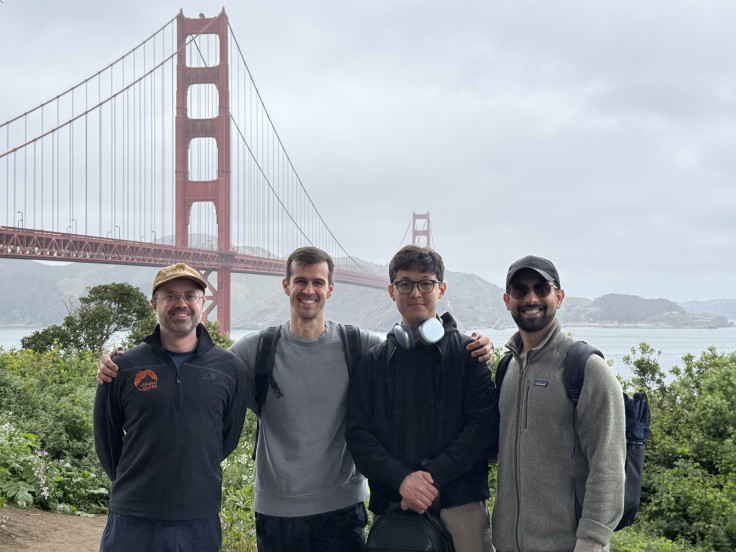
"I spent years working inside financial spreadsheets before I started building agents for them," Petta said. "That experience helps me recognize how much context can sit across a workbook and the files around it." That perspective has also carried into external technical assessment. IEEE Access has relied on Petta for eight completed peer reviews of AI and machine-learning research, while Innovate UK selected him for appointment as an Expert Assessor in its AI, Digital and Advanced Computing category.
At Bead, the immediate application is SOX testing. Publicly listed companies must assess whether their internal financial controls are operating as intended, requiring audit teams to collect evidence, test controls, document findings, and prepare working papers for professional review. In some cases, Bead's system has completed control-testing work within minutes that previously occupied teams for several days. The infrastructure Petta built also contributed to Bead winning its first client, described as one of the largest publicly listed companies in the world.
"Audit work has to be traceable," Petta said. "The working paper needs to show the evidence behind the test so a person can review it and challenge the conclusion when necessary." That requirement changes what counts as a successful AI result. The agent must preserve the relevant evidence and produce documentation that supports scrutiny by an auditor or regulator instead of simply arriving at an answer.
Petta designed the surrounding infrastructure with that expectation in mind. His work helps the system manage information throughout a test and turn completed analysis into an auditable working paper. Each technical layer supports the same purpose: allowing an output to be examined rather than merely accepted. Human reviewers remain responsible for conclusions that require professional judgment because they can inspect the evidence and evaluate how the system reached its result.
For Petta, spreadsheets are a practical test of whether an AI agent can function inside a large organization. Much of the evidence used in finance and audit lives in them, yet realistic spreadsheet work remains difficult because the task can require many connected steps and information distributed across numerous documents. Improving the underlying model alone does not remove those constraints. The infrastructure around it has to preserve context as the evidence expands and convert the agent's activity into something another professional can use.

"Spreadsheets are where much of the real financial evidence lives," Petta said. "If agents cannot work reliably there, they are not ready for a large portion of enterprise finance." Petta's work at Bead is aimed at that gap rather than at controlled spreadsheet demonstrations. His responsibility is to build technical layers capable of carrying an agent through complex evidence while preserving a clear route from its final work back to the source.
The standard is demanding because the work is consequential. For Petta, success means an agent can move through the evidence, complete the control test, and produce a working paper that a reviewer can challenge rather than simply trust. That requirement places traceability alongside speed as a core measure of whether enterprise financial AI is actually useful.
© Copyright IBTimes 2026. All rights reserved.