

Elon Musk Says 'AI Music Is Really Good' as He Unironically Admits To Having 'Cyber Psychosis'
Musk praised AI music at X Takeover and described 'cyber psychosis', raising questions about what he meant and how AI shapes creativity
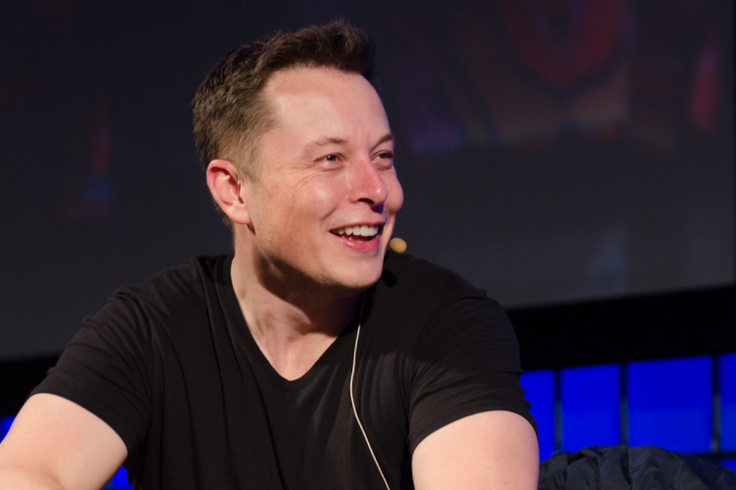
Elon Musk praised AI-generated music as 'really good' and said he had experienced what he called 'cyber psychosis' roughly six times this year.
The Tesla chief executive made the remarks by video link on Saturday, 10 October, during X Takeover at the company's Giga Texas factory in Austin.
The independently organised gathering brought together Tesla and technology enthusiasts. Musk's comments followed a question about recent artificial intelligence developments that had surprised him, particularly the quality of AI-generated music videos.
'I've got a little bit of cyber psychosis,' Musk said. 'Maybe a lot actually.' He went on to estimate that he had experienced what he called AI or superintelligence psychosis 'probably like half a dozen times' this year.
He did not say he had received a medical diagnosis. He said this in a discussion about creative technology, not as a disclosure of treatment or symptoms.
Elon Musk Praises AI Music Videos Made With Human Help
In the X Takeover interview, Musk described some recent AI music videos as among the best he had ever seen. He said he had shared examples on X and appeared especially impressed by how convincingly the visuals and music worked together.
He also rejected the dismissive label 'slop-core,' commonly applied to low-quality AI material. Musk preferred 'awesome-core,' a description that quickly became a target of online ridicule.
'AI music is really good,' he said. Musk argued that the videos showed something harder to measure than technical accuracy. He suggested that software can be tested against rules, but creating music and imagery people find beautiful involves taste, harmony, and emotional resonance.
Yet his account also acknowledged a human role in the creative process. He described one example combining several AI tools with art assets curated by a person. It would therefore be misleading to portray that finished video as a wholly autonomous AI creation.
His enthusiasm was a personal assessment of the results, not proof that a machine possesses artistic judgement. Nor did his comments establish how much of the music or visual material people created, selected, or refined.
The 'awesome-core' description drew critical replies on X after clips circulated. One user wrote, 'I am cringing out of my skin,' while another accused Musk of showing little regard for art. These posts illustrate opposition to his remarks rather than a representative measure of public opinion.
What Elon Musk's 'Cyber Psychosis' Remark Does and Does Not Mean
Musk's phrase overlaps with a more serious discussion among mental health researchers. 'AI psychosis' is sometimes applied to reports of delusional beliefs developing or worsening during extended conversations with chatbots.
The American Psychological Association stresses that the term is not a formal diagnosis. Its September review describes cases in which chatbot responses may reinforce vulnerable users' mistaken beliefs, while acknowledging uncertainty about causes and who might be at risk.

Researchers writing in The British Journal of Psychiatry have similarly called for more systematic research and safeguards. Their concerns relate to possible psychological harm from chatbot interaction, rather than the excitement someone expresses about AI-generated music.
In technology circles, 'cyber psychosis' can also function as an exaggerated or humorous shorthand for fascination with artificial intelligence. Musk did not explain whether he meant it that way, and the exchange provides no basis for diagnosing him.
His word choice nonetheless brought the two meanings into the same conversation. Moments after praising AI music videos, Musk used an expression researchers use to describe potentially serious mental health experiences.
© Copyright IBTimes 2026. All rights reserved.