

Supreme Court Justice Alito Says Marriage Equality Was a 'Decisive' Point in US Turn Against Religious Liberty
Justice Samuel Alito's remarks revive debate over Obergefell, religious exemptions and the limits of precedent in disputes involving same-sex marriage
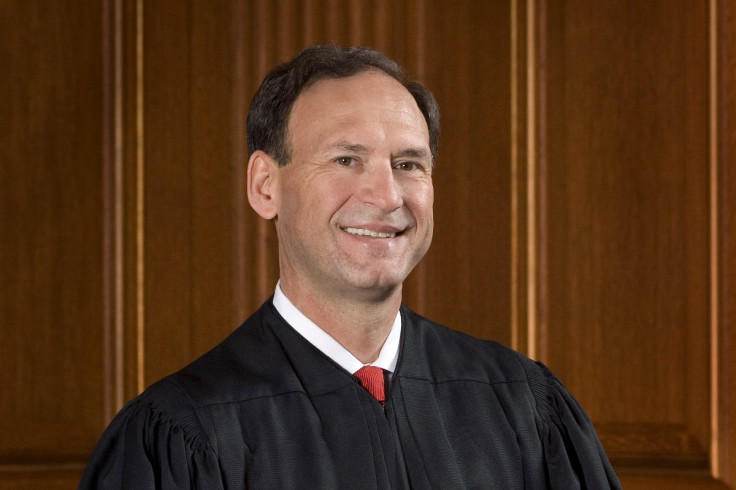
Supreme Court Justice Samuel Alito has renewed his criticism of marriage equality, describing the landmark 2015 ruling that established a constitutional right to same-sex marriage as 'perhaps the decisive point in our nation's turn against religious liberty.'
The comment appears in his newly published book of speeches, So Ordered: An Originalist's View of the Constitution, the Court, and Our Country.
It has drawn criticism from LGBTQ+ advocates and others who argue that it presents same-sex marriage and other civil-rights protections as threats to religious exercise.
In Obergefell v. Hodges, the Supreme Court held that the Fourteenth Amendment requires states to license marriages between two people of the same sex and recognise same-sex marriages lawfully performed in other jurisdictions.
The ruling did not require religious organisations to solemnise same-sex marriages or abandon their religious teachings about marriage. Disputes over the scope of religious exemptions have instead arisen in subsequent litigation involving services, employment, public accommodations and other areas of public life.
Justice Alito dissented from the 2015 ruling. He has since addressed private audiences on religious liberty, including seven Catholic audiences whose speeches appear in the book.
In a 2018 speech included in So Ordered, Alito said he feared that 'equating the expression of certain views with bigotry' would 'drive believers out of public life.'
Three years later, he compared Americans who hold traditional religious views about marriage with Catholics who were marginalised in post-Reformation England. He quoted language describing Catholics as being 'found in corners, and alleys, and cellars.'
The comparison prompted criticism from those who viewed it as overstating the position of people who oppose same-sex marriage, given the legal status and broad public support for marriage equality in the United States.
By 2022, Alito was telling the Magnificat Foundation that 'quite suddenly, religious liberty has become controversial.' He warned of a 'new moral code' that refused to 'live in peace with those who violate' it and predicted a 'steady stream of religious-liberty cases.'
Critics argue that this framing presents marriage equality and other civil-rights protections as threats to religious exercise.
Alito's Position on Precedent
Alito's latest comments are notable alongside remarks he made at an October 2025 academic conference hosted by George Mason University's Antonin Scalia Law School.
At that event, he said Obergefell was 'entitled to respect' under the doctrine of stare decisis, the legal principle that courts generally follow precedent. He also said that nothing in the Supreme Court's 2022 decision in Dobbs v. Jackson Women's Health Organisation was intended to disturb Obergefell.
Those comments did not amount to an irrevocable commitment never to revisit the ruling. They did, however, distinguish respect for a binding precedent from agreement with its constitutional reasoning.
The book, published by Basic Liberty on 6 October 2026, contains 19 speeches, seven delivered to Catholic audiences. Alito, a devout Catholic, uses the collection to defend what he calls 'practical originalism' and to discuss what he views as pressures on the US constitutional order.
The Supreme Court has also issued a series of rulings strengthening protections for religious exercise and expression. Those decisions include Groff v. DeJoy, which concerned religious accommodation in the workplace, and 303 Creative LLC v. Elenis, which involved religiously motivated expression and a public-accommodations law.
Jeff Mateer, executive vice-president and chief legal officer of the First Liberty Institute, wrote in the organisation's 2025 annual report that religious-liberty advocates 'continue[s] to win unparalleled court victories at every level of the judiciary.'
Those developments complicate Alito's portrayal of the current state of religious liberty, though they do not negate concerns some religious groups have raised as social norms and legal obligations change.
Continuing Legal Disputes
Justice Clarence Thomas, joined by Alito, previously argued that Obergefell had created 'a problem that only [the Court] can fix' in a 2020 statement concerning Davis v. Ermold. Thomas also described the ruling as having 'ruinous consequences for religious liberty.'
The statement has contributed to continuing debate over the relationship between Obergefell and religious-liberty protections. Alito's later description of Obergefell as entitled to respect under stare decisis provides additional context, but does not resolve questions about how the precedent might be treated in future litigation.
The remarks come as disputes over religious exemptions continue in areas including public accommodations, employment and education. Those disputes generally concern whether a person, business or organisation must provide a service or perform a public function connected with a same-sex marriage, not whether an individual must enter such a marriage or whether a religious organisation must solemnise one.
The Wider Debate
The debate reflects a continuing conflict over how same-sex marriage should interact with religious freedom and protections against discrimination.
The issue does not divide neatly between two opposing groups, religious people and organisations hold a range of views on marriage equality, while legal disputes often turn on the specific service, law or government function involved.
© Copyright IBTimes 2026. All rights reserved.