

Avi Loeb Keeps 3I/ATLAS At Rank 4 — Suspense Builds As New Data Looms
Loeb holds 3I/ATLAS at Rank 4, stressing caution until fresh data clarifies its mysterious anomalies
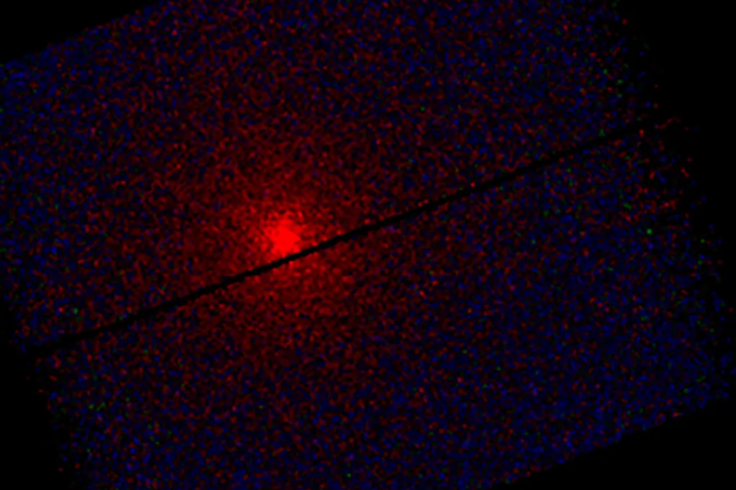
Harvard astrophysicist Avi Loeb remains cautious about moving the interstellar object 3I/ATLAS from Rank 4 on his own Loeb Classification Scale.
The scale, which is between 0 (natural icy rocks) and 10 (alien technology), is used to measure the probability of artificial origin in objects in the interstellar.
Loeb, in his article titled 'Updating the Loeb Classification Scale of 3I/ATLAS', said that although 3I/ATLAS has demonstrated 15 anomalies, including one remarkable anti-tail jet pointing toward the sun, the observations remain inconclusive. In this article in Medium, he wrote: '3I/ATLAS is most likely a comet of natural origin, but there are eight anomalies that endow it with a rank of 4 on the Loeb scale.'
What Rank 4 Means
Rank 4 on the Loeb scale is a category in which natural explanations are prevalent but cannot fully explain the observed behaviour. Loeb's classification reflects his cautious approach to applying science, with no speculation until corroborating data are available.
The anomalies include the longest anti-tail jet ever observed, reaching almost a million kilometres, and the anomalous direction along the ecliptic plane. These aspects have led to speculation that they may have had an artificial origin, though Loeb has pointed out that such speculation should be supported by evidence rather than guesswork.
Awaiting Jupiter Flyby
Suspense has now been developed as 3I/ATLAS approaches the closest point to Jupiter on 16 March 2026. The predicted perijove distance of 53.5 million kilometres puts it close to the radius of Jupiter, where the planet overpowers the Sun's tidal force.
It is hoped that this will give the most detailed imaging and spectroscopic information to date, which may help determine whether 3I/ATLAS is just a comet or something more exotic.
A Scale Designed to Cut Through Speculation

Loeb devised a classification system to minimise the element of guesswork in the rating of interstellar visitors. The scale enables scientists to rank claims according to the changing evidence, so that extraordinary claims are accompanied by extraordinary evidence.
It has already been used on past interstellar objects, such as Oumuamua, which Loeb controversially claimed had an artificial origin. He maintains 3I/ATLAS at Rank 4 to indicate anomalies, but they are not yet sufficient to warrant an upgrade in classification.
Public Fascination and Scientific Scrutiny
The controversy over 3I/ATLAS has captured the public's attention, and Loeb has appeared in various interviews to elaborate on his line of reasoning. He has cautioned against too much reckless conjecture, observing that interstellar archaeology, the science of technological evidence on cosmic objects, may come to be recognised as a respectable field should evidence of artificial origin be established one day.
In the meantime, Loeb insists that it is necessary to wait and not revise the ranking until new information comes in. With 3I/ATLAS still in the solar system, March 2026 remains a key moment for scientists and enthusiasts alike.
Loeb ensures that the evidence-based discussion does not lose track of the facts, regardless of the eventual findings regarding the nature of the cosmic visitor.
The scientific rigour and tantalising possibility in the decision to retain the object at Rank 4 is that, on some future day, interstellar visitors might unlock the secrets that we presently do not know. Until this moment, the cosmic suspense is sustained.
© Copyright IBTimes 2026. All rights reserved.