

3I/ATLAS Forces Astronomers to Reevaluate Probability Distributions for Interstellar Object Properties
3I/ATLAS's unexpected traits are reshaping how astronomers model the behaviour and origins of interstellar objects
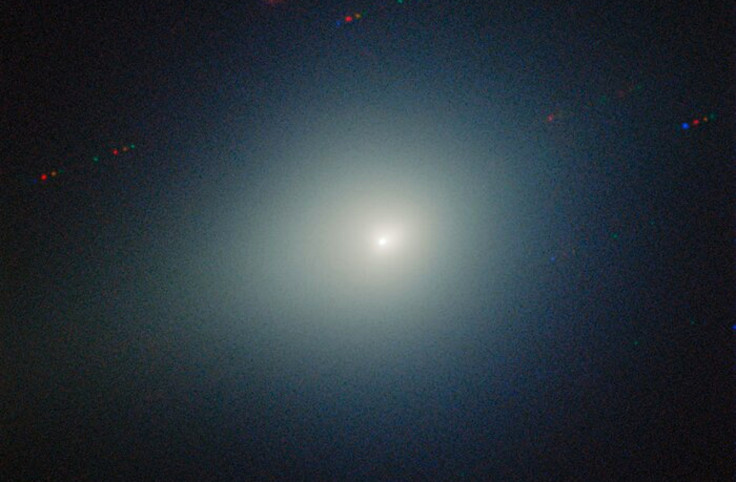
The discovery of 3I/ATLAS, only the third confirmed interstellar object ever observed passing through our Solar System, is already reshaping how astronomers model the properties of objects arriving from beyond our cosmic neighbourhood. Despite increasing the sample size from two to three, scientists say the impact on theoretical models has been disproportionate, exposing deep flaws in long-held probability assumptions about interstellar debris.
Discovered in July 2025 by the ATLAS survey and rapidly followed up by major observatories, 3I/ATLAS has introduced physical characteristics that do not fit comfortably within existing statistical frameworks built around earlier visitors 'Oumuamua and 2I/Borisov.
At this point, due to the sparse dataset, the probability distributions were broad and highly uncertain. The orbital parameters, as determined by the Gemini North telescope and summarised in the publicly available data, indicate a hyperbolic orbit with an eccentricity of 6.139, consistent with an interstellar origin. It is also retrograde and has a high inbound velocity, which makes it even more different from normal long-period comets.
However, the object's physical characteristics, rather than its orbit, have prompted astronomers to revise their models.
Light‑Scattering Properties Never Seen Before
Among the most remarkable discoveries is the result of new polarimetric observations that show that 3I/ATLAS is capable of light-scattering behaviour, which has not been studied before in terms of asteroids or comets. Recent reports show the object exhibits the light-scattering properties never seen on any known space object, indicating a surface composition or structure that is not comparable to those found in the Solar System.
This finding has significant ramifications for the topic of interstellar object modelling in terms of probability distributions. So far, astronomers have surmised that interstellar objects would be located within the same wide range of reflectance and polarisation as comets and asteroids orbiting the Sun. 3I/ATLAS is refuting that fact, meaning that the variety of interstellar objects may be much more than thought.
Early Characterisation Reveals Unusual Surface and Coma Features
Further observations indicate that 3I/ATLAS has a complex near-infrared spectrum, an intermediate red optical slope, and rare coma characteristics not typically observed in Solar System comets. These results indicate the possibility that the materials and outgassing behaviour of the surface of the object can be very different to known cometary bodies.
These anomalies make it challenging to classify 3I/ATLAS using current probability distributions, since most of them were based on the assumption that interstellar objects would be similar to the icy bodies of the Oort Cloud.
Why 3I/ATLAS Is Forcing a Rethink
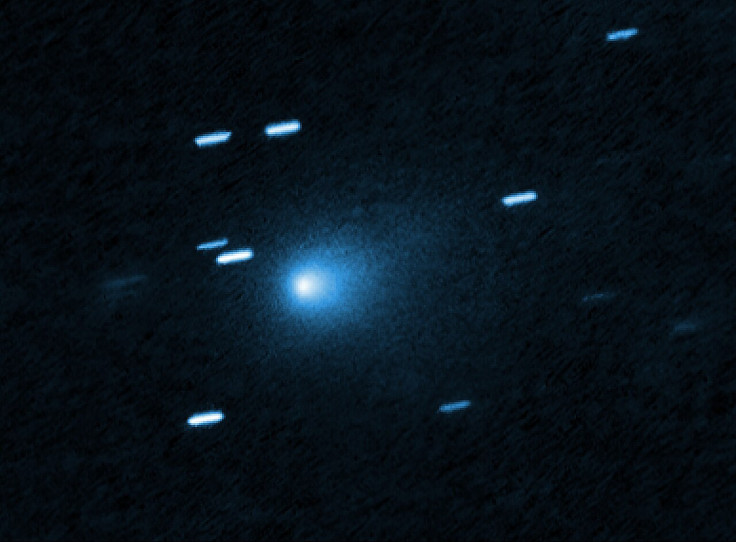
The peculiarities of 3I/ATLAS have made astronomers reconsider some of the major modelling assumptions:
- Brightness distributions: Signatures of the object's reflectance and polarisation are outside the expected ranges, indicating that previous models underestimated the variation in the interstellar material of the surface.
- Size distributions: Given early estimates, 3I/ATLAS may be larger than typical cometary nuclei, challenging established theories of the mass distribution of interstellar debris.
- Activity profiles: Their coma behaviour and spectral characteristics are distinct from those of Solar System comets, suggesting that interstellar objects may undergo different thermal or chemical processes.
- Trajectory expectations: 3I/ATLAS's retrograde, highly inclined orbit contributes to an ever-expanding body of evidence that interstellar objects originate from distinct, widely distributed sources across the galaxy.
The number of confirmed interstellar objects remains small, yet their variety is too vast to be explained by the simple statistical models used in the past.
A Universe More Diverse Than Expected
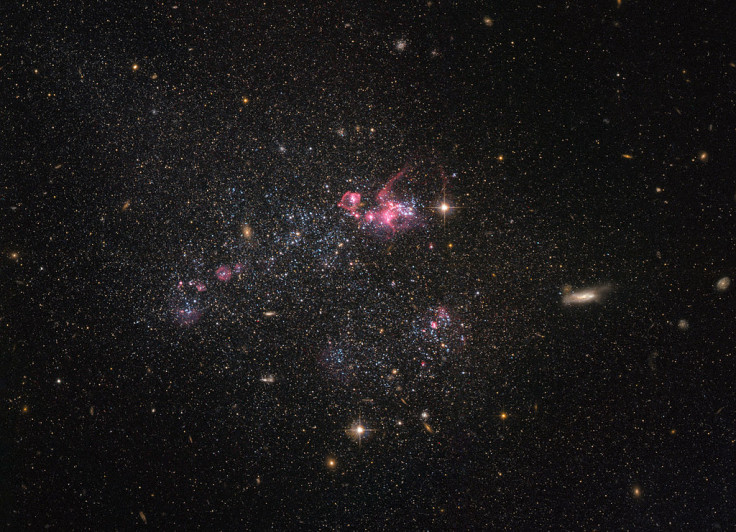
The findings of 3I/ATLAS help highlight a broader fact that has been emerging from recent astronomical discoveries: the universe is much more varied than previously thought.
Each new interstellar visitor has been an intriguing phenomenon in its own way. Oumuamua did not have a coma and had no non-gravitational acceleration; Borisov is a hyperactive comet; and current 3I/ATLAS has light-scattering qualities and spectral profiles that have never been seen before.
The object will be instrumental in refining the probability distributions used to describe interstellar populations as astronomers continue to analyse 3I/ATLAS. The next generation of discoveries, particularly using next-generation observatories like the Vera C. Rubin Observatory, will be able to determine whether 3I/ATLAS is an outlier or belongs to a larger, hitherto unidentified population of interstellar bodies.
So far, 3I/ATLAS is a testament to the fact that even a single discovery can redefine the cosmos.
© Copyright IBTimes 2026. All rights reserved.