

Woman Loses $50K to Fake Microsoft and Wells Fargo Scam: Suspect Arrested During $30K Pickup
Detectives intercept scam attempt and arrest suspect in ongoing fraud operation
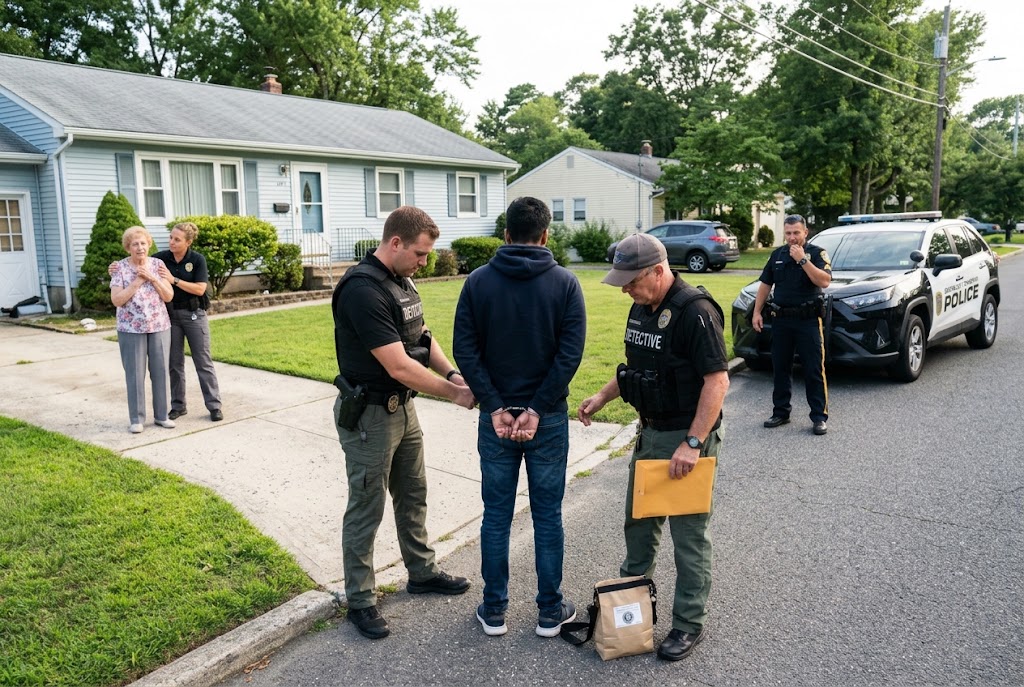
Berkeley Township detectives were already inside a Holiday City home, taking a report on a $50,000 (£36,965) theft, when the people who had taken the money rang the resident again. They wanted $30,000 (£22,180) more and said a courier would come to the house to collect it for safekeeping.
Officers set up surveillance around the property and waited. A grey Toyota RAV4 passed the house, left the area, then returned and parked one property away. At about the same time, the woman was told her courier had arrived.
Gurdutt Singh, 24, of South Richmond, New York, was arrested at the scene on Friday 14 August. He faces charges of conspiracy to commit third-degree theft by deception, and conspiracy to commit third-degree money laundering. He was lodged in the Ocean County Jail under New Jersey's bail reform guidelines.
How the Scam Opened
The money had gone earlier in August. An error message purporting to come from Microsoft took over the woman's home computer and displayed a telephone number. When she rang it, a woman claiming to represent Microsoft told her that her bank accounts had been compromised, then passed the call to a man who said he worked for Wells Fargo.
On that advice she posted a cashier's cheque for $50,000. The callers rang daily for several days afterwards to hold her trust, until she worked out that she had been defrauded and contacted Berkeley Township Police. She kept answering the phone after making the report, and officers were still in the house when the second demand arrived.
A Playbook the FBI Has Named
That opening is a documented script. In August 2025, the Federal Trade Commission listed the fake on-screen security alert, branded as Microsoft or Apple and carrying a number to call, as one of three standard approaches used against older adults.
So is the layering that followed. The FBI calls the fuller version the phantom hacker scam, in which criminals pose in succession as a technology company, a financial institution, and a government official. Victims are told their assets will sit in a protected account, and then never hear from the callers again.
The doorstep collection carries its own alert. A public service announcement issued on 29 January 2024 described couriers being sent to homes and public locations to pick up cash. Victims are sometimes told to authenticate the handover with a passcode, such as the serial number of a dollar bill.
Between May and December 2023, the bureau logged more than $55M (£40.7M) in losses to that method.
Why the Money Rarely Comes Back
The payment route matters as much as the sum. The Federal Trade Commission warns that bank accounts carry different and fewer protections than credit cards. Anyone talked into moving money out of an account, it says, is unlikely to be covered or to see it again. Its advice on the tactic reads: 'Moving it means you'll lose it, not protect it.'
The Second Berkeley Township Sting Since June
The department has run this operation before. In June, it arrested Ren Xin Huang, 54, of Flushing, New York. A caller posing as a Federal Trade Commission agent had convinced a woman in the township that the agency would store her money for her. That case opened with a bogus Microsoft error message too, and ended with officers taking over the communications and arranging a second pickup.
Berkeley Township Police say legitimate banks, government agencies, and financial institutions never ask customers to move or withdraw funds for safekeeping. Anyone who receives such a request should contact their bank through official channels, the department says.
The pattern is national. Americans aged 60 and over filed 201,266 complaints with the FBI's Internet Crime Complaint Center in 2025 and reported more than $7.7B (£5.7B) in losses, more than any other age group.
Tech and customer support fraud accounted for $1B (£739M) of that total, and over 12,000 of those victims lost more than $100,000 (£73,930) each.
Police have not said whether the $50,000 was recovered, and have named no other suspects.
© Copyright IBTimes 2026. All rights reserved.