Woman Loses $117K in Fake Wells Fargo Scam as Husband Enters Hospice: 'Everything I Had Is Gone'
A caregiver's life savings vanish in a sophisticated bank impersonation scam, highlighting the growing threat of financial fraud
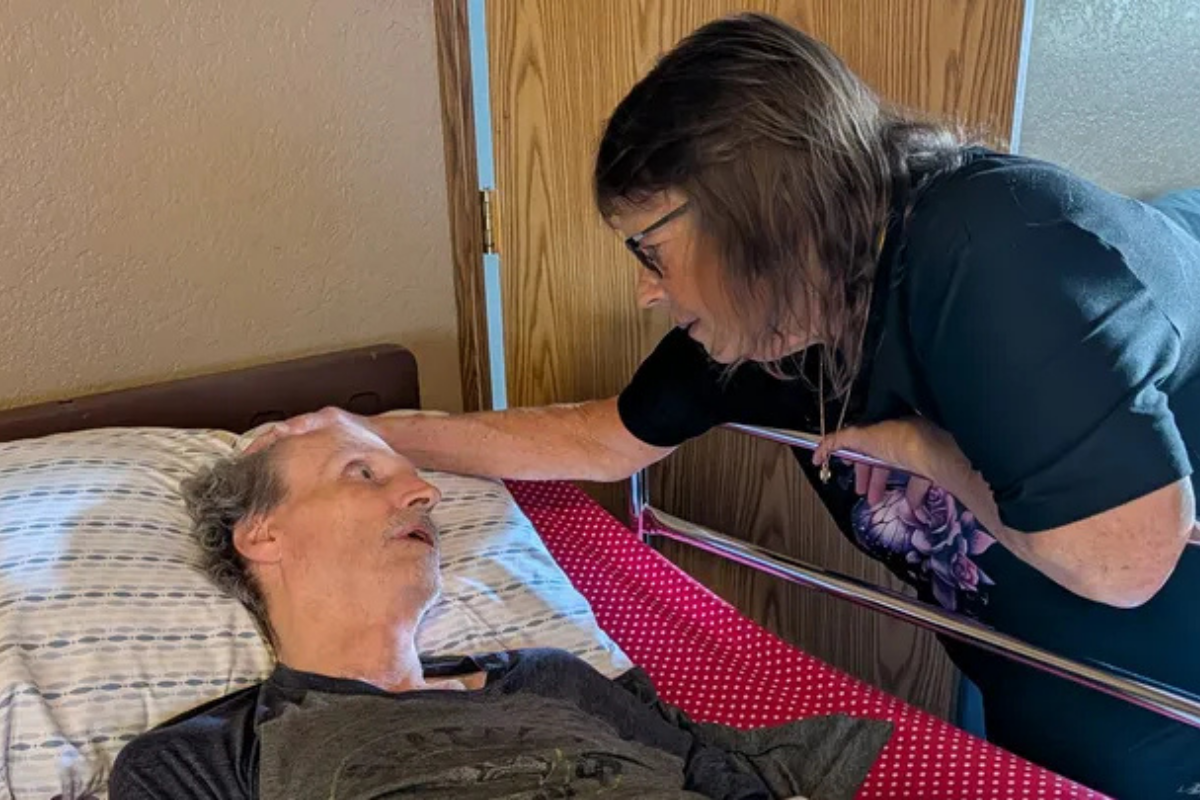
Charlotte Tripp was caring for her husband of 17 years, who has dementia and had just entered hospice care, when a phone call cost her almost everything. The Pierce County, Washington, resident says she lost about $117,000 (£87,000) to a caller posing as Wells Fargo fraud department, wiping out the savings she had counted on for the years ahead.
'Everything they took was what I was going to live on for the rest of my life,' Tripp told FOX 13 Seattle.
The fallout was immediate. Automatic payments bounced once the bank froze her compromised accounts, a water shutoff notice arrived, and she can no longer cover her mortgage or car insurance. Her Social Security disability already falls short of the mortgage, and her husband's income will disappear when he passes away.
It began with something ordinary. Trying to buy a barbecue grill, Tripp says she entered her debit card details on what looked like Costco's website. The payment failed, so she rang her bank and cancelled the cards. Days later, a caller claiming to be from Wells Fargo seemed to confirm something was wrong, and, believing it was linked to the Costco site, she followed his instructions.
'The guy said he was from Wells Fargo Fraud Department and that I needed to get to the bank immediately and withdraw $20,000,' she said. He stayed on the line while she was inside the branch and told her not to alert staff, insisting the tellers were in on it.
Once she had the $20,000 (£14,900), the caller directed her to deposit it into an ATM using a QR code. He then said investigators needed more money to protect her accounts, and told her to obtain a $49,500 (£36,900) cashier's check and move it into another account. Still believing she was helping to secure her savings, she did as she was told.
By then the scammers had gained access to her accounts, and they went further, emptying about $32,000 (£23,800) from her checking account, maxing her credit cards, pulling $10,000 (£7,400) from a line of credit, and taking out a $23,000 (£17,100) loan in her name.
How the Fake Wells Fargo Scam Left Her Owing Thousands
There is also a bill. Because she authorised the transfers herself, Tripp says Wells Fargo has told her she is liable for roughly $79,000 (£59,000) of the losses.
'What am I going to do if I get stuck with $79,000 that Wells Fargo is telling me I owe because I was frauded because I authorized it?' she said. The scammers even called back the next day to try again, and she hung up after telling the man exactly what he was.
Deputy Carly Cappetto of the Pierce County Sheriff's Office, which is investigating, said scammers routinely target older people and those under emotional strain. They manufacture urgency to cut victims off from anyone who might intervene, and insist that bank tellers and even the police are 'in on it, too.' That isolation, she said, is the clearest warning sign. She urged people to hang up and call their bank on a number they look up themselves. Many such operations run from overseas, which makes stolen money hard to recover.
Why Bank Impersonation Scams Keep Costing Billions
Tripp's case fits a fast-growing pattern. Americans reported losing $3.5B (£2.6B) to imposter scams in 2025, close to one in three fraud reports filed that year, according to the Federal Trade Commission. Criminals posing as banks drove the largest slice of nearly $1B (£745M) lost to business impersonators, with government impersonators accounting for a further $920M (£685M). No genuine bank or agency, the regulator stresses, will tell someone to move money to keep it safe.
The same tactic runs through British fraud. UK Finance logged £576.4M ($774M) lost to authorised push payment fraud in 2025, part of £1.28B ($1.72B) stolen through payment fraud overall. 'Safe account' cons, in which a caller posing as a bank or the police talks a target into moving savings, remain a core method. One protection sets British victims apart: since October 2024, UK banks have had to reimburse most eligible victims up to £85,000 ($114,000). Tripp, who authorised her own transfers under US rules, has no such backstop.
She has since handed investigators the account number where the cashier's check landed, hoping it helps trace those responsible, and started an online fundraiser to cover her bills while the case continues.
The deepest cost, for Tripp, is not the money. 'I can't believe this is happening right now at this time of my life when my husband's getting ready to pass away,' she said.
© Copyright IBTimes 2026. All rights reserved.
- Recommended For You