Retiree Lost $433K in Gold Coin Scam, Left With $3 in Savings and $30K in Debt: 'Total Nightmare'
Impostors posing as her investment firm emptied her IRA, leaving her with $3.09
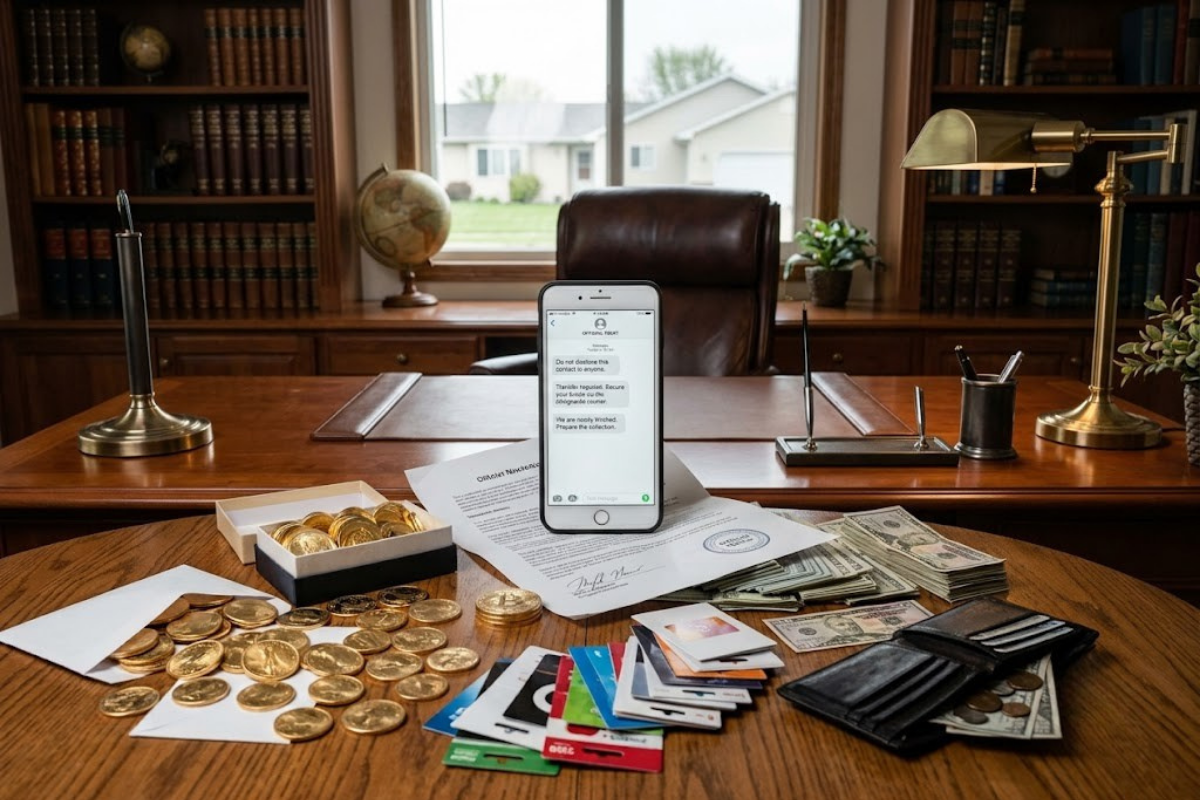
A Wisconsin woman handed over $433,000 (£321,000) to scammers in gold coins, cash, gift cards, and Bitcoin after being told the payments would protect her savings from hackers. The scheme also left her $30,000 (£22,300) in debt.
The woman, identified only as Mary, told FOX6 Milwaukee's Contact 6 that the fraud wiped out her retirement. 'My IRA was wiped out,' she said, and her savings account was left holding $3.09 (£2.29). 'It's a total, total nightmare,' she said.
The trouble began after Mary clicked a pop-up carrying her financial company's logo, which froze her computer. A man then rang, claiming to work for the same firm, and warned her that the accounts had been hacked.
Over roughly three months, the callers impersonated the Better Business Bureau and several government agencies, produced forged documents, and opened a fake bank account to route her money. They also made her sign a nondisclosure agreement. 'I couldn't tell my children, I couldn't tell my friends, I couldn't call the police,' Mary said.
Mary said she believed the callers were helping her. 'I've scrimped and saved and did without for 40 years to have a nice retirement, and they're there helping me secure all of this,' she said.
How the Gold Coin Scam Drained a $433K Retirement
The callers told Mary that converting her savings into gold coins and releasing them to a courier would keep the money safe. A video filmed on her own phone shows her sealing $131,000 (£97,000) in coins into an envelope, which she then handed over.
Mary was next directed to withdraw large sums of cash, buy hundreds of gift cards, and purchase Bitcoin, all of which went to the scammers. 'They were telling me my phones were being monitored, my computer was, you know, involved,' she said.
Threats were part of the script. Early on, Mary said the callers accused her of involvement in money laundering and illegal weapons sales, and claimed her own financial adviser was under suspicion too.
The fraud unravelled when a final call the scammers had promised never came. Mary tried the number herself. 'I called, and that number has been disconnected,' she said. The Oshkosh Police Department is investigating.
Why Gold Courier Scams Keep Targeting Older Savers
Mary's case is one of several. The Better Business Bureau Serving Wisconsin says three people have come forward over the past few weeks after converting assets into gold, with losses totalling about $3M (£2.2M). Lisa Schiller of the bureau said the scripts run on pressure. 'There's definitely a sense of urgency, a sense of pressure, a sense of panic,' she said.
The FBI says gold and bulk-cash courier scams cost Americans about $219M (£163M) in 2024, and that victims in Wisconsin alone lost roughly $8.07M (£6M) to gold courier schemes between January and October 2025. The schemes most often target older adults, who are more likely to hold retirement savings. Fraudsters have leaned on gold as bullion prices trade near record highs.
Investigators say the schemes are typically operated by overseas criminal rings that dispatch couriers to collect the gold face to face, a step that removes the digital trail that usually helps trace stolen money.
Such losses are rarely recovered. Unlike a fraudulent card payment, money moved by wire, cash, or gold at the customer's own instruction is seldom refunded, and US banks are generally not required to reimburse victims who were coerced.
The Federal Trade Commission says no legitimate agency or bank will tell someone to buy gold, move money into a 'secure' account, or hand cash to a courier to keep it safe.
A real official, it adds, will not keep someone on the phone during a trip to the bank or a shop. It advises anyone who receives such instructions to cut off contact and call a trusted relative or the police.
Mary does not expect to recover her money. She has set up a GoFundMe to help cover a loss built over 40 years and gone in three months.
© Copyright IBTimes 2026. All rights reserved.
- Recommended For You