

Blood Moon Eclipse: How and When To See 96% Red Glow as NASA Explains Mind-Bending 'all Earth Sunsets' Event
A near-total lunar eclipse to illuminate the night sky with a reddish glow
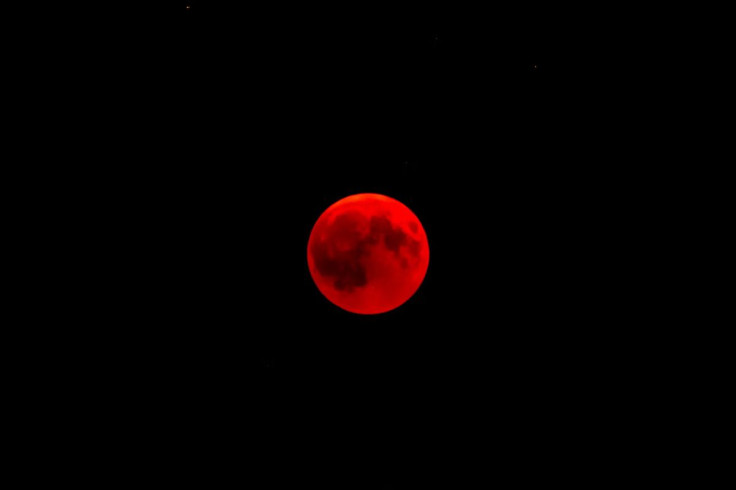
Skywatchers across the Americas are being treated to a rare blood moon eclipse on Thursday night, when Earth will cast a deep reddish glow across more than 96 per cent of the lunar surface.
The near-total event, visible from North and South America as well as the western edges of Europe and Africa, will see the moon slip almost entirely into the darkest core of Earth's shadow as the alignment unfolds.
The eclipse arrives exactly two weeks after a total solar eclipse plunged parts of southern Europe, Greenland and northern Russia into daytime darkness.
Such events regularly occur in pairs because the sun is about 400 times larger than the moon yet roughly 400 times farther away, allowing new moon solar alignments to transition into full moon lunar eclipses a fortnight later.
Viewing Times Across Major Cities
The eclipse officially begins at 9.23pm Eastern Time as the moon touches the faint outer fringe of Earth's shadow, though the main phase starts at 10.33pm when the darker umbra begins taking a visible bite out of the lunar disc.
The event reaches maximum coverage at 12.12am Eastern Time. The prominent partial phase lasts for three hours and 18 minutes, with the broader event officially concluding as the moon leaves the outer shadow at 3.01am.
Peak viewing times vary across regions, with New York catching the height of the display at 12.12am, Chicago at 11.14pm, Denver at 10.14pm and Los Angeles at 9.14pm.
Further south, skywatchers in Mexico City will see the peak at 10.14pm, Lima in Peru at 11.14pm and Buenos Aires at 1.14am.
Observers in London and western Europe face a narrower window, as maximum coverage occurs at 5.12am just as dawn breaks and the low setting moon sinks towards the horizon.
Why the Moon Turns Red: NASA's 'All Earth Sunsets' Effect
The crimson and orange hue across the lunar surface is caused by Rayleigh scattering, the same optical process that colours skies at dusk and dawn.
As sunlight filters through Earth's atmosphere, shorter blue wavelengths are scattered, allowing the longer red wavelengths to pass through and project onto the lunar disc.
'It is as if all of the world's sunrises and sunsets are projected onto the moon,' explained NASA scientists, describing how filtered light illuminates the shadowed sphere.
Because roughly 96.2 per cent of the moon will enter the deepest shadow, the colouration will appear close to that of a total eclipse.
Practical Tips To Observe
Unlike solar eclipses that require specialised protective glasses, this lunar event is safe to watch with the naked eye at every stage.
Observers can improve their view by heading to an open terrace, rooftop or local park away from heavy urban light pollution, giving their eyes several minutes to adjust to the dimmer sky while tracking changes in colour.
Standard binoculars or a small telescope will show the shadow line moving across craters and mountain ridges.
Astronomy clubs and services such as Time and Date will provide live broadcasts for those under cloud, and as the moon darkens, faint background stars will become visible across the night sky.
The eclipse will be followed by the next solar eclipse on 6 February and a further lunar event overnight on 20 February.
© Copyright IBTimes 2026. All rights reserved.