

Spain Gets Two Eclipses in 16 Days as Rare Lunar Event Follows Historic Solar Spectacle
A celestial event to remember: Spain's second major eclipse in August 2026
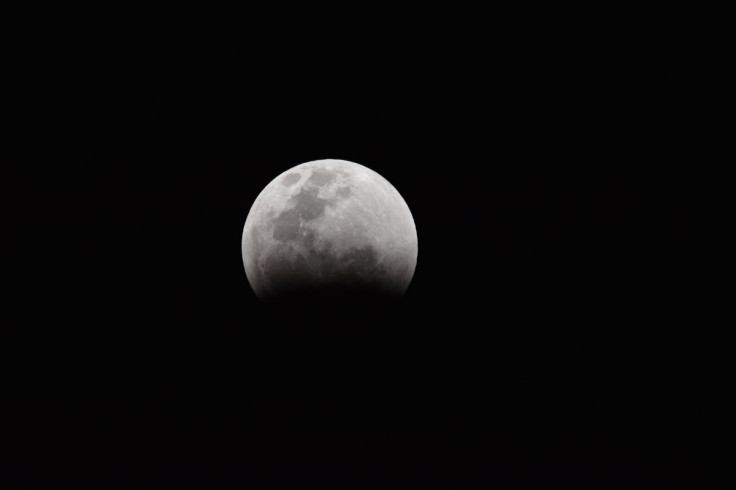
Spain is preparing for a second major eclipse in just 16 days, as a partial lunar eclipse sweeps across the country on Friday 28 August 2026, following the historic total solar eclipse that crossed Spain on 12 August.
The lunar event will be visible across Spain, although how much of it can be seen will depend on location. The Instituto Geográfico Nacional (IGN) says the eclipse will have a magnitude of 0.93, with the Moon entering the Earth's shadow during the early hours of 28 August.
The event will also be visible from parts of Europe, Africa and the Americas, making it one of August's major astronomical spectacles.
When Will the Lunar Eclipse Begin?
For mainland Spain, the eclipse will begin with the penumbral phase at 3:23 am local time on 28 August.
The more noticeable partial phase begins at about 4:34 am, when the Moon starts moving into Earth's darker central shadow, known as the 'umbra'.
The eclipse reaches its maximum at approximately 6:12 am, when about 93% of the Moon's disc will be covered by the Earth's umbral shadow.
The timing means the most dramatic part of the event occurs shortly before sunrise, making an unobstructed view towards the west-south-west particularly important.
Where in Spain Will It Be Visible?
The partial eclipse can be seen from all of Spain, but the Moon will set before the partial phase ends in parts of central and eastern Spain, the Balearic Islands and Melilla.
Observers in the western mainland, Canary Islands and Ceuta will have better opportunities to follow the event for longer, with the Moon remaining above the horizon for more of the eclipse.
In cities including Madrid, Barcelona, Córdoba, Málaga, Murcia, Palma and Seville, the eclipse reaches its maximum at around 6:12 am.
For the best chance of seeing it, observers should choose an open location with a clear western horizon and minimise surrounding light pollution.
Why Spain Is Getting Two Eclipses So Close Together
The lunar eclipse comes just 16 days after the total solar eclipse of 12 August, which crossed northern Spain as part of its path of totality.
The IGN described the August solar eclipse as the first total solar eclipse visible from the Iberian Peninsula in more than a century. Its path crossed Spain from west to east, passing through areas including Galicia, León, Bilbao, Zaragoza and Valencia.
The two events are part of the same broader eclipse season. Solar and lunar eclipses commonly occur close together because of the alignment of the Sun, Earth and Moon.
Will the Moon Turn Red?
Although this is not a total lunar eclipse, the Moon could develop noticeable reddish or coppery tones as it moves deeper into Earth's shadow.
Unlike a solar eclipse, the lunar event is safe to view with the naked eye and does not require specialist eye protection. Binoculars or a telescope can provide a closer view, but are not necessary.
For Spain's skywatchers, the 28 August eclipse therefore offers a second major celestial event within just over two weeks, turning August 2026 into an unusually memorable month for astronomy.
© Copyright IBTimes 2026. All rights reserved.